
The Fed Is Holding. The Real Question Is Whether It Can Afford To.
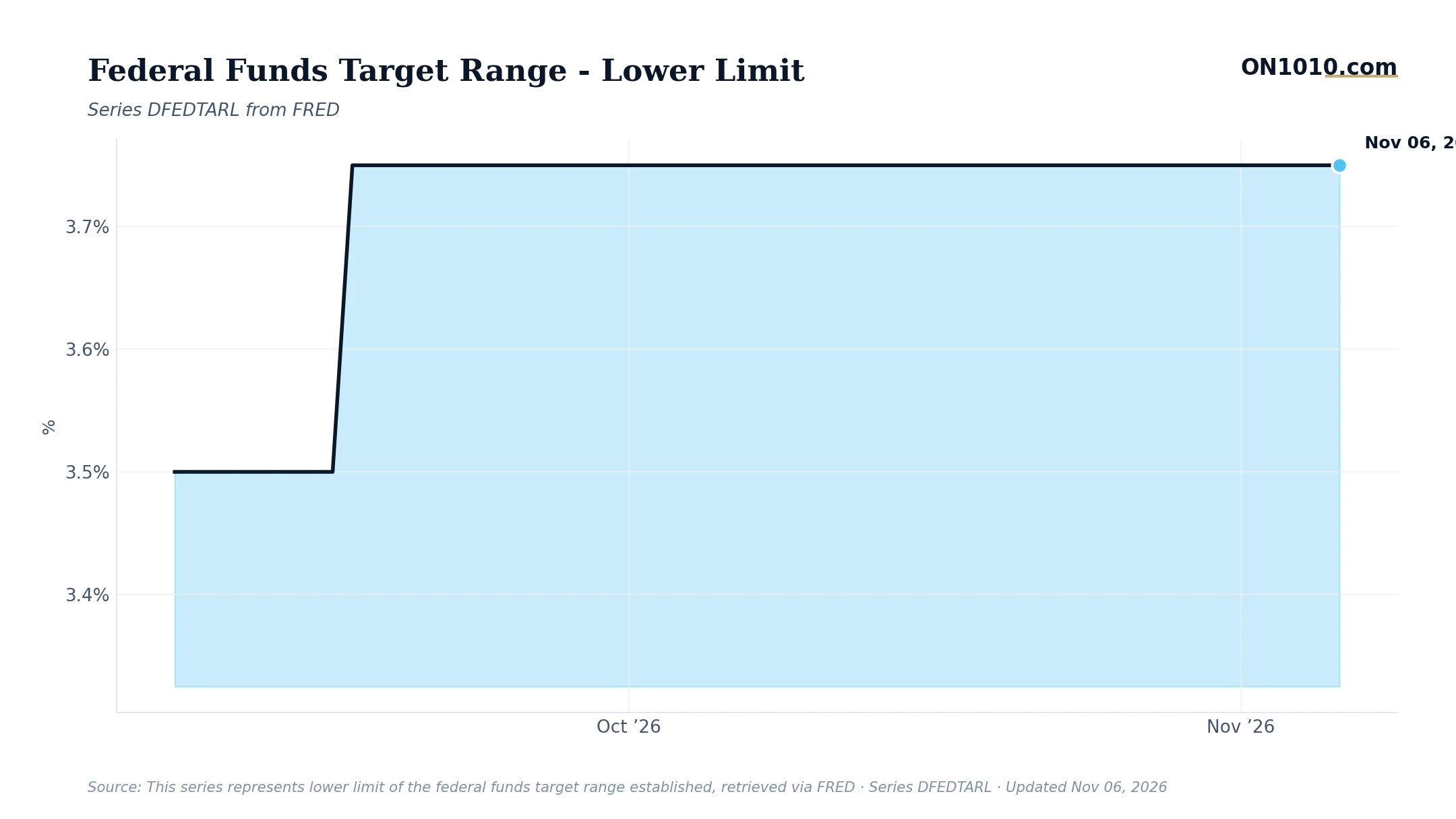
The federal funds rate target held at 3.75% to 4.00% again this week, unchanged. No drama in the number itself. The drama is in everything surrounding it.
Here is the tension: the Fed is sitting on a rate that looks restrictive on paper, but inflation is running hotter than nine out of every ten months in the historical record. That gap between policy and price pressure is the story. The Fed is not easing, but it may not be tight enough either.
Zoom out and the picture gets more complicated. Long-term interest rates are in the upper quarter of their historical range and have only recently started falling. Credit spreads are historically wide, a sign that lenders are demanding more compensation for risk. Consumer sentiment is near the very bottom of its historical range. Meanwhile, money is rotating hard into defensive sectors. Consumer staples, health care, real estate, and utilities have been outperforming the broader market by 10 to 17 percentage points over the past month. That is not an economy humming along confidently.
Historically, when monetary policy has been this restrictive relative to history, a new recession has begun within the following year about 18% of the time. When long-term rates have been this elevated, that figure rises to about 20%. Neither number is a siren. But both are worth knowing, because base rates are how professional allocators frame risk. They ask: given this setup, what has usually followed? Then they pressure-test it against the data they see today.
The practical question for anyone running a business or thinking about capital commitments is what the Fed does next. Holding steady when inflation is this hot signals the Fed sees stickiness in prices. Cutting into that environment would be a different signal entirely.
Bottom Line: The Fed’s rate is unchanged, but the environment around it is shifting. When credit is tightening, consumers are pulling back, and capital is rotating into safety, a steady policy rate is not the same thing as stable conditions.
Source: Federal Reserve Economic Data (FRED)
ON1010 Research is an independent publisher of economic education and is not a registered investment adviser, broker-dealer, or investment company. This content is for educational and informational purposes only and is not investment advice or a recommendation to buy, sell, or hold any security. Published under the publisher exemption recognized by Section 202(a)(11)(D) of the Investment Advisers Act of 1940 (Lowe v. SEC). Always consult a qualified financial professional before making any financial decision.
Free Research
The economy moves fast. We make sure you move faster.
Economic data, policy shifts, and market signals — delivered to your inbox.
Subscribe Free