
The Fed Is Holding. The Rest of the Dashboard Is Flashing Yellow.
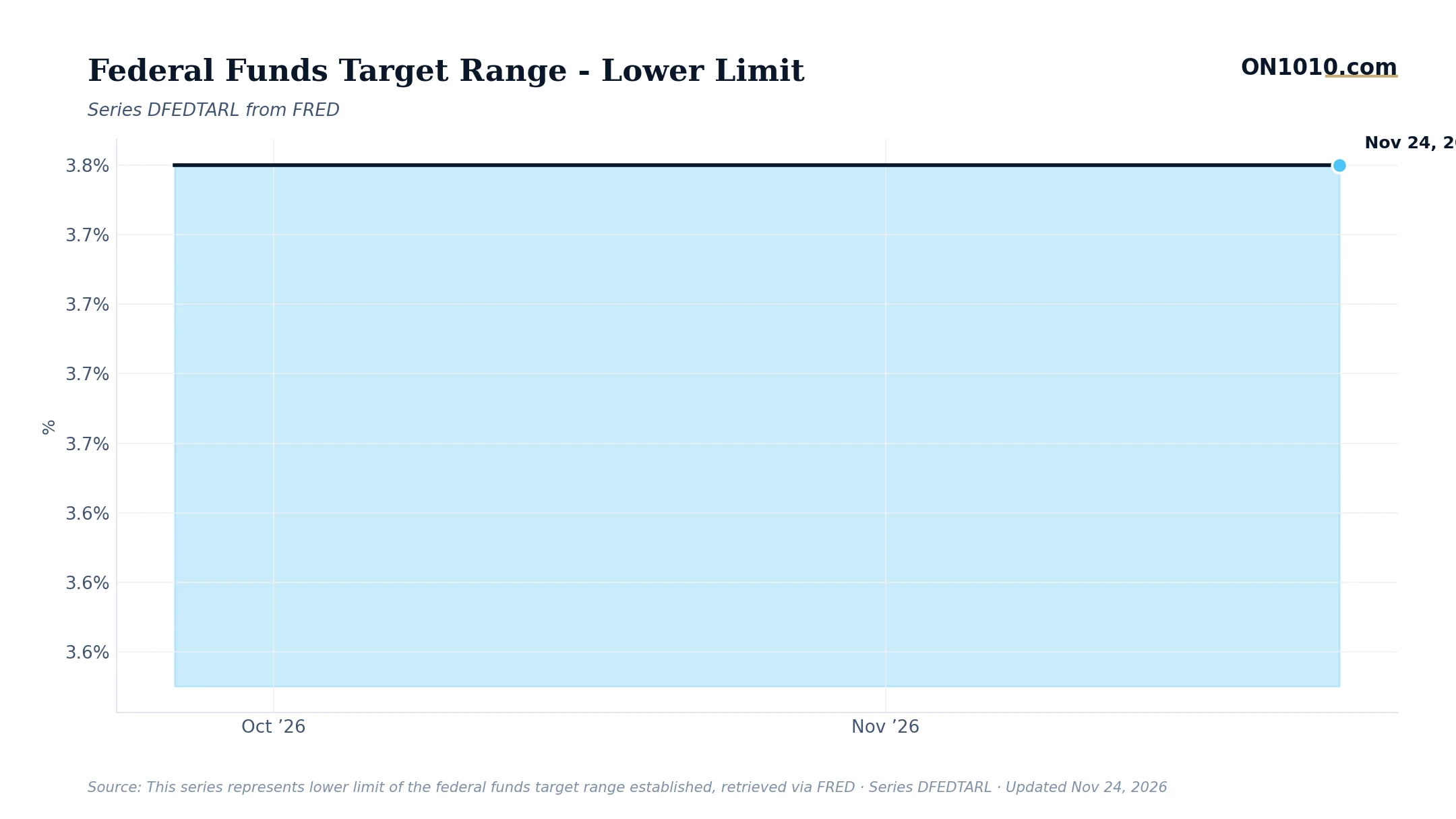
The federal funds rate target has sat at 3.75% (lower bound) without moving for weeks. No surprise there. But in a week when almost everything else in the economic dashboard is sending cautionary signals, a steady policy rate tells a more complicated story than it appears.
Here is the tension: the Fed is holding in place while the economy around it is shifting. Core inflation remains well above its historical norm and is still rising. Credit spreads are as wide as they have been in nine of every ten months on record. Consumer sentiment is near the very bottom of its historical range. Market uncertainty, measured by the VIX at 28.36 against a 20-day average of 22.65, is climbing. Defensive sectors are outperforming growth sectors by 5 percentage points over the past month, with every major defensive sector beating the S&P 500. That is not noise. That is institutional money moving.
The real policy rate, which is what actually matters for borrowing decisions, remains restrictive. When the Fed’s rate runs above inflation, it effectively raises the cost of every dollar borrowed. Historically, extended periods of restrictive real rates have preceded economic slowdowns in roughly one out of every five similar setups. That is a base rate worth understanding, even if most recent readings in this zone have resolved without a recession.
For businesses thinking about capital allocation, the combination of high real rates, wide credit spreads, and deteriorating market participation raises a consistent set of questions: How does the refinancing calendar look? How dependent is the business on new credit? Those questions are worth running through with a qualified financial professional who knows the specifics of the balance sheet.
Bottom Line: A steady Fed rate can feel like calm, but every other gauge around it is signaling that financial conditions are tightening on their own. The policy rate held. The cost of risk did not.
Source: Federal Reserve Economic Data (FRED), Series DFEDTARL
ON1010 Research is an independent publisher of economic education and is not a registered investment adviser, broker-dealer, or investment company. This content is for educational and informational purposes only and is not investment advice or a recommendation to buy, sell, or hold any security. Published under the publisher exemption recognized by Section 202(a)(11)(D) of the Investment Advisers Act of 1940 (Lowe v. SEC). Always consult a qualified financial professional before making any financial decision.
Free Research
The economy moves fast. We make sure you move faster.
Economic data, policy shifts, and market signals — delivered to your inbox.
Subscribe Free