
The Fed Rate That Hasn’t Moved in Months, and What That Stillness Is Telling You
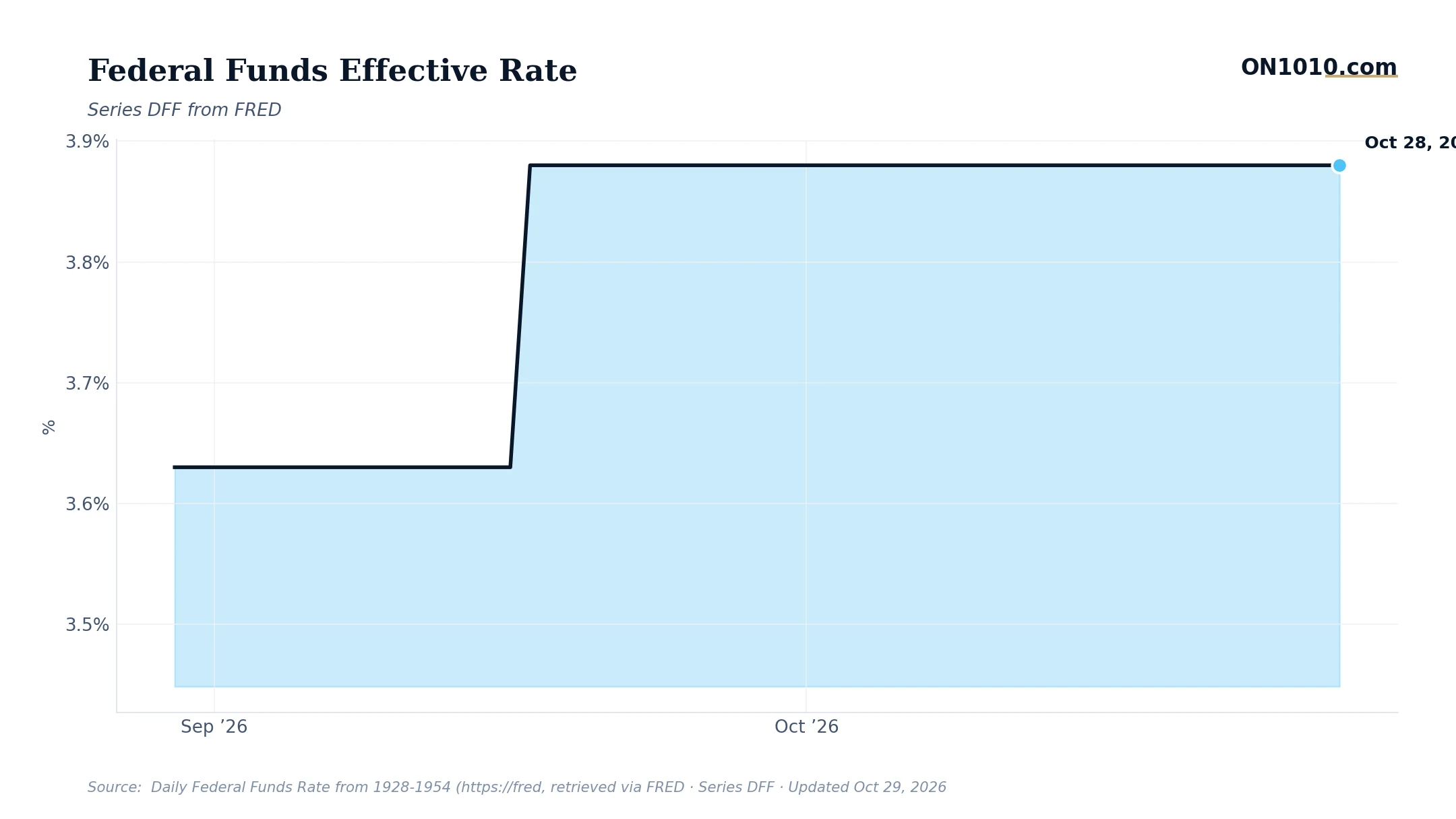
The effective federal funds rate has sat at 3.88% for six straight days, and that flatline is worth more attention than it looks. Holding steady is a choice, and right now, that choice is happening against a backdrop where almost nothing else is standing still.
Pull back and the picture gets more complex. Core inflation is running hot relative to history. Long-term interest rates are in the upper range of their historical track record and rising. Credit spreads have widened, signaling stress in the corners of the bond market that institutional investors watch closely. The Fed is threading a needle: the policy rate is already restrictive by historical standards, yet the inflation it is trying to cool still hasn’t returned to target.
Here is the math that matters. If the effective funds rate is 3.88% and core inflation is still elevated, the real policy rate (the rate after subtracting inflation) tells you how hard the brakes are actually pressed. A high nominal rate against stubborn inflation means the real restraint is real, but not crushing. That tension between “high enough to slow things down” and “not high enough to break them” is exactly where the Fed wants to be, and exactly where the risk lives.
Historically, when monetary policy has run this restrictive relative to its own history, a new recession has followed within 12 months about 18% of the time. That is roughly one-in-five odds. Worth knowing, not worth panicking over. The more interesting signal right now may be in credit markets, where wider spreads suggest bond investors are quietly pricing in more risk than the equity headlines imply.
In past cycles, business operators and capital allocators have used periods of Fed stillness to audit their own rate exposure: floating-rate debt, refinancing timelines, and the duration of any fixed obligations on the balance sheet. A qualified financial professional is the right partner for that conversation.
Bottom Line: The Fed has stopped moving, but the economy around it hasn’t. When the rate is frozen and the signals around it are shifting, the stillness itself becomes the story worth watching.
Source: Federal Reserve Economic Data (FRED)
ON1010 Research is an independent publisher of economic education and is not a registered investment adviser, broker-dealer, or investment company. This content is for educational and informational purposes only and is not investment advice or a recommendation to buy, sell, or hold any security. Published under the publisher exemption recognized by Section 202(a)(11)(D) of the Investment Advisers Act of 1940 (Lowe v. SEC). Always consult a qualified financial professional before making any financial decision.
Free Research
The economy moves fast. We make sure you move faster.
Economic data, policy shifts, and market signals — delivered to your inbox.
Subscribe Free