
The Fed’s Rate Hasn’t Moved in Six Days. That Stillness Is the Story.
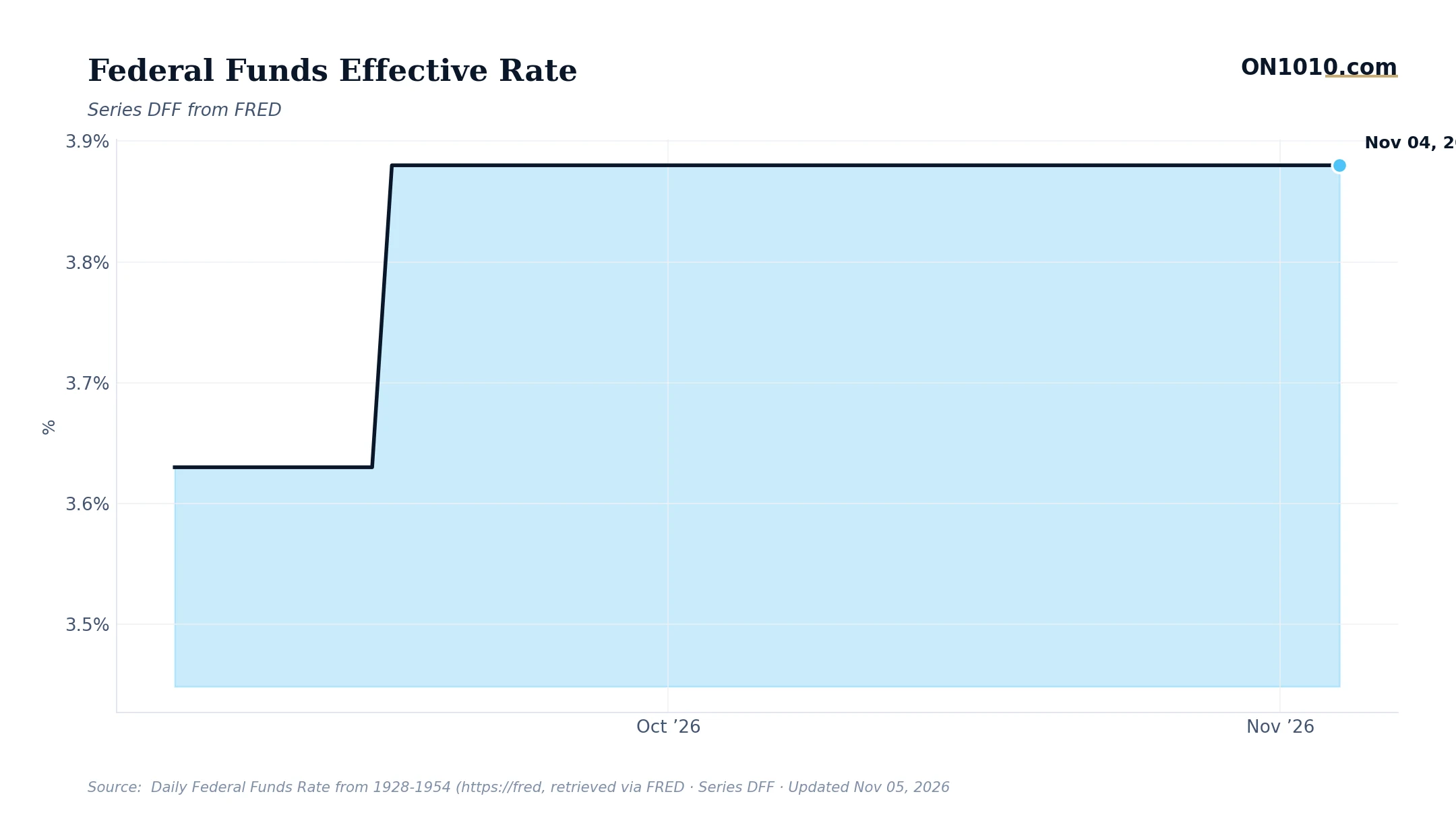
The effective federal funds rate has sat at 3.88% every single day this week. No drift, no wobble. Banks are borrowing from each other at exactly the rate the Fed intends, and the market is doing nothing to push back.
That kind of precision matters more than it might look. The effective rate is where policy actually lives. The Fed announces a target range, but the effective rate is what banks pay in the real world, overnight, every day. When it tracks the target this cleanly, the Fed’s grip on short-term credit is tight. The plumbing is working.
Here’s the tension worth watching: monetary policy is restrictive by historical standards, inflation is running hot relative to most of the past 50 years, and yet credit spreads are widening, consumer sentiment is near the bottom of its long-run range, and institutional money has been rotating hard into defensives. Health care and consumer staples have beaten the broader market by double digits over the past month. That is the kind of rotation that tends to show up when large investors are quietly preparing for slower growth, even when the headlines look calm.
A 3.88% effective rate against still-elevated inflation means real short-term rates are positive but not dramatically so. Historically, when real policy rates sit in this zone alongside wide credit spreads and weak consumer sentiment, businesses that carry floating-rate debt or face refinancing in the near term have tended to feel the squeeze before it shows up in the broader data. In past cycles, the lag between tight money and slower business investment has run six to eighteen months. That’s the kind clock that is easy to ignore until it goes off.
Bottom Line: The Fed’s rate is steady. The question is whether “steady” means stable or stuck, and whether the economy can grow its way through restrictive policy before something in the credit markets breaks the calm.
Source: Federal Reserve Economic Data (FRED)
ON1010 Research is an independent publisher of economic education and is not a registered investment adviser, broker-dealer, or investment company. This content is for educational and informational purposes only and is not investment advice or a recommendation to buy, sell, or hold any security. Published under the publisher exemption recognized by Section 202(a)(11)(D) of the Investment Advisers Act of 1940 (Lowe v. SEC). Always consult a qualified financial professional before making any financial decision.
Free Research
The economy moves fast. We make sure you move faster.
Economic data, policy shifts, and market signals — delivered to your inbox.
Subscribe Free