
The Strait of Hormuz Is the World’s Most Dangerous Chokepoint. Right Now, It’s Back in the Conversation.
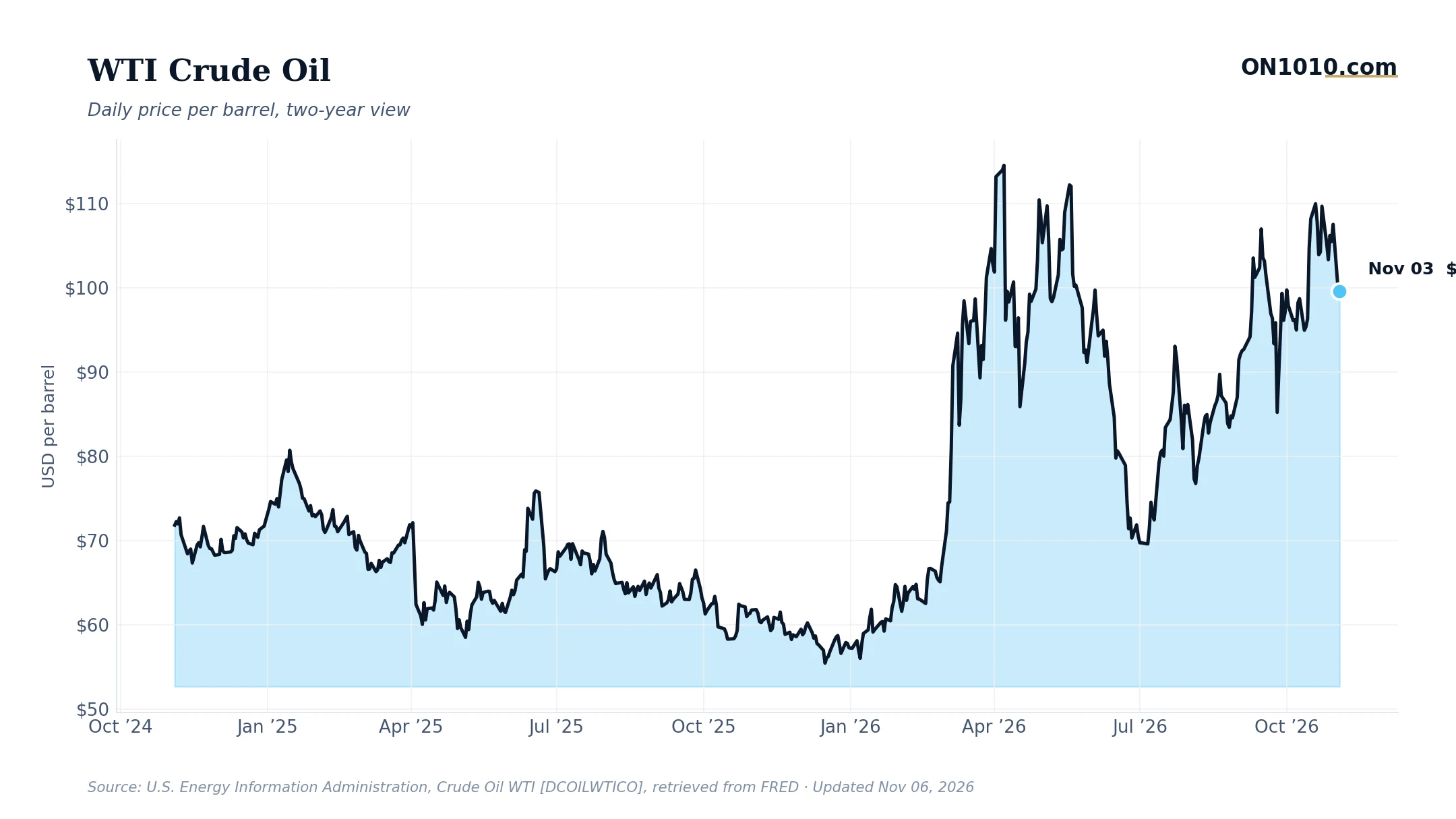
According to CNBC, energy analyst Bob McNally of Rapidan Energy is warning that renewed U.S.-Iran tensions could push both Brent and WTI crude above $100 per barrel. The number itself is attention-grabbing. The mechanism behind it is what actually matters.
About 20% of the world’s traded oil flows through the Strait of Hormuz, a waterway only 21 miles wide at its narrowest point. There is no good alternative route. If that chokepoint faces any credible disruption, the global oil market cannot reroute around it quickly. Supply is not just about how much oil exists in the ground. It is about whether it can get to a refinery tomorrow morning. That geography has not changed, and it is the reason a flare-up in U.S.-Iran relations carries disproportionate weight in energy markets even when the underlying conflict is regional.
This lands in an already uncomfortable macro environment. Core inflation is running well above its historical norm. Monetary policy is restrictive, with real rates elevated. Consumer sentiment is near historic lows. If energy prices spike materially from here, they add fuel to an inflation problem the Fed has not yet solved. Higher energy costs compress margins for every business that moves, heats, or manufactures anything. That is a broad list.
The sector rotation data reinforces the picture. Consumer staples, health care, real estate, and utilities have all outperformed the broader market significantly over the past month, while technology has lagged sharply. Historically, that kind of flight toward defensive sectors has reflected building anxiety about economic conditions rather than any single catalyst.
Historically, oil price shocks driven by geopolitical supply fears have behaved differently from demand-driven rallies. The demand-driven variety often signals a strong economy. The supply-shock variety typically compresses corporate margins, raises costs for consumers, and complicates central bank decisions at exactly the wrong moment. Past performance does not predict future results, but that historical distinction is worth understanding before treating any oil price move as a uniform signal.
Bottom Line: A closed or disrupted Strait of Hormuz is not a tail risk. It is a tail risk with a very specific trigger, a known mechanism, and a history of outsized consequences. The question worth asking is what current oil prices are already pricing in, and what they are not.
Read more: CNBC Top News
ON1010 Research is an independent publisher of economic education and is not a registered investment adviser, broker-dealer, or investment company. This content is for educational and informational purposes only and is not investment advice or a recommendation to buy, sell, or hold any security. Published under the publisher exemption recognized by Section 202(a)(11)(D) of the Investment Advisers Act of 1940 (Lowe v. SEC). Always consult a qualified financial professional before making any financial decision.
Free Research
The economy moves fast. We make sure you move faster.
Economic data, policy shifts, and market signals — delivered to your inbox.
Subscribe Free