
Wages Are Rising. After Inflation, Not So Much.
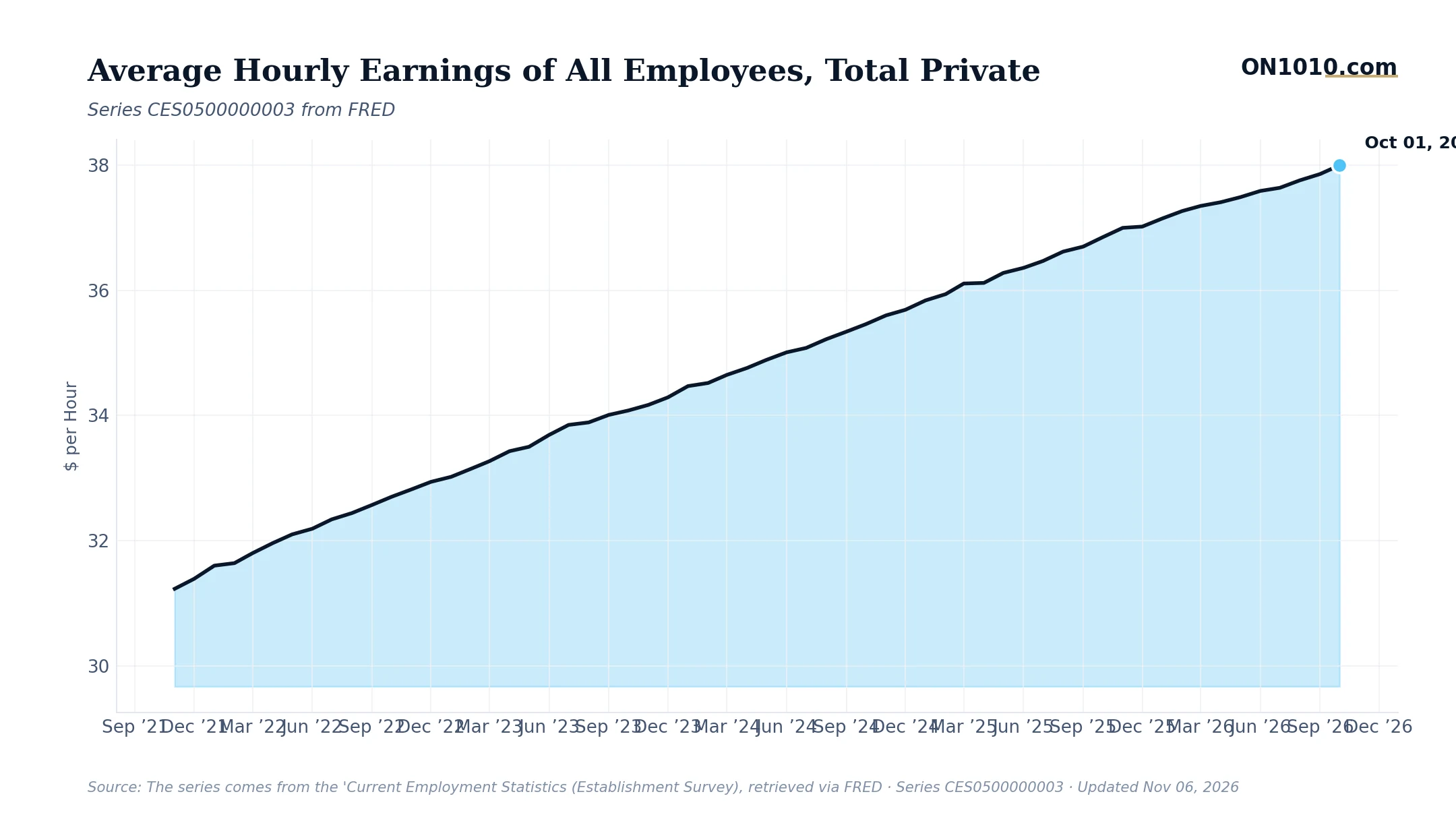
Average hourly earnings climbed to $38.00 in October, up 0.37% from September and 2.65% from a year ago. The trend is steady and unbroken: wages have risen every month since May. On paper, workers are making more money.
The catch is inflation. Core inflation is running near its highest level in nearly a decade of historical data. If prices are rising faster than paychecks, workers are falling behind in purchasing power even as their nominal wages tick up. A 2.65% wage gain sounds reasonable until inflation takes a bigger bite out of it.
This is exactly the tension that makes today’s labor market hard to read. Nominal wage growth is moderate but consistent, suggesting employers still need workers and are willing to pay for them. At the same time, restrictive monetary policy, wide credit spreads, and historically weak consumer sentiment point to an economy where the financial pressure on households is building quietly beneath the surface. When consumers feel squeezed in real terms, spending eventually follows.
Historically, this kind of setup, steady nominal wage growth alongside high and rising inflation, has marked a late-cycle squeeze where workers win on paper but lose in the checkout line. In past cycles, businesses have watched real wage trends closely because rising unit labor costs without matching productivity gains compress profit margins, which is the leading indicator that tends to move before hiring and investment do.
Bottom Line: The number to watch alongside this wage print is inflation. If prices stay elevated while wage growth holds around 2.65%, real incomes stay under pressure, and consumer spending, the backbone of U.S. economic growth, eventually has to reflect that math.
Source: Federal Reserve Economic Data (FRED)
ON1010 Research is an independent publisher of economic education and is not a registered investment adviser, broker-dealer, or investment company. This content is for educational and informational purposes only and is not investment advice or a recommendation to buy, sell, or hold any security. Published under the publisher exemption recognized by Section 202(a)(11)(D) of the Investment Advisers Act of 1940 (Lowe v. SEC). Always consult a qualified financial professional before making any financial decision.
Free Research
The economy moves fast. We make sure you move faster.
Economic data, policy shifts, and market signals — delivered to your inbox.
Subscribe Free