
The Trade War Tax Is Starting to Show Up in the Growth Numbers
Canada’s $27.6 billion in retaliatory tariffs took effect this week, and the market is starting to do the math on what that means for actual economic growth.
Here’s the twist most people are missing: oil is near $93.72 a barrel, Canada’s tariffs just hit, global shipping authorities are warning of a maritime trade breakdown, and yet the VIX sits at 15.60. Credit spreads are historically tight. The market is pricing calm. That gap between headline risk and market complacency is the real story worth watching this week.
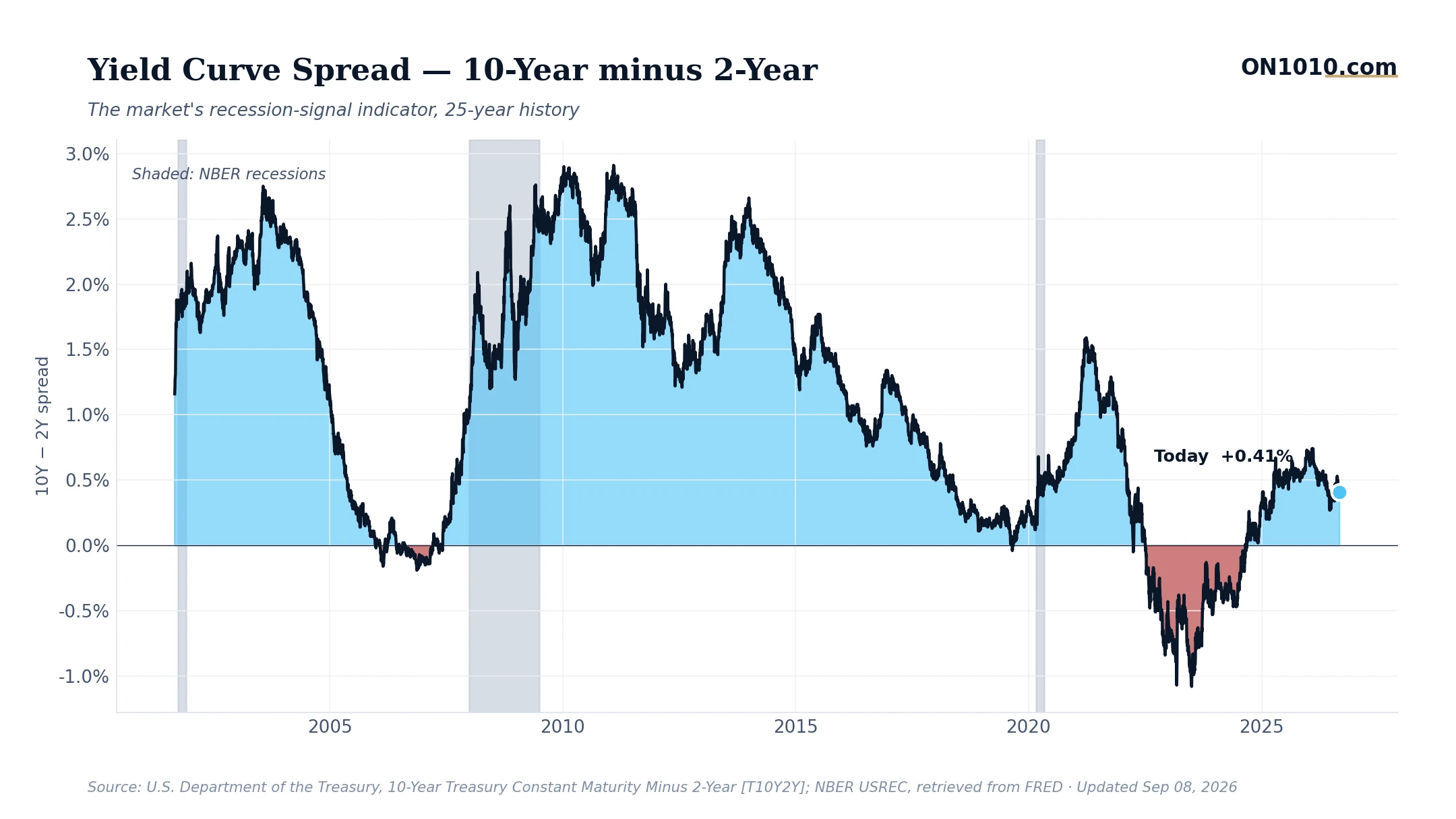
What moved: The S&P 500 dipped 0.38% to 7,718.60 on Monday while the Russell 2000 actually gained 0.25%, closing at 2,975.65. That divergence is worth a second look. Large caps carry more international revenue exposure than small caps, so when trade risk rises, the rotation from large to small has a logic to it. The 10-year Treasury yield sits near 4.77% against a 2-year at 4.34%, a spread of 41 basis points, with breakeven inflation at 2.35%. Long rates are historically elevated, and that acts as a quiet drag on business investment even when nobody’s talking about it.
On deck today: Watch for any fresh trade policy statements following Canada’s tariff action. Any signal on U.S. retaliation or negotiation shifts the growth calculus meaningfully.
Why it matters: The growth gauge is sitting near its historical midpoint and drifting lower. Tariffs add friction to optimized supply chains, and friction shows up in margins before it shows up in headlines.
Sunday’s Long View is going deeper on the wage-inflation gap, and that story connects directly to the same margin pressure building here. It’s free, and it’s worth your weekend.
ON1010 Research is an independent publisher of economic education and is not a registered investment adviser, broker-dealer, or investment company. This content is for educational and informational purposes only and is not investment advice or a recommendation to buy, sell, or hold any security. Published under the publisher exemption recognized by Section 202(a)(11)(D) of the Investment Advisers Act of 1940 (Lowe v. SEC). Always consult a qualified financial professional before making any financial decision.
Free Research
The economy moves fast. We make sure you move faster.
Economic data, policy shifts, and market signals — delivered to your inbox.
Subscribe Free