
Economic Wire: Trump says oil and gas prices won’t fall until ‘right after’
The White House Just Told You When Energy Relief Is Coming
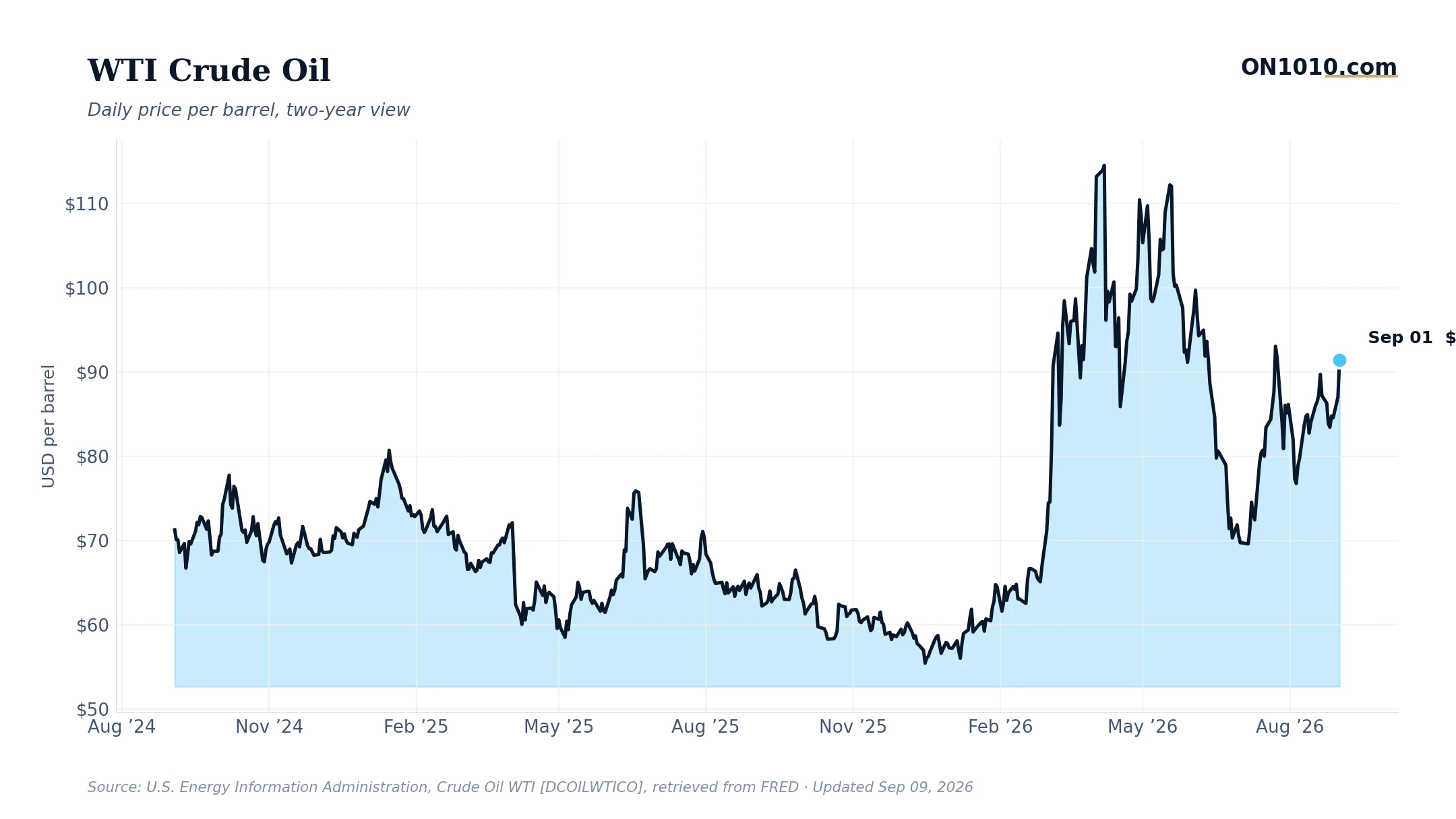
According to CNBC, President Trump said energy prices elevated by the Iran war will stay high until “right after” the midterm elections. That is a remarkable statement, not for its politics, but for what it reveals about the economics underneath.
When a sitting president publicly signals that price relief has a political timeline attached to it, businesses and capital allocators face a concrete planning problem. The uncertainty is no longer open-ended. It has a rough endpoint. And that changes the calculus.
Here is the mechanism worth understanding. Sustained high energy prices act like a hidden tax on the entire economy. They lift input costs across manufacturing, transportation, and agriculture. They squeeze profit margins at companies that cannot fully pass those costs along to customers. And they eat into real consumer spending power at exactly the wrong moment: core inflation is already running hot by historical standards, and consumer sentiment is sitting near multi-decade lows even as official sentiment readings tick slightly higher. That combination creates a fragile demand picture. Higher gas prices do not help it.
The administration’s implicit bet seems to be that the geopolitical situation resolves on a timeline that lines up with electoral interests. That may prove correct. But the energy market has its own logic. Historically, investors have looked at extended energy price shocks as a margin compression story first and a growth story second, tracking which sectors can absorb costs and which cannot before repositioning. The questions worth sitting with now include how long supply chains can absorb elevated input costs before companies start making harder decisions about hiring and investment, and whether the bond market will keep pricing calm if inflation stays sticky through 2027.
Credit spreads remain remarkably tight even against this backdrop, which suggests credit markets are not pricing significant distress yet. That tension between tight spreads and weak consumer sentiment is worth watching carefully.
Bottom Line: When policy explicitly delays price relief to a known date, the economy does not wait patiently. Margins, spending, and investment decisions adjust in real time, long before the political clock runs out.
Read more: CNBC Top News
ON1010 Research is an independent publisher of economic education and is not a registered investment adviser, broker-dealer, or investment company. This content is for educational and informational purposes only and is not investment advice or a recommendation to buy, sell, or hold any security. Published under the publisher exemption recognized by Section 202(a)(11)(D) of the Investment Advisers Act of 1940 (Lowe v. SEC). Always consult a qualified financial professional before making any financial decision.
Free Research
The economy moves fast. We make sure you move faster.
Economic data, policy shifts, and market signals — delivered to your inbox.
Subscribe Free