
When Calm Gets Expensive: The Hidden Cost of a Low VIX
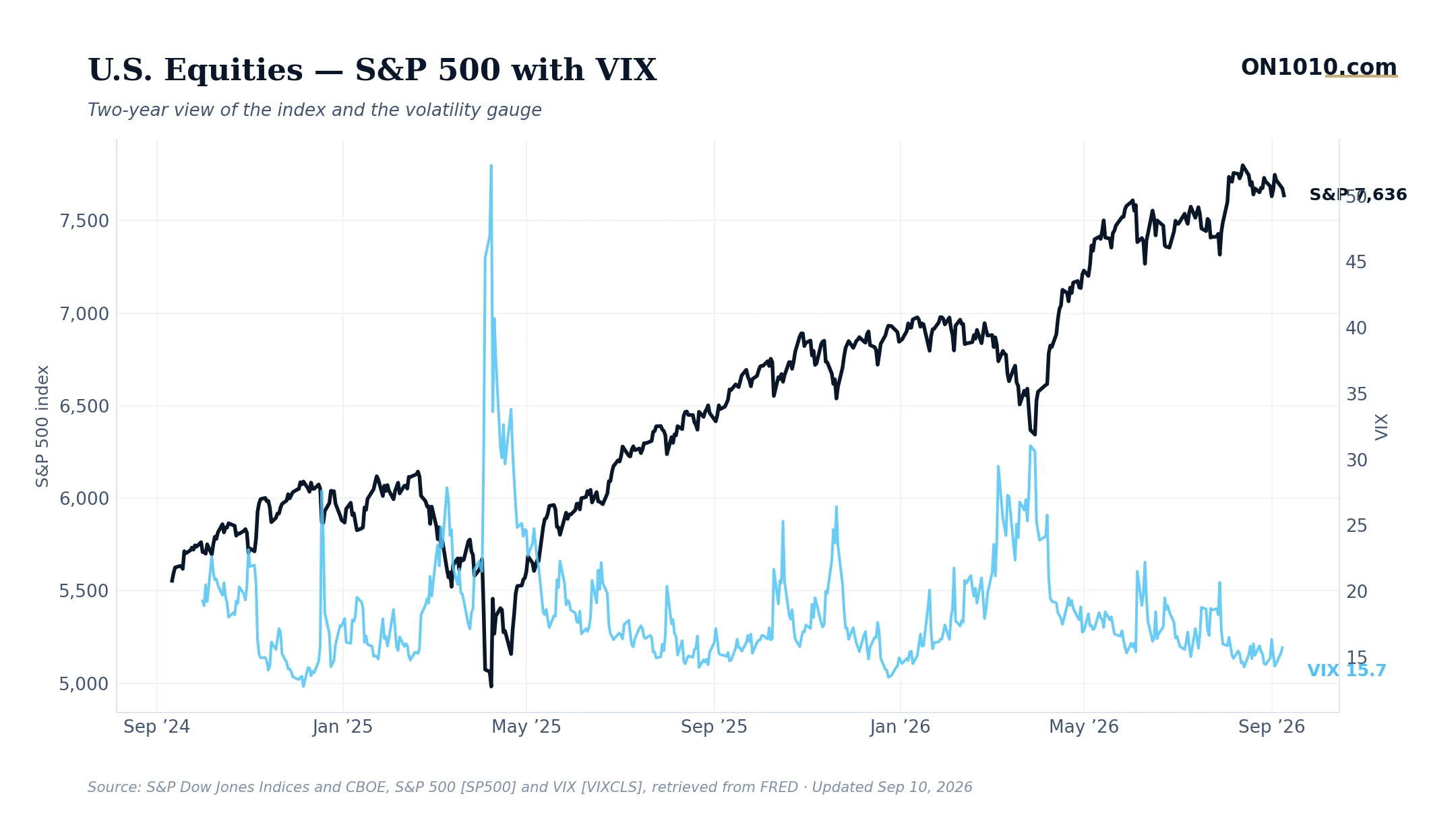
According to CNBC, big swings in Treasury yields over the past couple of months have renewed attention on the CBOE Volatility Index (VIX) and the Merrill Lynch Option Volatility Estimate (MOVE) as investors begin building hedges ahead of what is historically one of the most turbulent stretches of the calendar. The interesting thing isn’t that people are hedging. It’s that they’re doing it while the VIX, currently around 16.5, still sits below its historical midpoint.
That’s the tension worth understanding. Volatility is low by historical standards, which makes hedges relatively cheap to buy right now. But “cheap” is a moving target. September and October have produced more outsized market swings than any other two-month window in the modern era, and the backdrop this year adds some extra texture. The 10-year Treasury yield is sitting at 4.8%, in the upper range of the past several decades, and core inflation remains hotter than nine out of every ten months on record. When yields are this elevated and inflation is this sticky, the bond market tends to stay jumpy. And when bonds jump, stocks typically follow.
There’s also something worth noting in the gauges right now: market trend and participation have been deteriorating even as credit spreads remain remarkably tight. That kind of divergence, where the credit market says “everything is fine” while equity market breadth quietly weakens, has historically been a setup worth watching, not because it predicts a crash, but because it can flag a market that is narrower and more fragile than the headline index suggests.
Historically, investors who recognize low-volatility windows inside seasonally risky periods have used them to think carefully about portfolio resilience before conditions shift. The question this raises isn’t whether a selloff is coming. It’s whether the cost of being unprepared outweighs the cost of protection while it’s still reasonably priced.
Bottom Line: A quiet VIX during the calendar’s most historically volatile stretch is less a signal to relax and more an invitation to think clearly before the noise picks up.
Read more: CNBC Top News
ON1010 Research is an independent publisher of economic education and is not a registered investment adviser, broker-dealer, or investment company. This content is for educational and informational purposes only and is not investment advice or a recommendation to buy, sell, or hold any security. Published under the publisher exemption recognized by Section 202(a)(11)(D) of the Investment Advisers Act of 1940 (Lowe v. SEC). Always consult a qualified financial professional before making any financial decision.
Free Research
The economy moves fast. We make sure you move faster.
Economic data, policy shifts, and market signals — delivered to your inbox.
Subscribe Free