
THE Fed’s Patience Just Got More Expensive
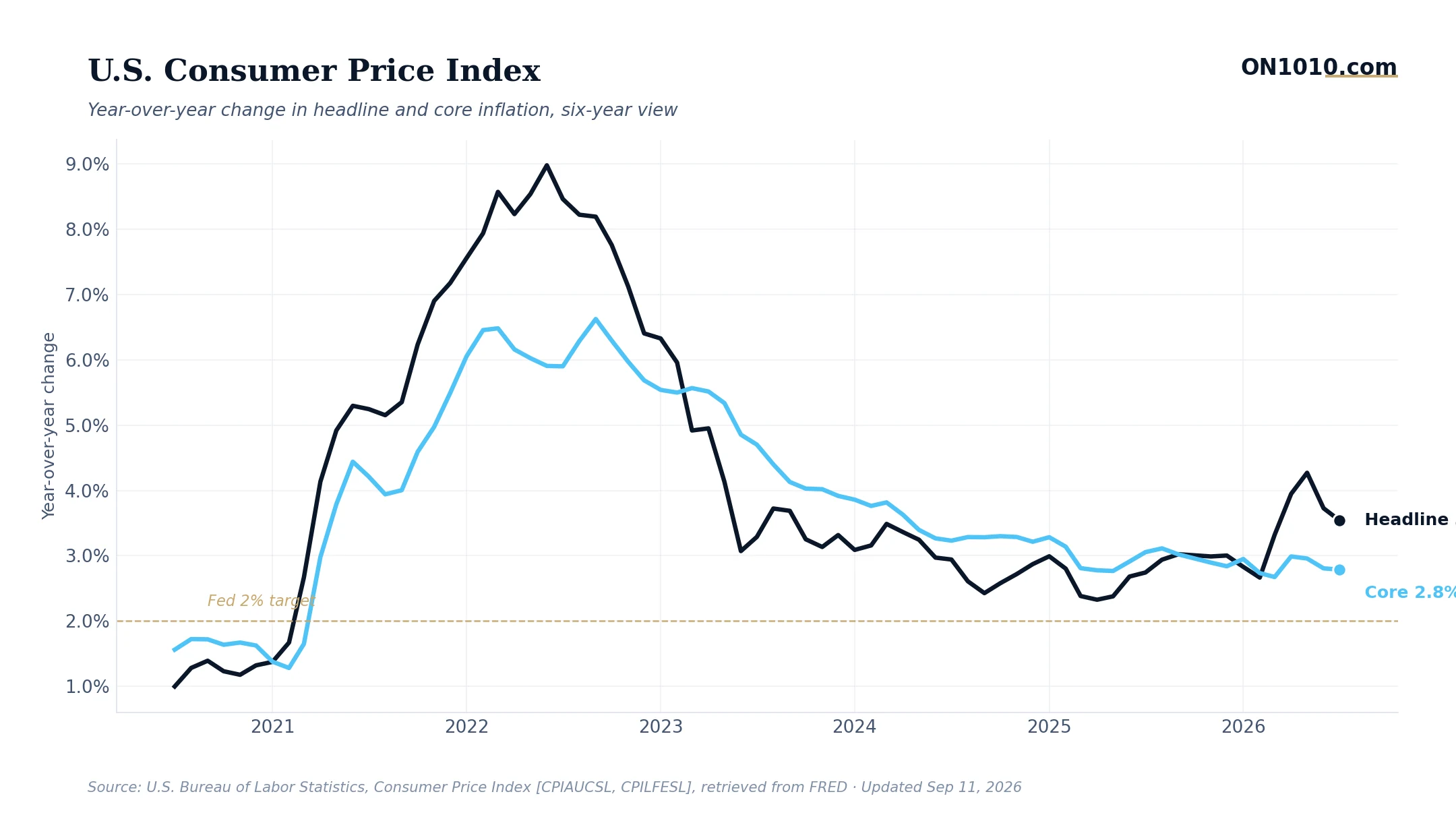
According to CNBC, consumer prices rose 3.4% annually in August, with core inflation (excluding food and energy) climbing 0.2% for the month. The headline number matched the Dow Jones consensus expectation of 0.4% on the month, which is exactly what makes this report uncomfortable. When inflation prints exactly where the market expected and still sits at 3.4%, there is no bad-data excuse to hide behind.
Core inflation at 0.2% monthly sounds benign until you annualize it: that pace runs closer to 2.4%, still above the Fed’s 2% target. More importantly, the Consumer Price Index now sits at a historically elevated level, higher than roughly nine of every ten months in the post-war record. This is not a blip waiting to resolve; it is a reset in the price level that has been running hot for years. The longer inflation stays above target, the more it embeds itself into wage negotiations, lease agreements, and long-term contracts, every mechanism businesses use to price the future.
The policy math here matters. Monetary policy reads as roughly neutral versus its own history, meaning the Fed is neither stomping on the brakes nor letting the economy run free. But long-term interest rates are sitting in the upper quarter of their historical range and, as of this week, moving higher. Credit spreads, meanwhile, remain historically tight, suggesting corporate bond markets are not yet pricing meaningful stress. The two signals are pulling in different directions, and that tension is worth watching.
Historically, investors and business planners have treated persistent core inflation as a constraint on how long the Fed can stay patient, because every month inflation runs above target is another month the real cost of borrowing quietly shifts. The question this report raises is whether 3.4% is a ceiling or a floor for the rest of 2026.
Bottom Line: When inflation prints exactly as expected and it is still 3.4%, “in line with estimates” is no comfort. The Fed’s job just got longer.
Read more: CNBC Economy
Source: U.S. Bureau of Labor Statistics via CNBC Economy, September 11, 2026. Past performance does not predict future results. This is educational content, not investment advice.
ON1010 Research is an independent publisher of economic education and is not a registered investment adviser, broker-dealer, or investment company. This content is for educational and informational purposes only and is not investment advice or a recommendation to buy, sell, or hold any security. Published under the publisher exemption recognized by Section 202(a)(11)(D) of the Investment Advisers Act of 1940 (Lowe v. SEC). Always consult a qualified financial professional before making any financial decision.
Free Research
The economy moves fast. We make sure you move faster.
Economic data, policy shifts, and market signals — delivered to your inbox.
Subscribe Free