
Inflation Ticked Up in August. The Real Problem Is Where It Has Been All Year.
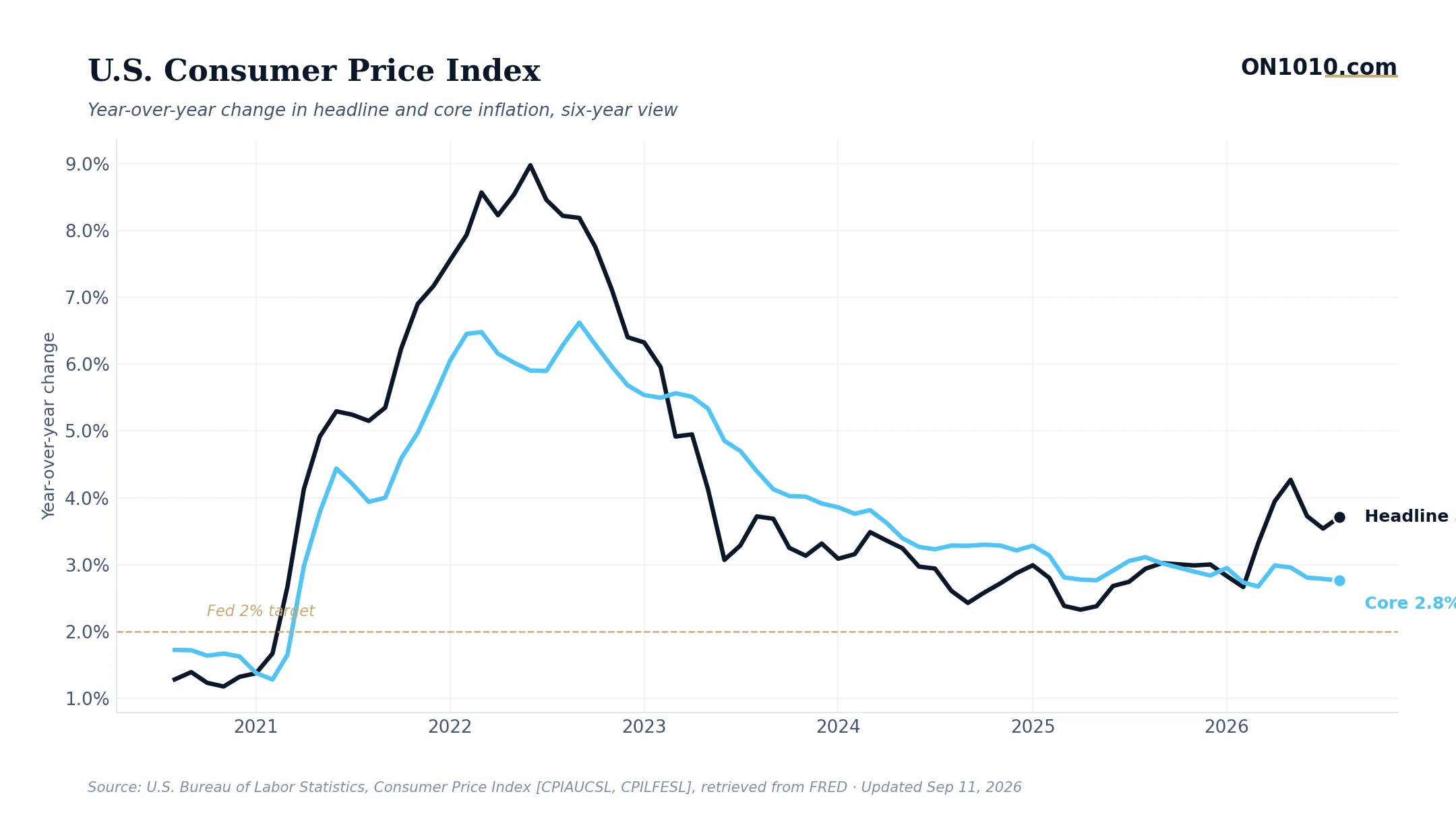
Consumer prices rose 0.4% in August, pushing the year-over-year rate to 3.05%. That monthly number is the hottest single-month print since May, and it lands at an awkward moment: the Fed needs inflation to keep falling, and it just moved the wrong direction.
Look at the trend data and a pattern emerges. From March through June, prices drifted mostly sideways. Then May jumped to 333.979, pulled back, and now August has pushed to a new cycle high at 334.131. The sideways drift was not a victory lap. Inflation stalled out above 3%, which is where it has been grinding for months. Historically, the last mile of disinflation is the hardest. Getting from 9% to 4% is relatively fast. Getting from 3% to 2% can take years, especially when services prices are sticky and wage growth is still running ahead of the Fed’s comfort zone.
Here is what makes this reading significant beyond the headline number. Inflation at 3.05% year-over-year sits higher than roughly nine of every ten months on record going back decades. Meanwhile, long-term interest rates are in the upper quarter of their historical range and, notably, just shifted from steady to rising. When inflation stays elevated and long rates are climbing, the real cost of capital goes up for businesses. That squeezes margins, which historically leads to tighter hiring and investment decisions down the road.
In past cycles, investors and business operators have watched closely for whether inflation re-accelerates after a stall. A second wave of price pressure, even a mild one, tends to extend the period of elevated rates and compress valuation multiples. Consumer sentiment is already near historic lows. The question worth tracking: if prices keep nudging higher while sentiment stays depressed, what does that do to the consumer spending that has been holding the economy together?
Bottom Line: Inflation did not break out, but it did not break down either. At 3.05% and rising month-over-month, the “last mile” problem is very much alive, and the cost of that stall is showing up in higher long-term rates.
Source: Federal Reserve Economic Data (FRED)
ON1010 Research is an independent publisher of economic education and is not a registered investment adviser, broker-dealer, or investment company. This content is for educational and informational purposes only and is not investment advice or a recommendation to buy, sell, or hold any security. Published under the publisher exemption recognized by Section 202(a)(11)(D) of the Investment Advisers Act of 1940 (Lowe v. SEC). Always consult a qualified financial professional before making any financial decision.
Free Research
The economy moves fast. We make sure you move faster.
Economic data, policy shifts, and market signals — delivered to your inbox.
Subscribe Free