
The Yield Curve Is Positive Again. History Says That’s When to Start Paying Attention.
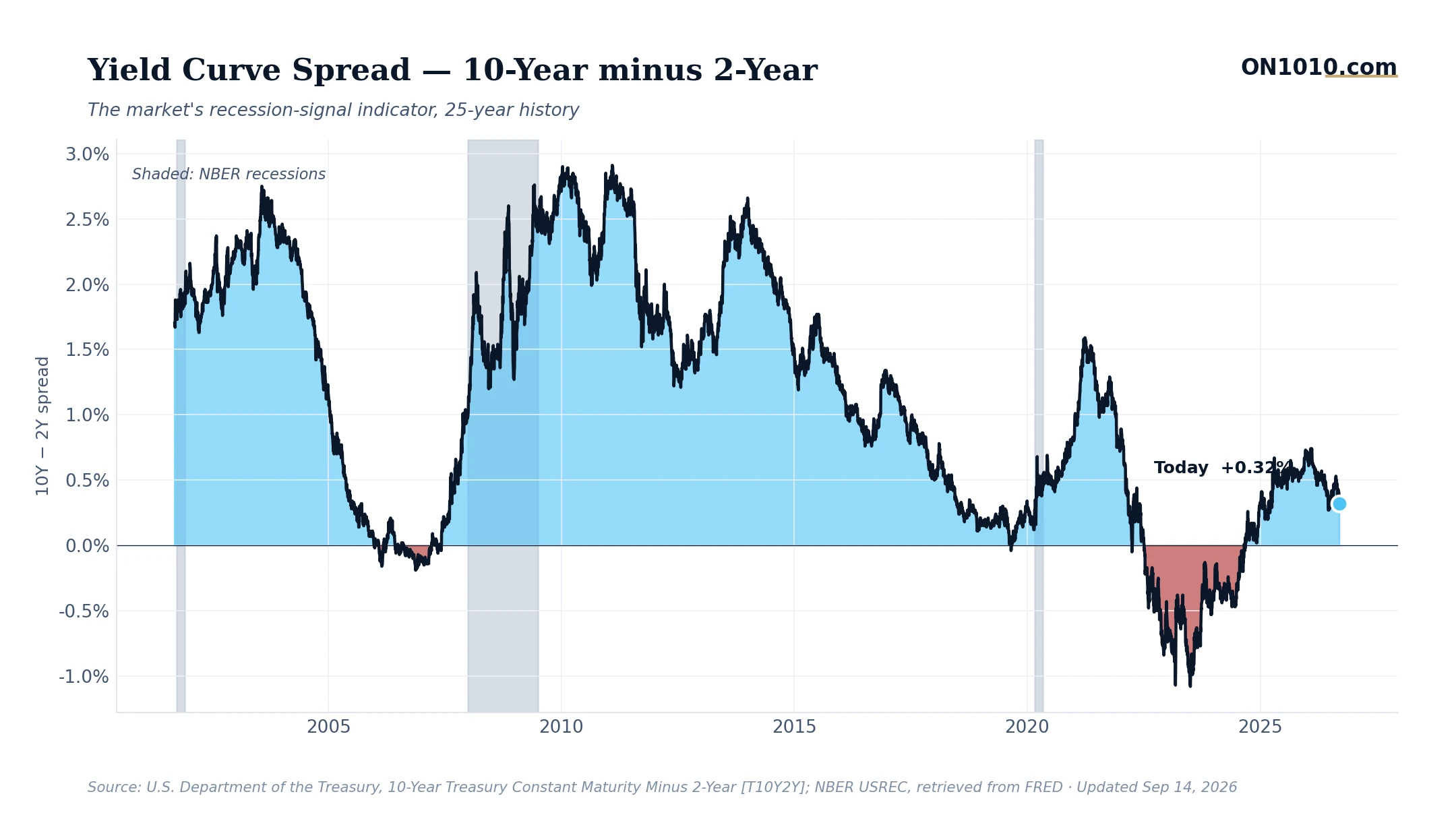
The 10-year/2-year Treasury spread sits at 0.32% as of September 14, down from 0.33% the day before and continuing a quiet slide from 0.41% just two weeks ago. The direction is the story here, not the absolute level.
Most people track the yield curve when it inverts. That’s backward. The real warning signal in past cycles has arrived during the re-steepening, the phase the curve is in right now.
Here’s the mechanism. An inverted curve (short rates above long rates) squeezes bank lending margins and slows credit creation. When the curve re-steepens after an inversion, it often means the Fed has started cutting, or the market expects cuts, because growth is slowing. The steepening looks like relief. But historically, that’s the moment the economic slowdown actually bites. The current gauge picture reinforces the tension: long-term interest rates remain in the upper quarter of their historical range, consumer sentiment is near a decade low, and the broader market trend shows weakening participation even as price levels hold up.
The spread moving from inversion back toward positive territory has, in past cycles, sometimes preceded the onset of recession rather than signaled its end. Historically, readings in the current zone for long-term interest rates have been followed by a new recession within 12 months roughly 19% of the time. That’s one-in-five odds. Worth knowing, not worth panicking over.
For business operators and capital allocators, the live question is whether the economy is in a soft landing or a slow-motion deceleration that hasn’t fully shown up in employment data yet. Credit spreads are tight, which suggests bond markets aren’t pricing serious stress. But the combination of high nominal rates, sliding curve steepness, and depressed consumer sentiment is a mix that rewards attention.
Bottom Line: The yield curve is doing exactly what it has done before several past downturns, steepening quietly while the headlines stay calm. The question worth watching is whether that calm holds or whether the bond market is already telling us something the equity market hasn’t priced yet.
Source: Federal Reserve Economic Data (FRED)
ON1010 Research is an independent publisher of economic education and is not a registered investment adviser, broker-dealer, or investment company. This content is for educational and informational purposes only and is not investment advice or a recommendation to buy, sell, or hold any security. Published under the publisher exemption recognized by Section 202(a)(11)(D) of the Investment Advisers Act of 1940 (Lowe v. SEC). Always consult a qualified financial professional before making any financial decision.
Free Research
The economy moves fast. We make sure you move faster.
Economic data, policy shifts, and market signals — delivered to your inbox.
Subscribe Free