
Economic Wire: Consumers hit by one-two punch of oil and rates from Iran wa
When the War Bill Arrives at the Kitchen Table
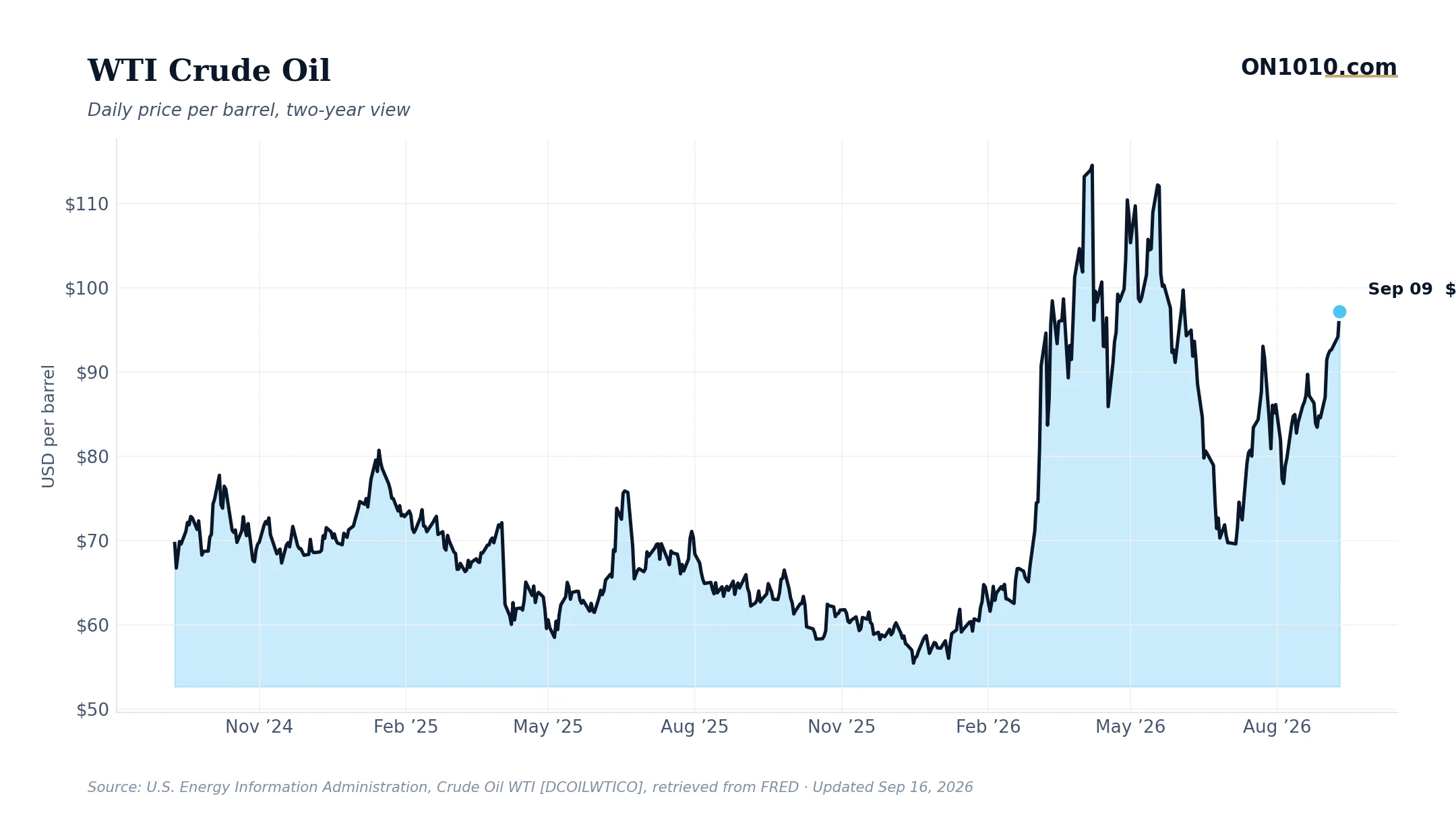
According to CNBC, rising oil prices and Treasury yields tied to the Iran conflict are adding roughly $1,700 per household to annual energy and borrowing costs, pushing consumers to lean harder on savings. The headline number is striking. The mechanism behind it is worth understanding.
Think of it as a tax that nobody voted on. When geopolitical risk spikes, oil prices rise, gasoline follows, and heating and electricity costs move with them. Simultaneously, Treasury yields climb as investors demand more compensation for uncertainty. The 10-year yield sat at 4.97% as of September 14, which is high by the standards of the past two decades. That rate is the anchor for mortgage rates, auto loans, and credit card pricing. When it rises, every dollar of new borrowing costs more, and every dollar spent on energy is a dollar not spent somewhere else.
Here is where it gets structurally interesting. Core inflation is already running hot relative to most of recorded economic history. The Federal Reserve’s hands are not entirely free. An oil-driven price surge complicates the Fed’s path because supply shocks are inflationary and deflationary at the same time: they raise prices while also draining household purchasing power, which can slow growth. The Fed cannot easily cut to support the consumer without risking re-accelerating the inflation it has spent years fighting.
Historically, investors and business operators have paid close attention to the spread between wage growth and this kind of dual cost squeeze, because when real purchasing power erodes faster than incomes can absorb, consumer spending eventually softens. Credit spreads remain tight for now, which suggests credit markets are not yet pricing in a broad deterioration. Consumer sentiment is already near historically weak levels, though past periods of similarly weak sentiment have not consistently preceded recessions. The question worth asking is how long households can bridge the gap with savings before spending patterns change.
Bottom Line: An energy and rate shock hitting simultaneously is not just a consumer inconvenience. It compresses household cash flow, complicates monetary policy, and puts corporate revenue forecasts at risk if spending softens.
Read more: CNBC Economy
ON1010 Research is an independent publisher of economic education and is not a registered investment adviser, broker-dealer, or investment company. This content is for educational and informational purposes only and is not investment advice or a recommendation to buy, sell, or hold any security. Published under the publisher exemption recognized by Section 202(a)(11)(D) of the Investment Advisers Act of 1940 (Lowe v. SEC). Always consult a qualified financial professional before making any financial decision.
Free Research
The economy moves fast. We make sure you move faster.
Economic data, policy shifts, and market signals — delivered to your inbox.
Subscribe Free