
THE Fed’s Rate Has Been Frozen at 3.63% for Six Straight Days.
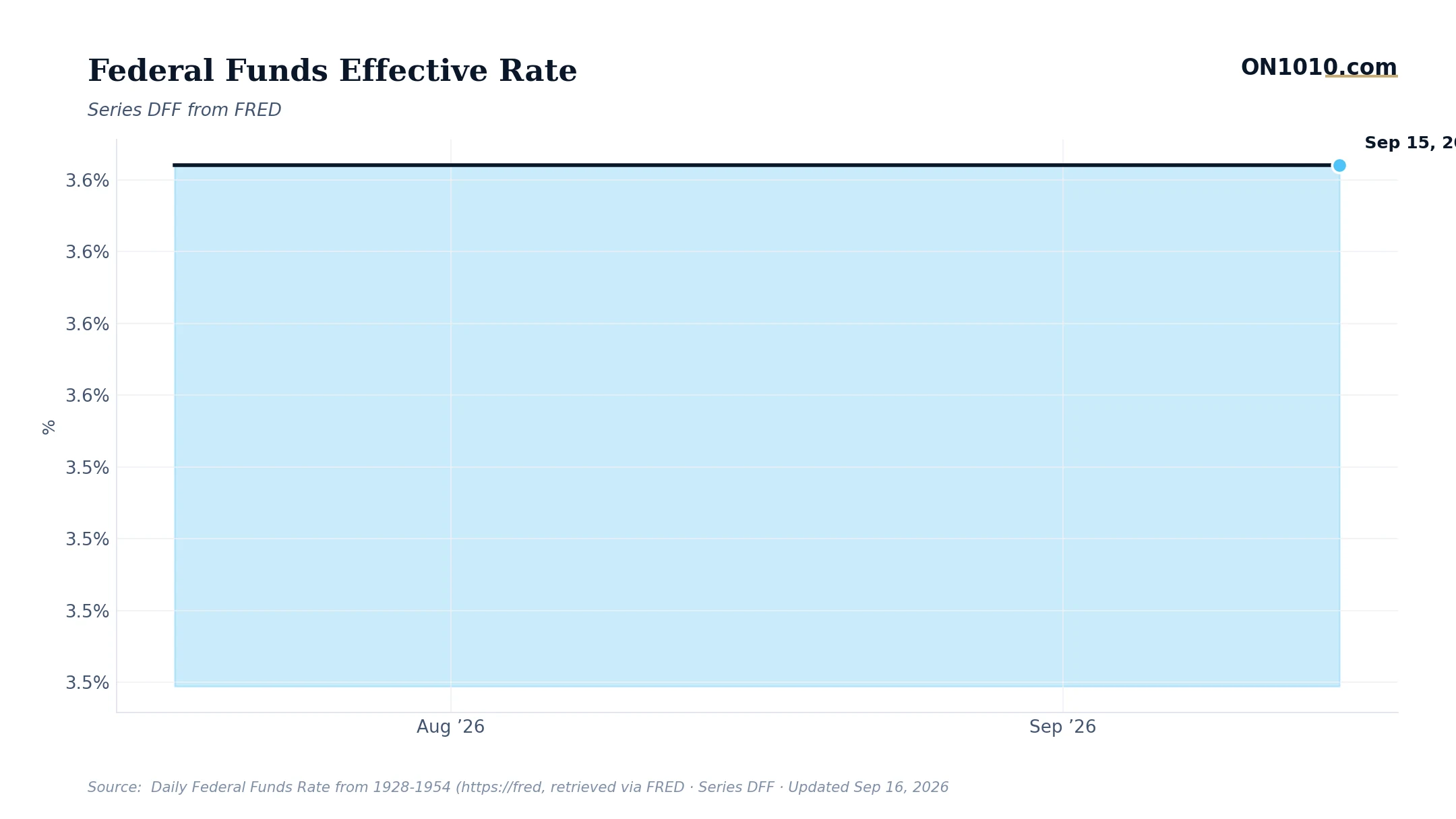
The effective federal funds rate has not moved a single basis point since September 10. Six consecutive readings at exactly 3.63%. The Fed said 3.63%, and the market is delivering 3.63%. When overnight lending markets track the target this precisely, it tells you something important: no stress, no scrambling, no distortion in the plumbing of the financial system.
That precision matters more than it sounds. The effective rate is where theory meets reality. The Fed sets a target range; banks actually lend to each other at the effective rate. When those two numbers drift apart, it usually signals something is off, either excess reserves are building up in odd places, or banks are paying a premium for overnight cash. Tight alignment like this reflects a well-functioning money market operating under conditions of ample bank reserves.
Zoom out and the picture gets more complex. Core inflation is running hot relative to most of the historical record, while long-term interest rates are sitting in their upper range historically and still rising. The Fed’s overnight rate is near its long-run midpoint. Credit spreads are tight, which the bond market tends to use as shorthand for calm. Yet consumer sentiment is historically weak and market participation is deteriorating. That combination, calm credit and anxious consumers, is worth watching. Historically, when long-term rates have been elevated like this, a new recession began within the following 12 months about 19% of the time. The base rate is not a forecast; it is context.
In past cycles, business operators and capital allocators have paid close attention to the gap between the overnight rate and inflation. At 3.63% against still-hot core inflation, the real policy rate is close to neutral at best. That raises a question worth sitting in on: is monetary policy actually doing the work of restraining price pressure, or has it quietly stepped aside?
Bottom Line: The effective rate is locked in, the machinery is humming, and the short end of the market is calm. The tension lives further out the yield curve, where long-term rates are elevated and the distance between monetary policy and inflation is narrower than it looks.
Source: Federal Reserve Economic Data (FRED)
ON1010 Research is an independent publisher of economic education and is not a registered investment adviser, broker-dealer, or investment company. This content is for educational and informational purposes only and is not investment advice or a recommendation to buy, sell, or hold any security. Published under the publisher exemption recognized by Section 202(a)(11)(D) of the Investment Advisers Act of 1940 (Lowe v. SEC). Always consult a qualified financial professional before making any financial decision.
Free Research
The economy moves fast. We make sure you move faster.
Economic data, policy shifts, and market signals — delivered to your inbox.
Subscribe Free