
The Job Market’s Cleanest Reading in Months. What Do We Do With It?
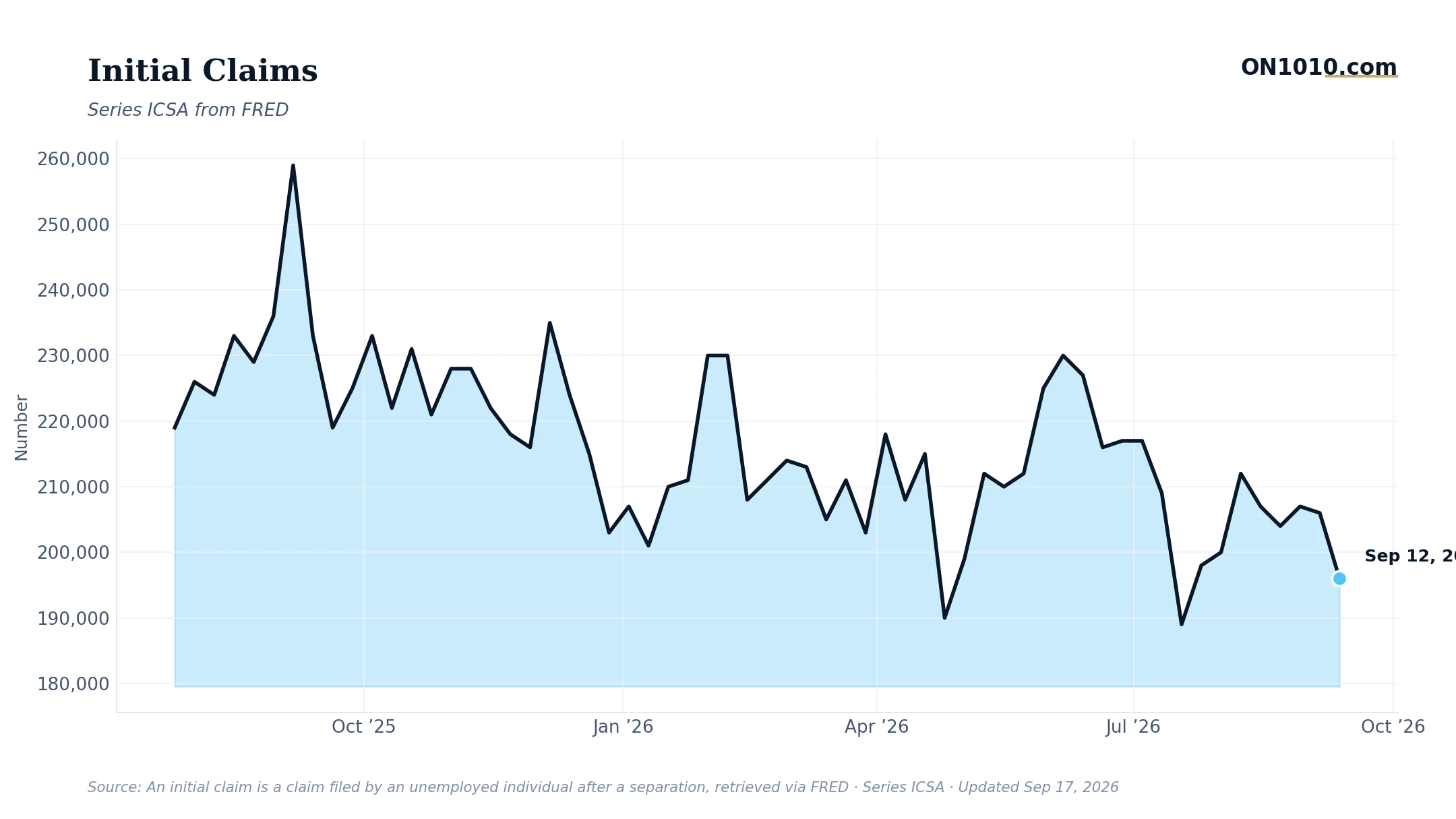
Initial jobless claims fell to 196,000 for the week ending September 12, down 10,000 from the prior week. To find a cleaner stretch of layoff data, you’d have to go back quite a while.
Here’s what makes this interesting: the trend has been moving steadily in one direction. Six weeks ago, claims were running above 212,000. Now they’re sitting at 196,000. That’s a consistent, methodical decline, and in labor market terms, 196,000 is historically very low. Employers are holding on to workers even as growth gauges sit near their historical midpoint and consumer sentiment remains near multi-decade lows.
The puzzle is the gap between how workers feel and how employers behave. Sentiment is historically weak, yet firing rates are historically low. One way to read that: businesses see enough margin stability to keep payrolls intact, even while households feel squeezed by still-elevated prices. Inflation, by our gauges, remains hotter than roughly nine of every ten months on record. That matters because strong headline employment in a high-inflation environment can still mean workers are falling behind in real purchasing power.
Historically, initial claims in this range have tended to precede continued labor market stability rather than rapid deterioration. The recession base rate from current growth and monetary policy readings is in the single digits, though long-term rates sitting in the upper quarter of their historical range carry a somewhat higher recession rate, around 19% over the following year, based on past data. Past patterns are not a guarantee of future outcomes, but they’re worth knowing.
The question for business operators and capital allocators is whether this labor market strength is broad or narrow. Low claims tell you firing is slow. They say nothing about hiring intentions, which is the signal that matters when margins start to compress.
Bottom Line: Layoffs are historically quiet, and that’s genuinely good news. The harder question is whether tight credit spreads and a slightly defensive market posture are telling us something about the next chapter that claims data can’t yet see.
Source: Federal Reserve Economic Data (FRED)
ON1010 Research is an independent publisher of economic education and is not a registered investment adviser, broker-dealer, or investment company. This content is for educational and informational purposes only and is not investment advice or a recommendation to buy, sell, or hold any security. Published under the publisher exemption recognized by Section 202(a)(11)(D) of the Investment Advisers Act of 1940 (Lowe v. SEC). Always consult a qualified financial professional before making any financial decision.
Free Research
The economy moves fast. We make sure you move faster.
Economic data, policy shifts, and market signals — delivered to your inbox.
Subscribe Free