
The Fed Just Raised Rates. Here’s What the Overnight Market Confirms.
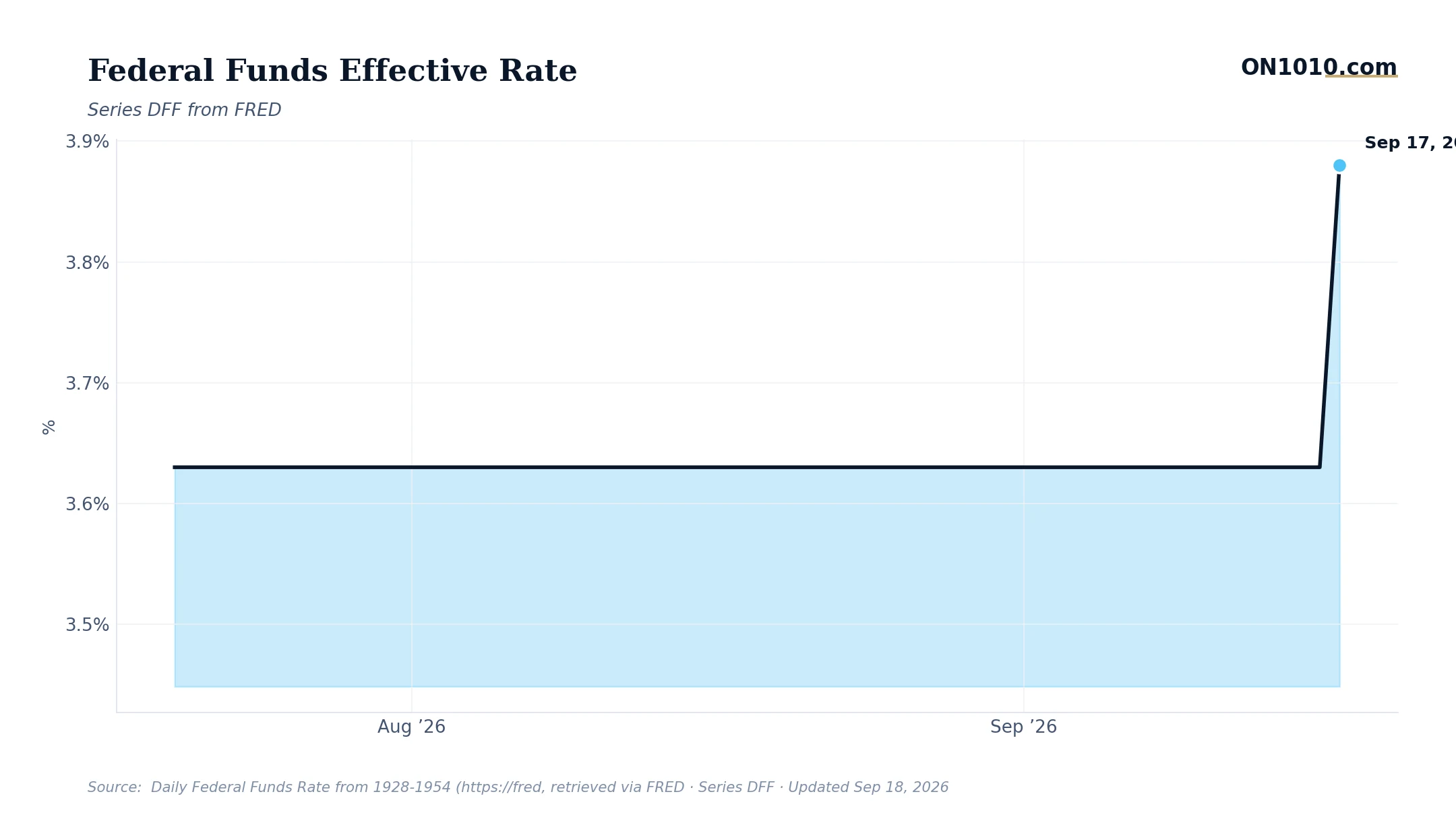
The effective federal funds rate jumped from 3.63% to 3.88% overnight on September 17, a clean 0.25 percentage point move that tells you the Fed’s September rate decision landed exactly as intended. When you see the overnight rate ratchet up in a single day like this after weeks of stability, a new Fed target has taken effect.
Wait. A rate hike? In this environment?
Read the data carefully. The Fed’s previous target was holding the funds rate around 3.63%. The new 3.88% reading reflects a move to a higher target band, not a market disruption. The overnight plumbing is working precisely as designed. Banks are pricing each other’s overnight loans at the new Fed rate, confirming the policy transmission mechanism is intact.
The more interesting context is what this rate sits against. Core inflation is still running hot relative to its historical norm. Long-term rates are in their upper historical range and rising. That puts policymakers in the position of raising the overnight rate while the bond market independently pushes long-term yields higher, tightening financial conditions from both ends simultaneously. Meanwhile, consumer sentiment is sitting near historic lows, and market trend and participation signals have been deteriorating. Credit spreads remain tight, which suggests corporate borrowers are not yet pricing in distress, but that’s a condition worth watching, not a guarantee.
Historically, when long-term interest rates have been elevated and monetary policy was tightening, a new recession began within the following 12 months about 19% of the time. That is one-in-five odds, not a coin flip, but nothing close to inevitable. Past performance does not predict future results.
For businesses weighing capital commitments or refinancing decisions, the relevant question is straightforward: how much more tightening can margins absorb before investment plans get repriced? That’s a question for each operator to answer with their own numbers, alongside a qualified financial professional.
Bottom Line: The overnight rate confirmed the Fed’s move with textbook precision. The harder question now is whether an economy carrying hot inflation, high long-term rates, and softening consumer sentiment can absorb tighter money without something breaking in the credit markets.
Source: Federal Reserve Economic Data (FRED), Series DFF
ON1010 Research is an independent publisher of economic education and is not a registered investment adviser, broker-dealer, or investment company. This content is for educational and informational purposes only and is not investment advice or a recommendation to buy, sell, or hold any security. Published under the publisher exemption recognized by Section 202(a)(11)(D) of the Investment Advisers Act of 1940 (Lowe v. SEC). Always consult a qualified financial professional before making any financial decision.
Correction (September 25, 2026): An earlier headline said the Fed cut rates. The FOMC raised the target range by 1/4 percentage point to 3.75%-4.00% on September 16, 2026, effective September 17.
Free Research
The economy moves fast. We make sure you move faster.
Economic data, policy shifts, and market signals — delivered to your inbox.
Subscribe Free