
The 10-Year Yield Is Parked at 5.1%. History Says That’s Not Normal.
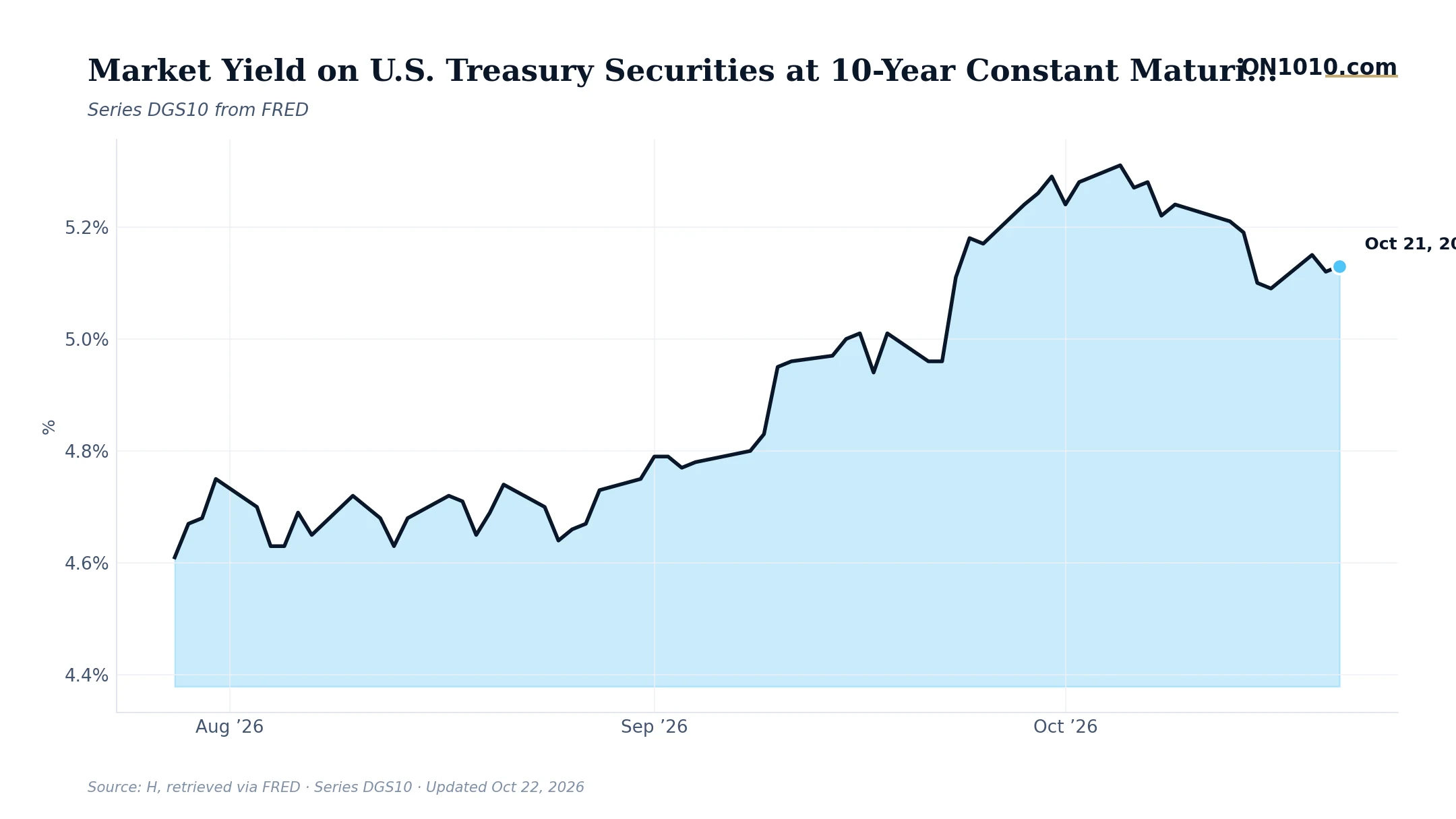
The 10-year Treasury yield ticked up to 5.13% on October 21, holding a tight range between 5.09% and 5.19% for the past week. The one-day move is a rounding error. The level itself is the story.
Long-term rates at this level are historically elevated, sitting in the upper quarter of their entire recorded range. They’ve been here before, but not often. The full macro backdrop makes it harder to dismiss as temporary: core inflation is still running hot relative to history, monetary policy remains restrictive (the real policy rate is genuinely positive, which was rare for most of the past 15 years), and credit spreads are now widening, a signal that lenders are demanding more compensation for risk. When rates, real policy tightness, and credit stress move in the same direction at the same time, the pressure on borrowing costs compounds across the economy.
The sector rotation in equities is worth noting here. Consumer staples and health care are beating the broader market by more than 5 percentage points over the past month, while technology and communication services are lagging. When bond yields stay elevated and money rotates toward defensive sectors simultaneously, it typically reflects institutional investors pricing in slower growth or tighter financial conditions ahead, even when the equity index itself remains above its key moving averages.
In past cycles, when long-term rates held in this zone, businesses faced a real choice: lock in higher financing costs now or wait, hoping rates drift lower. Historically, this type of sustained elevation in the 10-year has compressed valuation multiples on equities, raised the hurdle rate for new capital investment, and shifted the math on commercial real estate refinancing. From similar rate readings, a new recession began within 12 months about 13% of the time. That is not a high probability, but it is not zero, and it is worth knowing the base rate.
Bottom Line: The 10-year yield barely moved today, but the combination of elevated long-term rates, widening credit spreads, and defensive sector rotation is assembling a picture that equity prices alone are not showing. The question is whether rates stay here long enough to matter, or whether something breaks first.
Source: Federal Reserve Economic Data (FRED)
ON1010 Research is an independent publisher of economic education and is not a registered investment adviser, broker-dealer, or investment company. This content is for educational and informational purposes only and is not investment advice or a recommendation to buy, sell, or hold any security. Published under the publisher exemption recognized by Section 202(a)(11)(D) of the Investment Advisers Act of 1940 (Lowe v. SEC). Always consult a qualified financial professional before making any financial decision.
Free Research
The economy moves fast. We make sure you move faster.
Economic data, policy shifts, and market signals — delivered to your inbox.
Subscribe Free