
The Real Tariff Story Isn’t the Exemptions. It’s What They Reveal About How Trade Policy Actually Works.
According to CNBC, Senator Susan Collins announced Friday that the U.S. will issue tariff exemptions on several categories of Canadian imports, a development framed politically around Maine’s Senate race but carrying economic implications that extend well beyond one state’s ballot box.
Here is what the announcement actually demonstrates: blanket tariffs are a starting position, not a final policy. The exemption process is where the real economic negotiation happens, and it almost always does. When tariffs go on, lobbyists, senators, and industry groups immediately begin cataloging which inputs are irreplaceable, which supply chains would break, and which consumers would get hurt fastest. The exemptions follow. This is the incentive structure working exactly as designed, or, depending on your view, exactly as it was always going to.
For businesses, especially those in manufacturing and natural resources, the practical lesson from every tariff cycle going back decades is that the headline rate and the effective rate often diverge significantly once exemptions are carved out. That gap is where capital allocation decisions get made. A firm that assumed the full tariff rate and restructured its supply chain may have moved too fast. A firm that waited to see how exemptions shook out may have avoided a costly mistake. Neither approach is obviously right in real time, which is why tariff uncertainty compresses business investment even when the final policy turns out to be moderate.
Historically, investors have watched tariff exemption announcements as signals about which industries have political cover and which don’t. The industries that win exemptions tend to be those with concentrated domestic supply chains, significant employment in swing states, or input costs that would visibly raise consumer prices. The pattern is worth understanding because it shapes where trade policy friction ultimately lands across the economy.
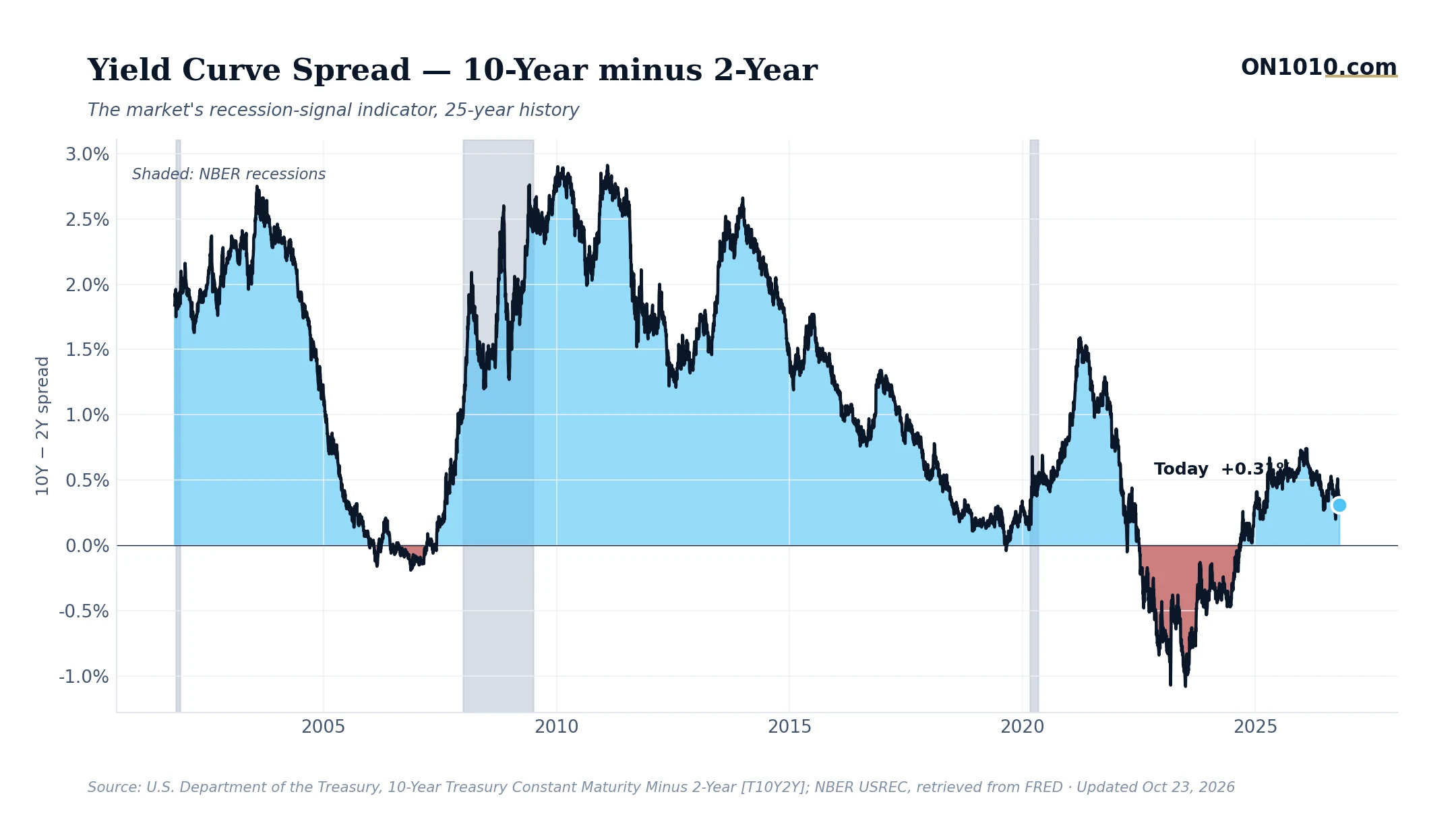
The backdrop here is not benign. Credit spreads remain wide, long-term interest rates are near historical highs, and sector rotation data shows money moving decisively into defensives. Consumers are already cautious. Adding supply chain uncertainty to that mix creates friction for business investment at a moment when margins need stability more than disruption.
Bottom Line: Tariff exemptions are not a reversal. They are confirmation that the costs of broad tariffs always land somewhere specific, and the political system responds to wherever the pain is loudest.
Read more: CNBC Top News
ON1010 Research is an independent publisher of economic education and is not a registered investment adviser, broker-dealer, or investment company. This content is for educational and informational purposes only and is not investment advice or a recommendation to buy, sell, or hold any security. Published under the publisher exemption recognized by Section 202(a)(11)(D) of the Investment Advisers Act of 1940 (Lowe v. SEC). Always consult a qualified financial professional before making any financial decision.
Free Research
The economy moves fast. We make sure you move faster.
Economic data, policy shifts, and market signals — delivered to your inbox.
Subscribe Free