
When Bonds Rally While Oil Surges, Something Interesting Is Happening
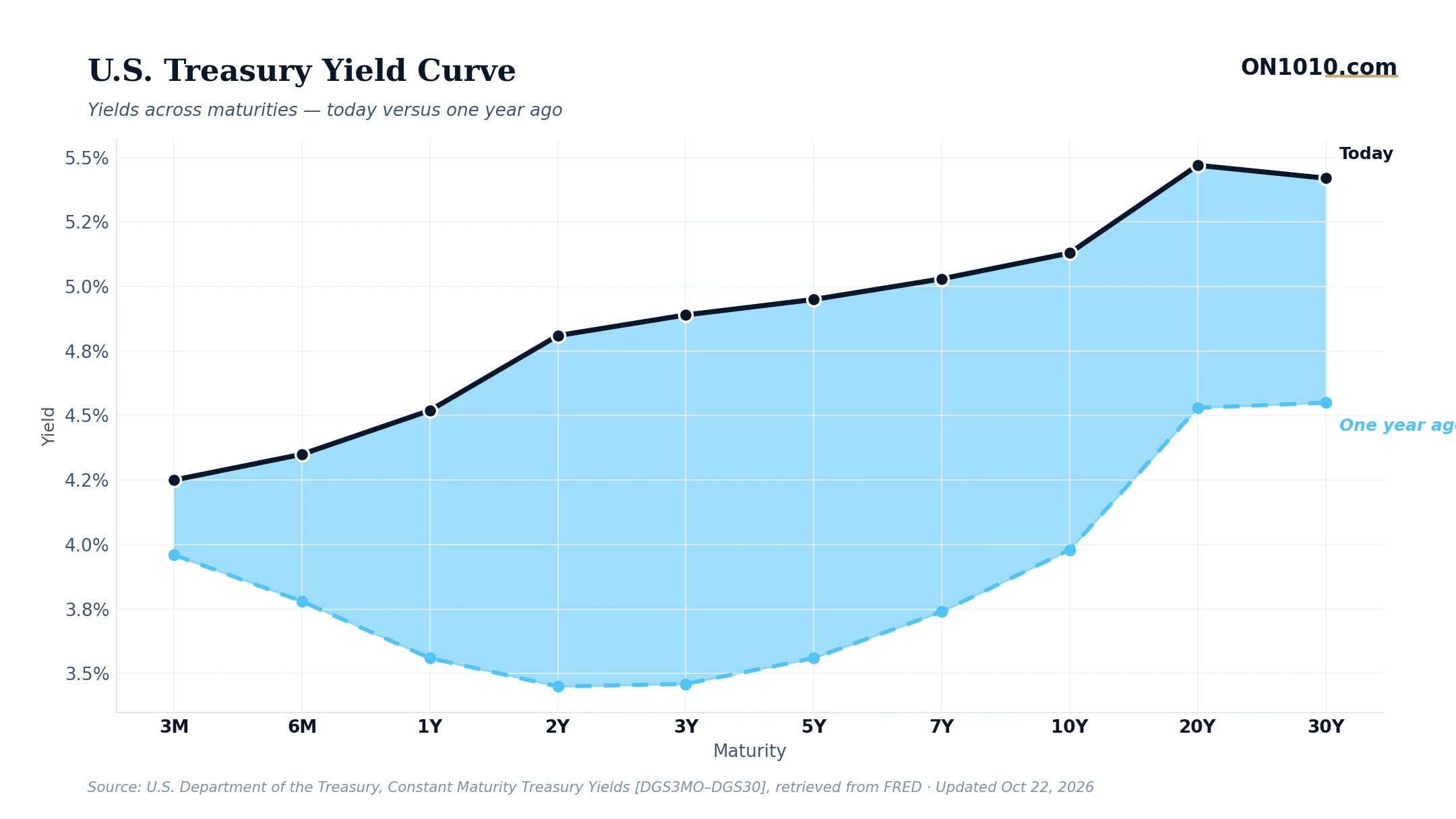
According to CNBC, the 10-year Treasury yield fell sharply on Thursday, dropping below 5% to its lowest level in nearly a month, as stocks sold off and oil prices surged simultaneously. The headline makes it sound like a routine flight to safety. The more interesting story is what the bond market is quietly signaling about where this economy might be heading.
Start with the backdrop. As recently as October 21, the 10-year yield sat at 5.13%, which by any historical measure is elevated. Long-term interest rates are currently sitting in the upper quarter of their historical range, a level that has historically coincided with meaningfully tighter financial conditions for businesses and consumers alike. When yields move that high, every dollar of debt becomes more expensive to carry, and the math on new capital projects gets harder to justify.
Thursday’s drop cuts against the oil story, and that tension is worth paying attention to. Rising oil prices normally feed inflation expectations, which typically push bond yields higher as investors demand more compensation for the erosion of their returns. The fact that yields fell anyway suggests bond investors are weighing something else more heavily: the possibility that slowing growth and tightening financial conditions will do more damage to the economy than oil prices do to inflation. Credit spreads have also been widening recently, a signal that markets are pricing in more stress in the real economy. Consumer sentiment is near its historical floor. Defensive sectors like consumer staples and health care are outperforming the market by wide margins, while technology and communication services are lagging badly. These pieces fit together.
Historically, investors have used the bond market as a forward-looking gauge precisely because it reprices faster than the economy moves. When yields fall during equity selloffs accompanied by rising oil, it has often meant the market is less worried about inflation and more worried about demand. The question this raises: if growth expectations are softening while monetary policy remains historically restrictive, what does that mean for corporate margins, which lead hiring and investment decisions by months?
Bottom Line: The bond market may be telling a different story than the oil market, and when those two disagree, history suggests bonds are worth taking seriously.
Read more: CNBC Top News
ON1010 Research is an independent publisher of economic education and is not a registered investment adviser, broker-dealer, or investment company. This content is for educational and informational purposes only and is not investment advice or a recommendation to buy, sell, or hold any security. Published under the publisher exemption recognized by Section 202(a)(11)(D) of the Investment Advisers Act of 1940 (Lowe v. SEC). Always consult a qualified financial professional before making any financial decision.
Free Research
The economy moves fast. We make sure you move faster.
Economic data, policy shifts, and market signals — delivered to your inbox.
Subscribe Free