
The 10-Year Yield Just Dipped Below 5%. Don’t Celebrate Yet.
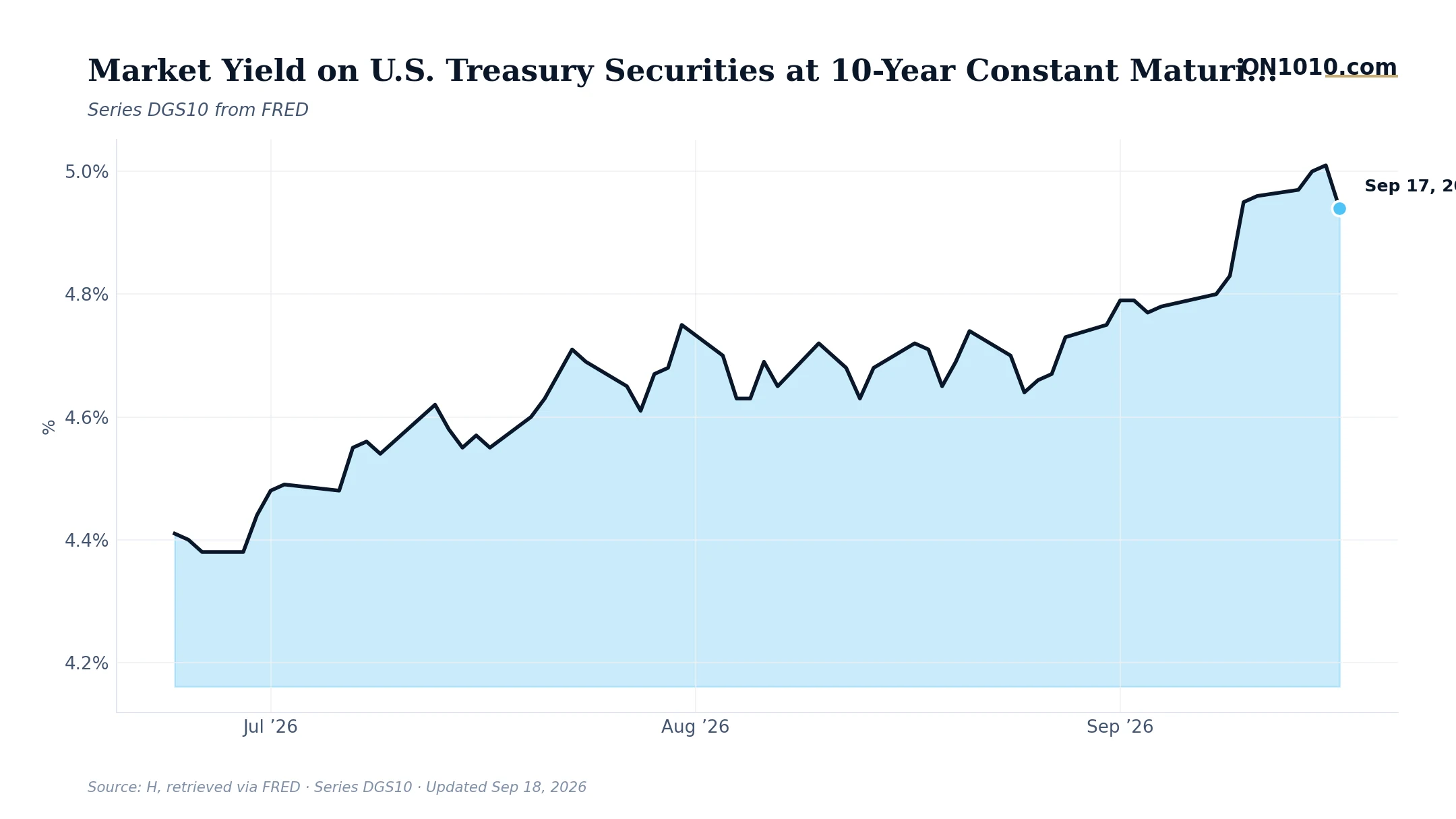
The 10-year Treasury yield fell to 4.94% on September 17, pulling back from 5.01% the day before. One basis point crossing rarely makes headlines, but this one does: 5% has been a psychological line in the sand for bond markets, and the 10-year has been hugging it all week.
Look at the recent trend and what you see is a yield that refuses to move far from 5%. It touched 4.94% twice now, bounced to 5.01%, and keeps snapping back to the same range. That’s not a breakout. That’s a range. And a rate that stays this high for this long is a fundamentally different problem than one that spikes and retreats.
Here’s why the persistence matters: long-term rates in the upper quarter of their historical range are doing something specific. They are repricing the cost of capital across every corner of the economy. Corporate debt rolls over at higher rates. Mortgage payments stay elevated. Stock valuations face more competition from a “risk-free” 4.94% Treasury. Meanwhile, core inflation is running hotter than nine out of every ten months on record, which means the Fed has little political cover to push rates meaningfully lower anytime soon. Credit spreads are tight, which tells you corporate bond markets aren’t panicking. But the equity market’s trend and participation signals have been weakening, which is worth watching alongside yields.
Historically, when the 10-year has held in this range for an extended period, it has tended to slow capital investment decisions. Business borrowing costs rise. Project hurdle rates go up. The math on expansion gets harder. In past cycles, investors and operators have watched how long elevated long-term rates persist alongside tight credit spreads to judge whether the rate pressure is being absorbed or building.
Bottom Line: The yield dipping below 5% is a footnote. The real story is that it keeps coming back there, and an economy carrying high inflation and elevated long-term rates at the same time is one where the cost of waiting is low and the cost of borrowing is high. What does that incentive structure eventually do to business investment?
Source: Federal Reserve Economic Data (FRED)
ON1010 Research is an independent publisher of economic education and is not a registered investment adviser, broker-dealer, or investment company. This content is for educational and informational purposes only and is not investment advice or a recommendation to buy, sell, or hold any security. Published under the publisher exemption recognized by Section 202(a)(11)(D) of the Investment Advisers Act of 1940 (Lowe v. SEC). Always consult a qualified financial professional before making any financial decision.
Free Research
The economy moves fast. We make sure you move faster.
Economic data, policy shifts, and market signals — delivered to your inbox.
Subscribe Free