
The Bond Market’s Inflation Expectations Have Barely Moved. Here’s Why That’s Worth Watching.
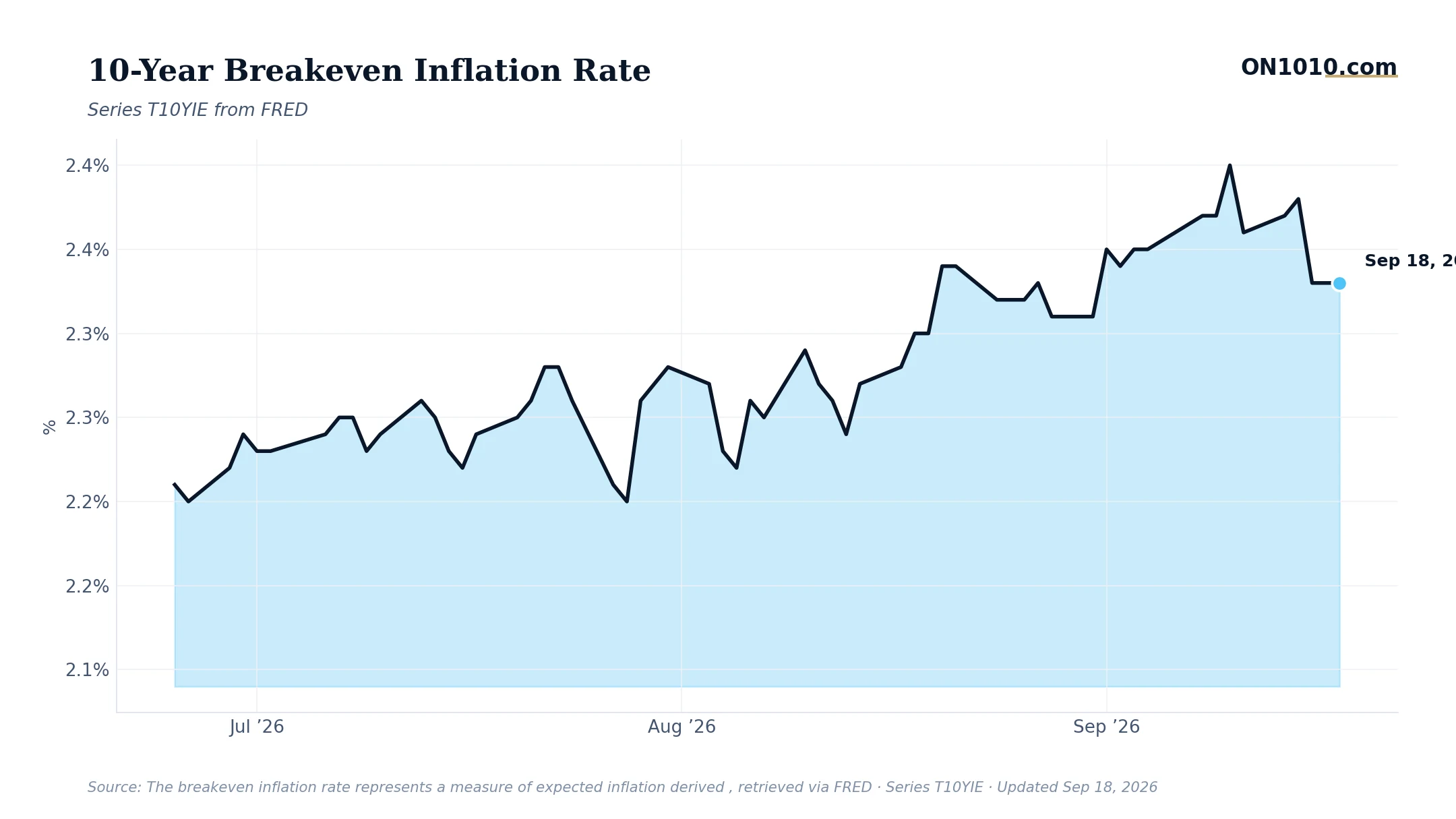
The 10-year breakeven inflation rate held at 2.33% for the third consecutive day, capping a week that saw it drift down from 2.38% on September 14. No drama in the number itself. The interesting part is what it means that bond market investors are collectively forecasting inflation barely above the Fed’s 2% target, while core inflation is running hot by historical standards.
The breakeven rate is essentially the bond market’s bet. It’s the difference between what a regular 10-year Treasury yields and what an inflation-protected Treasury (TIPS) yields. When investors expect more inflation, they demand more compensation, and the breakeven rises. At 2.33%, the market is signaling mild confidence that the inflation surge of recent years is largely behind us, even as the underlying gauges say core inflation remains high compared to most of the past few decades.
That’s a tension worth understanding. Consumer sentiment is weak by historical measures, credit spreads are tight, and long-term interest rates sit in the upper quarter of their historical range. These don’t all point the same direction. Weak sentiment can suppress demand and cool prices. Tight credit spreads suggest investors aren’t worried about corporate defaults. Elevated long-term rates reflect higher borrowing costs throughout the economy, which puts pressure on business margins and investment decisions.
Historically, when breakeven inflation settled in the 2.25% to 2.50% range after a period of elevated inflation, it often signaled that bond investors believed the disinflationary work was mostly done. In past cycles, capital allocators have used this kind of reading to think about the duration risk on their balance sheets, since the gap between nominal rates and inflation expectations tells you something about where real borrowing costs actually sit. Past patterns are not guarantees of future outcomes, and anyone making significant capital or financing decisions should factor in their own situation with a qualified financial professional.
Bottom Line: The breakeven is calm at 2.33%, but calm and resolved are two different things. The question worth tracking is whether this stability holds if core inflation data stays elevated and long-term rates keep pushing higher.
Source: Federal Reserve Economic Data (FRED)
ON1010 Research is an independent publisher of economic education and is not a registered investment adviser, broker-dealer, or investment company. This content is for educational and informational purposes only and is not investment advice or a recommendation to buy, sell, or hold any security. Published under the publisher exemption recognized by Section 202(a)(11)(D) of the Investment Advisers Act of 1940 (Lowe v. SEC). Always consult a qualified financial professional before making any financial decision.
Free Research
The economy moves fast. We make sure you move faster.
Economic data, policy shifts, and market signals — delivered to your inbox.
Subscribe Free