
The 2-Year Treasury Is Stuck. That Tells You Something.
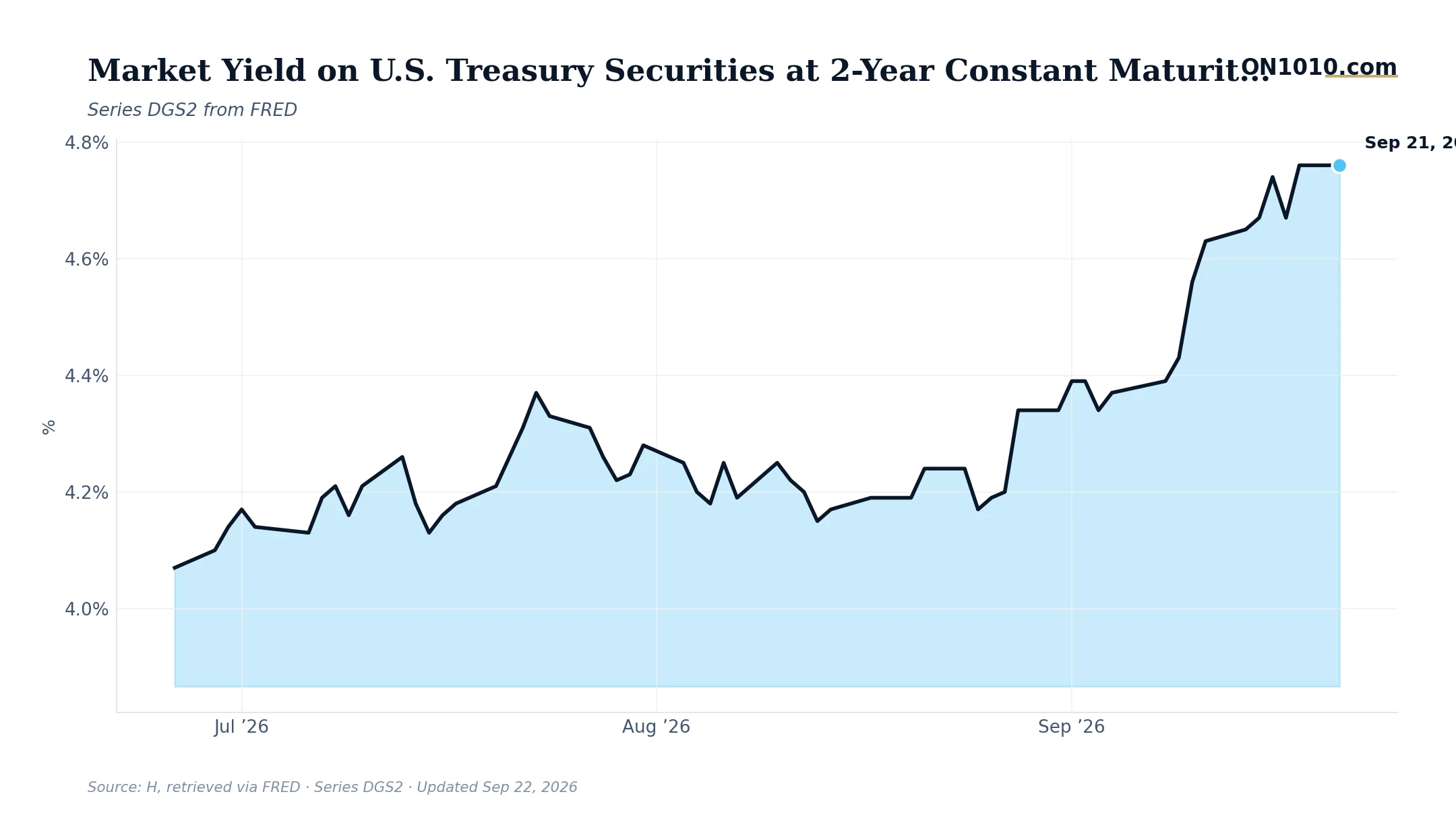
The 2-year Treasury yield has barely moved, closing at 4.76% on both Thursday and Friday after a brief dip to 4.65% earlier in the week. That’s a tight range, and in bond markets, stillness is its own kind of signal.
The 2-year yield is essentially the bond market’s forecast for Fed policy over the next 24 months. When it moves sharply, traders are repricing their expectations for rate cuts or hikes. When it parks itself and refuses to budge, the market is saying: we don’t see a clear catalyst to change our minds. Right now, the rate cut story is stalled.
That context matters. Core inflation is running well above its long-run historical norm, and the Fed’s benchmark rate sits close to where it’s been for months. The spread between where rates are and where inflation is running gives the central bank very little room to celebrate. Meanwhile, long-term interest rates remain elevated by historical standards, and conditions in that zone have historically been followed by a new recession within a year about 19% of the time. Worth knowing, not worth panicking over.
The tension in the broader picture is real. Credit spreads are remarkably tight, meaning the bond market’s credit side is pricing near-calm conditions. But consumer sentiment remains historically weak, and equity market participation is showing early signs of deterioration even as the index itself holds above its key moving averages. The pieces don’t all point the same direction.
Historically, when the 2-year yield plateaus at elevated levels while rate cut expectations fade, businesses that were counting on cheaper borrowing costs have had to recalibrate their planning timelines. Capital allocation decisions, refinancing strategies, and project hurdle rates all shift when the “rates will come down soon” assumption quietly expires.
Bottom Line: The 2-year yield isn’t screaming, but its silence may be the loudest message of the week. The bond market appears to have given up waiting for a near-term catalyst to push rates lower. The question for anyone making multi-year capital commitments right now: what does your plan look like if rates stay in this neighborhood through 2027?
Source: Federal Reserve Economic Data (FRED)
ON1010 Research is an independent publisher of economic education and is not a registered investment adviser, broker-dealer, or investment company. This content is for educational and informational purposes only and is not investment advice or a recommendation to buy, sell, or hold any security. Published under the publisher exemption recognized by Section 202(a)(11)(D) of the Investment Advisers Act of 1940 (Lowe v. SEC). Always consult a qualified financial professional before making any financial decision.
Free Research
The economy moves fast. We make sure you move faster.
Economic data, policy shifts, and market signals — delivered to your inbox.
Subscribe Free