
The Yield Curve Is Positive Again. That’s the Good News. Here’s the Complicated Part.
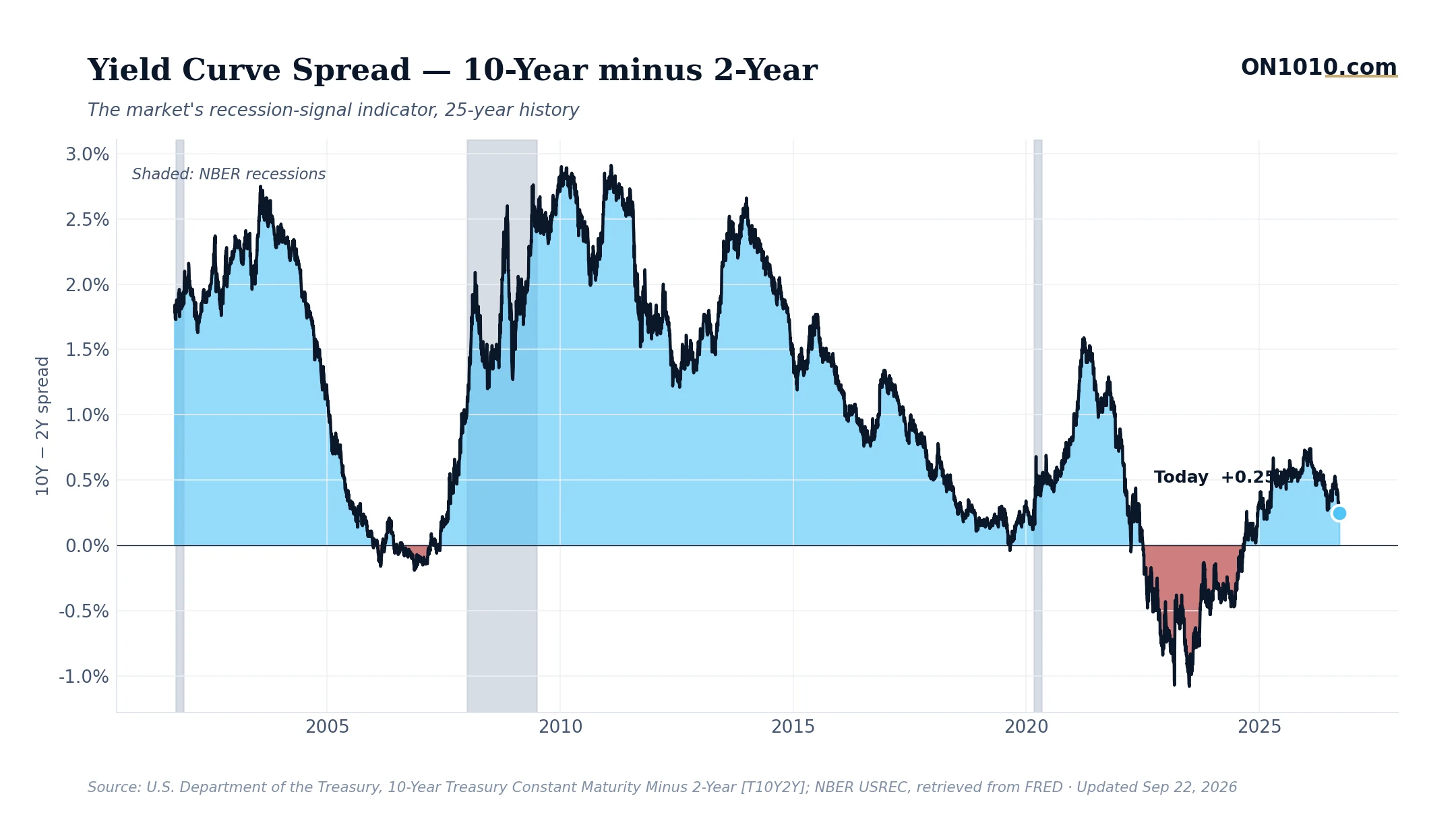
The gap between 10-year and 2-year Treasury yields widened to 0.25% on September 22, up from 0.20% the day before. After spending much of the past two years deeply inverted, the curve has now been positive for several months and is grinding slowly steeper.
The direction is right. The margin for error is razor thin.
The Bigger Picture
A 0.25% spread sounds like progress, and technically it is. An inverted curve means short-term rates are higher than long-term rates, which historically signaled that markets expected the Fed to cut rates aggressively because growth was about to slow. The fact that the curve has un-inverted suggests those fears have eased. But context matters here: long-term rates remain high by historical standards, core inflation is still running hot relative to its own history, and the spread has been drifting in a narrow band between 0.20% and 0.33% for the past week. This is a curve that has normalized in name more than in character.
Why It Matters
Historically, the re-steepening of the yield curve after a deep inversion has come in two very different flavors. In some past cycles, it reflected genuine economic resilience, longer-term confidence returning as the Fed’s work neared completion. In others, it marked the moment when short-term rates fell sharply because growth was already deteriorating. The curve alone cannot tell you which story is playing out. In past cycles, capital allocators have watched credit spreads, corporate margins, and employment trends alongside the yield curve to triangulate which version of “steepening” they were actually living through. Credit spreads today are historically tight, which points toward the constructive interpretation. Consumer sentiment, however, remains historically weak, which complicates it.
Bottom Line: The yield curve returning to positive territory removes one warning flag from the board, but a 0.25% spread with inflation still running high and long-term rates elevated leaves very little cushion if the economy hits an unexpected bump. The question worth asking: is the curve steepening because confidence is growing, or because short-term rate expectations are quietly shifting?
Source: Federal Reserve Economic Data (FRED)
ON1010 Research is an independent publisher of economic education and is not a registered investment adviser, broker-dealer, or investment company. This content is for educational and informational purposes only and is not investment advice or a recommendation to buy, sell, or hold any security. Published under the publisher exemption recognized by Section 202(a)(11)(D) of the Investment Advisers Act of 1940 (Lowe v. SEC). Always consult a qualified financial professional before making any financial decision.
Free Research
The economy moves fast. We make sure you move faster.
Economic data, policy shifts, and market signals — delivered to your inbox.
Subscribe Free