
When the Bond Market Talks, Everything Else Has to Listen
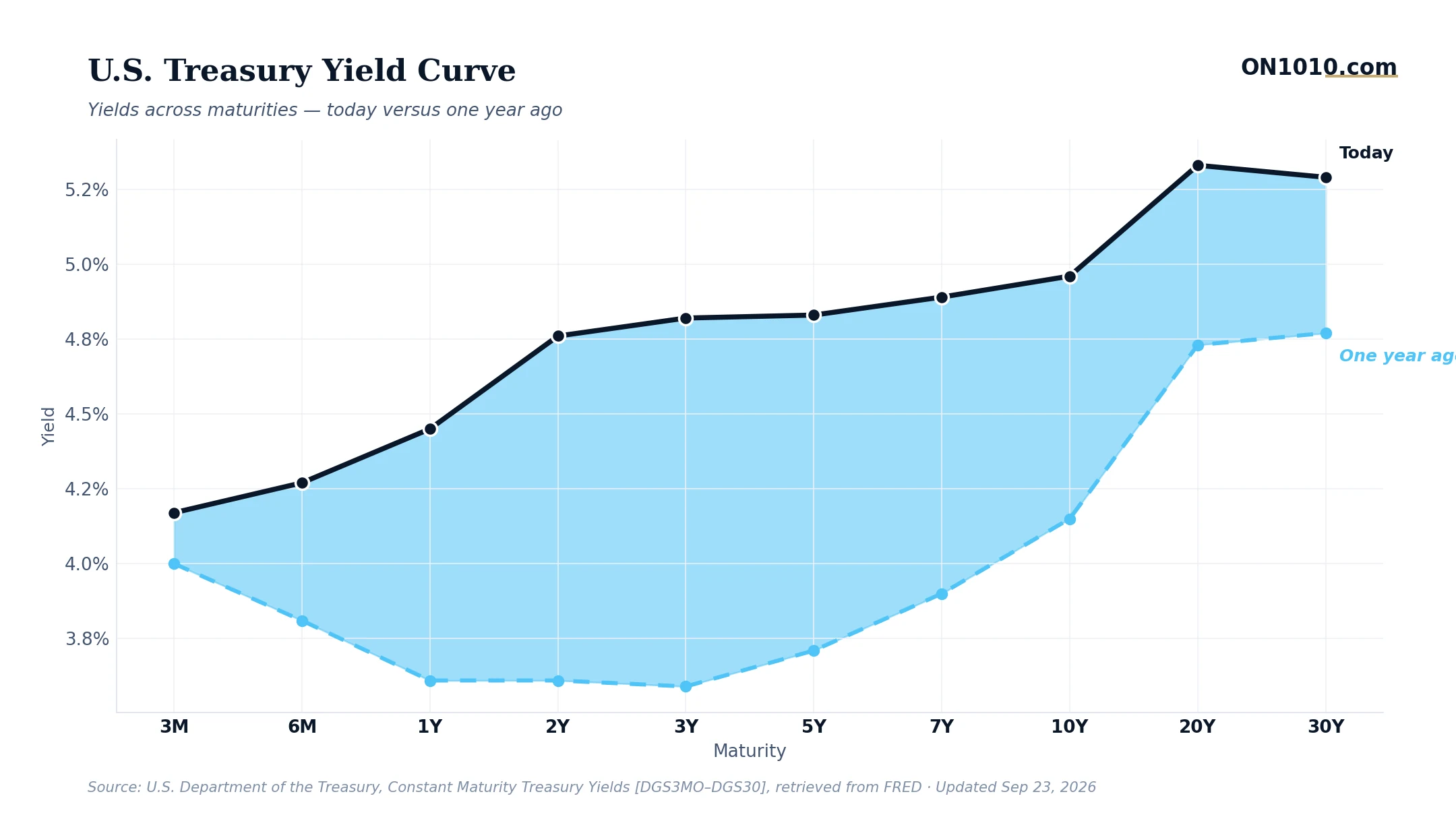
According to CNBC, government borrowing costs jumped sharply Wednesday as the 10-year Treasury yield pushed to 4.96%, the product of several converging pressures. The headline number is striking enough. The more important question is what happens downstream.
Treasury yields are the foundation everything else is priced on. Mortgages, corporate debt, auto loans, commercial real estate refinancing, all of them float above the 10-year like a building on a foundation. When that foundation rises, the cost of doing business rises with it. Businesses carrying floating-rate debt feel it immediately. Those planning new capital investment run the numbers and find fewer projects that pencil out. That is how a move in bond yields quietly compresses margins before it ever shows up in an earnings report.
Here is the wrinkle worth paying attention to: credit spreads remain historically tight, meaning the corporate bond market is not pricing in stress even as the underlying risk-free rate climbs. The bond market is sending two signals simultaneously, Treasuries say rates are high, credit spreads say companies are fine. Those two things cannot coexist indefinitely. Either growth stays strong enough to justify both, or one of them has to give.
Inflation is still running hot by historical standards, which limits how quickly the Fed can respond. The federal funds rate target sits where it does precisely because the Fed cannot cut until it is confident inflation is beaten. That leaves the economy absorbing elevated long-term rates with no relief valve clearly in sight.
Historically, when long-term rates have run this high relative to their own history, investors and business operators have focused on two things: who needs to refinance, and when. Debt that was locked in at lower rates carries no immediate pain. Debt coming due in the next 12 to 24 months faces a different math entirely. That refinancing wall is the question worth mapping carefully.
Bottom Line: A 4.96% 10-year yield is a blunt instrument that reprices risk across the entire economy. The places to watch are the balance sheets with short maturities and the capital plans that suddenly need a higher return to justify themselves.
Read more: CNBC Economy
ON1010 Research is an independent publisher of economic education and is not a registered investment adviser, broker-dealer, or investment company. This content is for educational and informational purposes only and is not investment advice or a recommendation to buy, sell, or hold any security. Published under the publisher exemption recognized by Section 202(a)(11)(D) of the Investment Advisers Act of 1940 (Lowe v. SEC). Always consult a qualified financial professional before making any financial decision.
Free Research
The economy moves fast. We make sure you move faster.
Economic data, policy shifts, and market signals — delivered to your inbox.
Subscribe Free