
Bond Markets Think Inflation Is Solved. Are They Right?
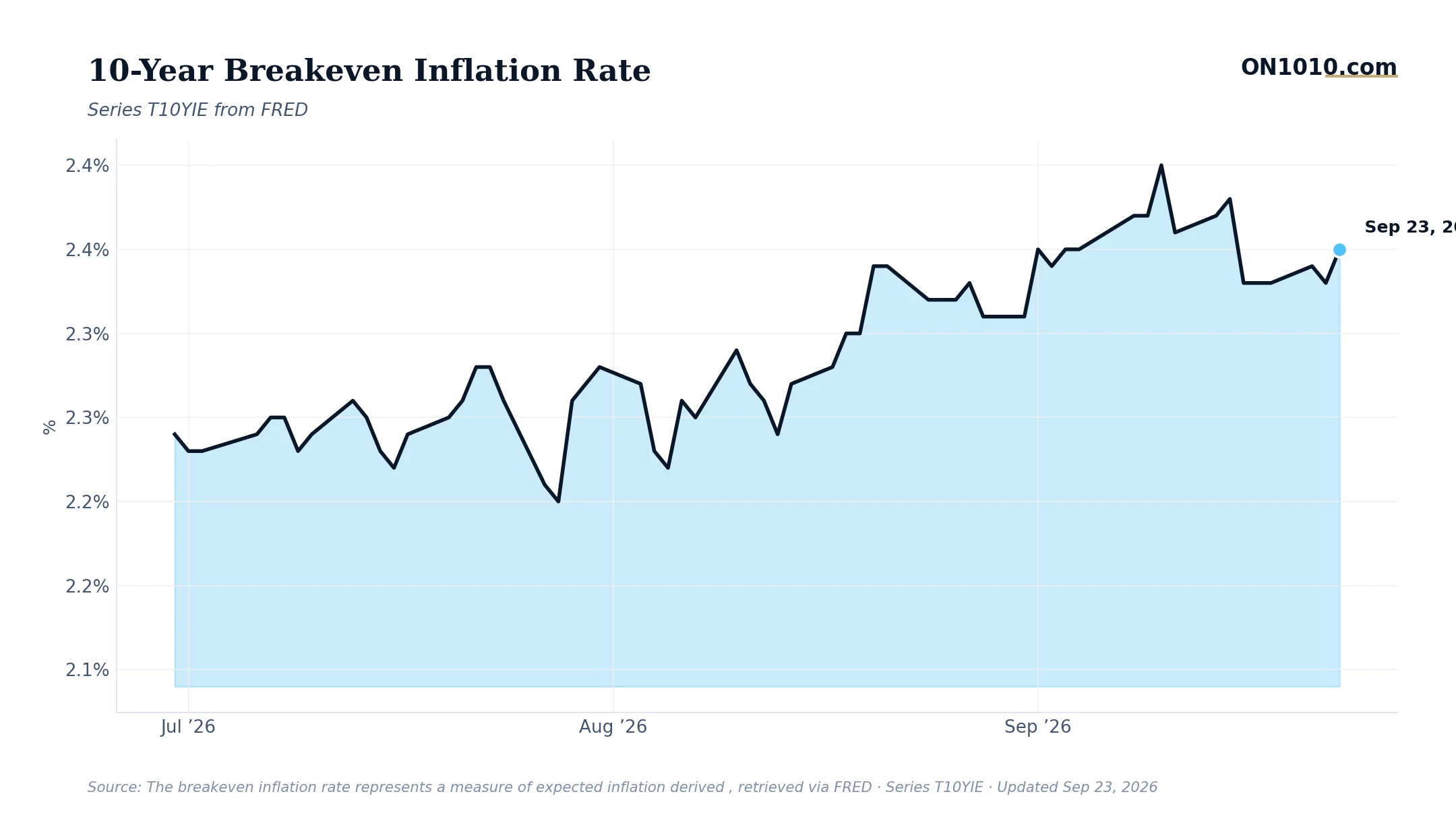
The 10-year breakeven inflation rate ticked up to 2.35% on Tuesday, a two-basis-point move from the day before and the fourth distinct reading in the past week, all clustered tightly between 2.33% and 2.35%. The market’s verdict on inflation is essentially: contained, stable, and close enough to the Fed’s target to stop worrying about it.
That calm deserves a second look.
Core inflation is running historically hot relative to decades of data, yet the bond market is pricing a future where that heat quietly fades. The gap between what inflation is and what markets expect is doing a lot of work right now. Long-term interest rates are still high by historical standards but have started to fall. Credit spreads are extraordinarily tight. Equity markets are calm, with the VIX sitting well below its long-run average. Every liquid market seems to be telling the same story: the inflation problem is yesterday’s problem.
The tension worth watching is whether the bond market is correctly anticipating a soft landing or pricing in a little too much optimism. Historically, when breakeven inflation rates have settled near 2.3% to 2.4% while core inflation remained elevated, the resolution went one of two ways: actual inflation gradually returned to where markets expected, or a second wave of price pressure caught investors off guard. The past doesn’t decide which happens this time, but it sets the terms of the bet.
For anyone thinking about long-term financing costs, capital project timelines, or real returns on savings, the breakeven rate is the market’s best collective estimate of where prices go. In past cycles, a stable breakeven near 2.35% alongside falling long-term rates has historically meant real borrowing costs were doing the heavy lifting that nominal rates obscured. The question worth asking is whether the inflation optimism embedded in these numbers is earned by the data, or simply borrowed from a bull market mood.
Bottom Line: Markets are pricing inflation as a solved problem while core inflation remains historically elevated. The spread between those two facts is where the real risk lives.
Source: Federal Reserve Economic Data (FRED)
ON1010 Research is an independent publisher of economic education and is not a registered investment adviser, broker-dealer, or investment company. This content is for educational and informational purposes only and is not investment advice or a recommendation to buy, sell, or hold any security. Published under the publisher exemption recognized by Section 202(a)(11)(D) of the Investment Advisers Act of 1940 (Lowe v. SEC). Always consult a qualified financial professional before making any financial decision.
Free Research
The economy moves fast. We make sure you move faster.
Economic data, policy shifts, and market signals — delivered to your inbox.
Subscribe Free