
Economic Wire: Bond liquidation wrecks small caps. Here’s how bad some trad
The S&P 500 Is Holding Up. Small Caps Are Telling a Different Story.
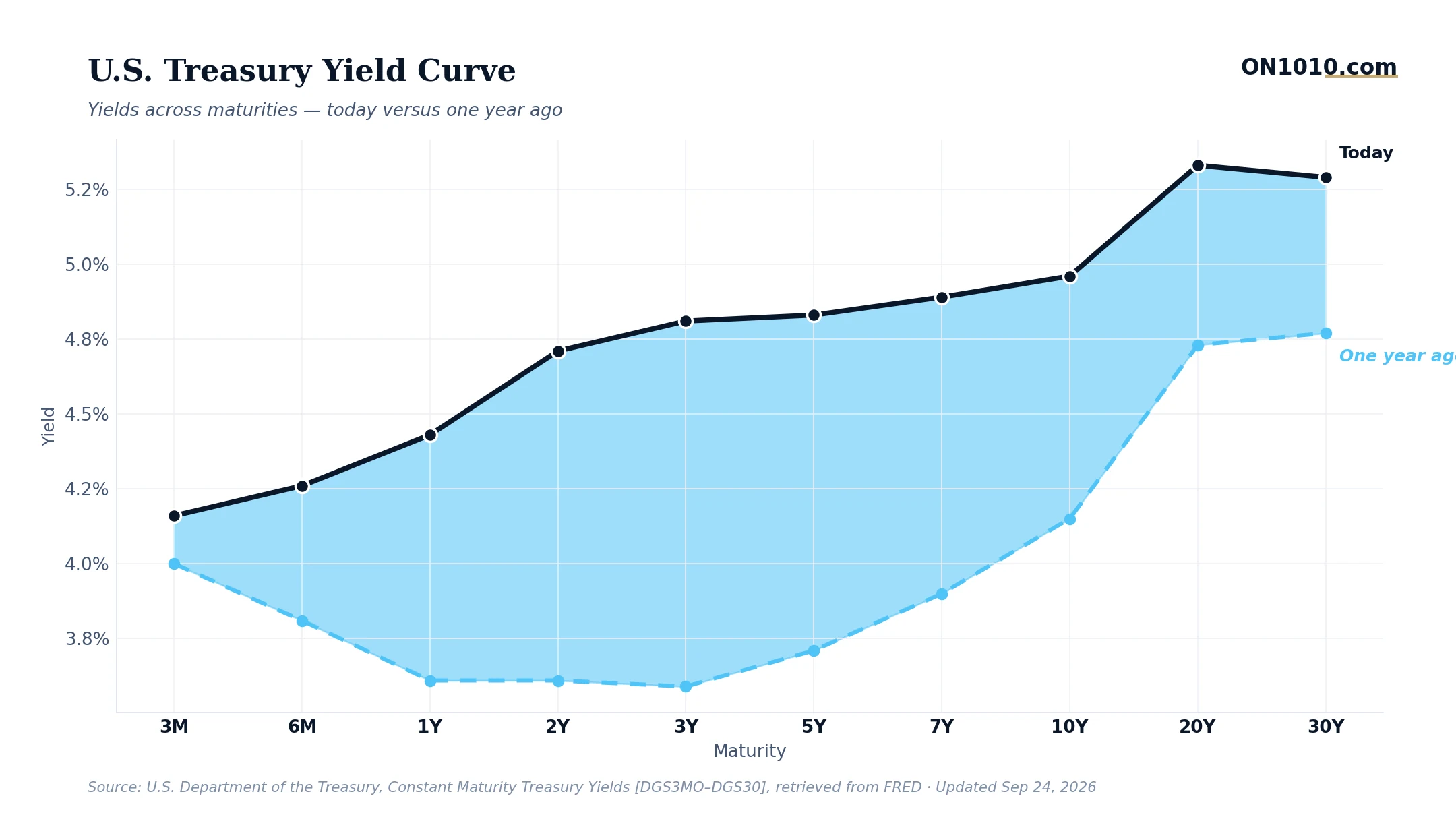
According to CNBC, rising bond yields and higher crude oil prices are battering small-cap stocks even as the S&P 500 holds its ground. The divergence is the story, because when the biggest names in the index mask the pain underneath, the headline number flatters to deceive.
Small-cap companies carry a structural vulnerability that large caps largely don’t. Their debt tends to be shorter-duration and floating-rate, which means rising yields hit their interest expense almost immediately. Large multinationals can absorb higher rates over years as long-term debt matures slowly. Small caps feel it in the next earnings report. That’s a margin compression story, and compressed margins historically lead hiring and investment decisions by several quarters.
The backdrop makes this harder to dismiss. Long-term interest rates are sitting in the upper quarter of their historical range, which has historically coincided with a recession beginning within 12 months about 19% of the time. Credit spreads remain tight, the bond market’s version of calm, but the equity market’s own trend and participation gauges are deteriorating. That combination is a tension worth watching: the credit market says no panic, but the breadth of the stock rally is narrowing. When the large-cap index is powered by a handful of names (here, Technology is outpacing SPY by nearly 6 percentage points over the past month while Financials and Industrials lag by more than 6 points each), the rally’s foundation is narrower than the index level suggests.
Historically, investors have treated small-cap underperformance in a rising-rate environment as a leading signal for broader earnings pressure, because small caps are often more exposed to domestic economic conditions, higher input costs, and tighter credit. The question this raises is whether large-cap resilience reflects genuine earnings strength or simply reflects where institutional money has concentrated while avoiding the rate-sensitive corners of the market.
Bottom Line: When the index goes up but the average stock goes down, the index is a bad mirror. Watch what’s underneath.
Read more: CNBC Top News
ON1010 Research is an independent publisher of economic education and is not a registered investment adviser, broker-dealer, or investment company. This content is for educational and informational purposes only and is not investment advice or a recommendation to buy, sell, or hold any security. Published under the publisher exemption recognized by Section 202(a)(11)(D) of the Investment Advisers Act of 1940 (Lowe v. SEC). Always consult a qualified financial professional before making any financial decision.
Free Research
The economy moves fast. We make sure you move faster.
Economic data, policy shifts, and market signals — delivered to your inbox.
Subscribe Free