
The Fed Is Holding Steady. The Economy Around It Is Anything But.
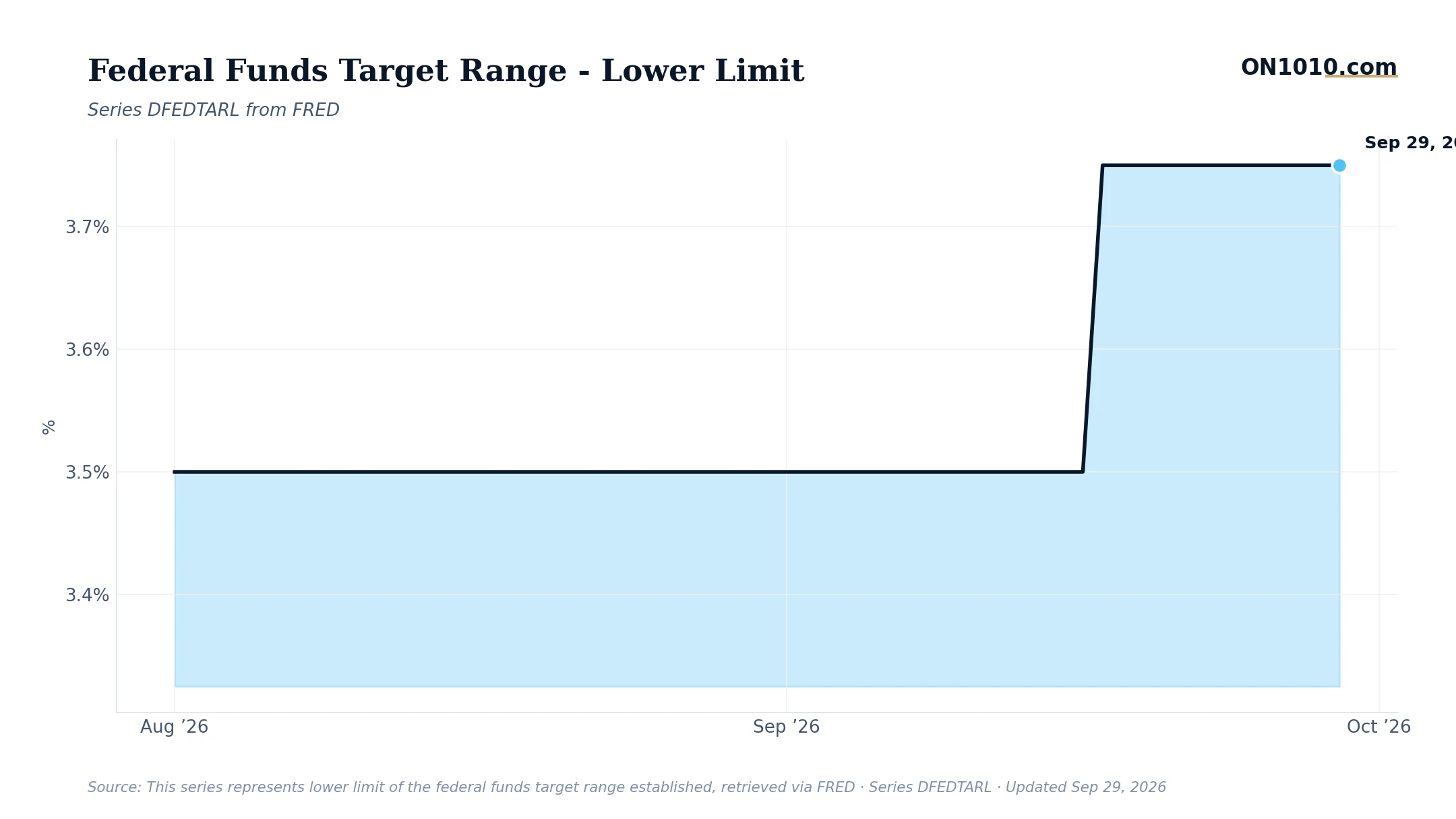
The federal funds rate target sits at 3.75%, exactly where it was yesterday, the day before, and every day this week. No surprise there. But the real story is what’s happening in the economic environment surrounding a rate that hasn’t moved.
The gap between “policy unchanged” and “conditions unchanged” is widening. Core inflation is running hotter than roughly nine of every ten months in the historical record. Long-term interest rates are elevated compared to most of the past several decades. And consumer sentiment is near the very bottom of its historical range. The Fed is holding the line, but the line is under pressure from multiple directions at once.
Here’s the tension worth watching: monetary policy looks neutral against history, which sounds fine in isolation. But neutral policy alongside very high inflation is a completely different animal than neutral policy with inflation near target. When the policy rate and inflation are running close together, the real cost of borrowing can be surprisingly low, even when the nominal rate sounds high. That’s the distinction most coverage skips.
Historically, periods when long-term rates were elevated while the Fed held its policy rate steady have occasionally resolved with either a cut cycle (if growth softened) or a renewed push higher (if inflation re-accelerated). The base rate for a new recession beginning from today’s monetary policy zone has been around 10% in any given 12-month window, elevated compared to comfortable, but hardly a flashing red light. One meaningful shift to note: credit conditions just moved from low to neutral, meaning borrowing is getting slightly less easy than it was. That tends to matter more for smaller businesses and leveraged borrowers than for large companies with strong balance sheets.
Bottom Line: The Fed isn’t moving, but the world around that 3.75% rate is shifting. The question that matters for every business decision and financing choice right now: is the real cost of money actually as tight as it looks on paper?
Source: Federal Reserve Economic Data (FRED)
ON1010 Research is an independent publisher of economic education and is not a registered investment adviser, broker-dealer, or investment company. This content is for educational and informational purposes only and is not investment advice or a recommendation to buy, sell, or hold any security. Published under the publisher exemption recognized by Section 202(a)(11)(D) of the Investment Advisers Act of 1940 (Lowe v. SEC). Always consult a qualified financial professional before making any financial decision.
Free Research
The economy moves fast. We make sure you move faster.
Economic data, policy shifts, and market signals — delivered to your inbox.
Subscribe Free