
The Fed’s Rate Has Stopped Moving.
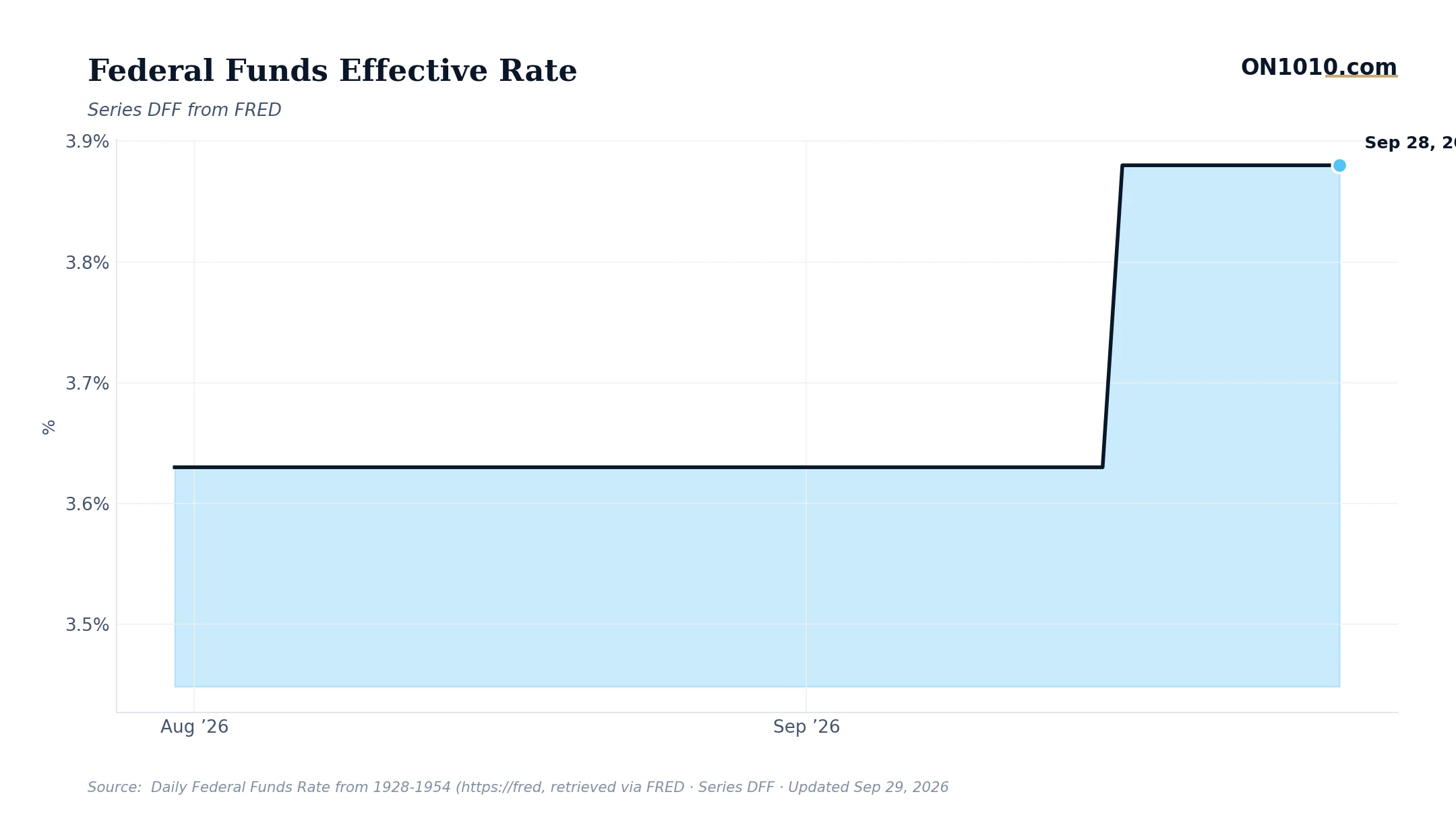
The effective federal funds rate has sat at 3.88% for six consecutive days. No drift, no surprise, no deviation from target. The overnight lending market is doing exactly what the Fed wants it to do.
But stillness in the policy rate doesn’t mean stillness in the economy around it.
Here’s the tension worth understanding. Our monetary policy gauge sits near its historical midpoint, suggesting the overnight rate itself isn’t the primary story. The bigger story is what surrounds it: core inflation running hotter than roughly nine out of every ten months on record, and long-term interest rates sitting in the upper quarter of their historical range. That combination means the Fed is holding a relatively neutral policy rate while the rest of the rate structure remains genuinely elevated for businesses, homebuyers, and anyone refinancing debt. The overnight rate is calm; the borrowing conditions that actually touch the real economy are anything but.
Credit conditions just shifted from low to neutral, worth watching, because credit is the circulatory system. When it loosens, capital moves; when it tightens, projects get shelved. That shift doesn’t predict anything on its own, but it’s the kind of second-order development that historical cycles say to track carefully.
Historically, when the policy rate holds steady while long-term rates stay elevated, business investment decisions face a real squeeze: short-term borrowing costs look manageable, but longer-duration financing costs remain high. In past cycles, that gap between the overnight rate and longer rates has shaped where companies chose to invest, and how much. With consumer sentiment at historically weak levels, the demand side of that equation carries its own uncertainty. Past performance doesn’t predict future results, but the pattern is worth understanding.
Bottom Line: The Fed’s overnight rate is anchored at 3.88%, but the real question is whether long-term rates come down to meet it, or whether elevated borrowing costs keep doing quiet, persistent work on the margins of business investment.
Source: Federal Reserve Economic Data (FRED)
ON1010 Research is an independent publisher of economic education and is not a registered investment adviser, broker-dealer, or investment company. This content is for educational and informational purposes only and is not investment advice or a recommendation to buy, sell, or hold any security. Published under the publisher exemption recognized by Section 202(a)(11)(D) of the Investment Advisers Act of 1940 (Lowe v. SEC). Always consult a qualified financial professional before making any financial decision.
Free Research
The economy moves fast. We make sure you move faster.
Economic data, policy shifts, and market signals — delivered to your inbox.
Subscribe Free