
The Labor Market Is Quietly Losing Its Cushion. Today’s Inflation Print Will Tell Us How Much That Matters.
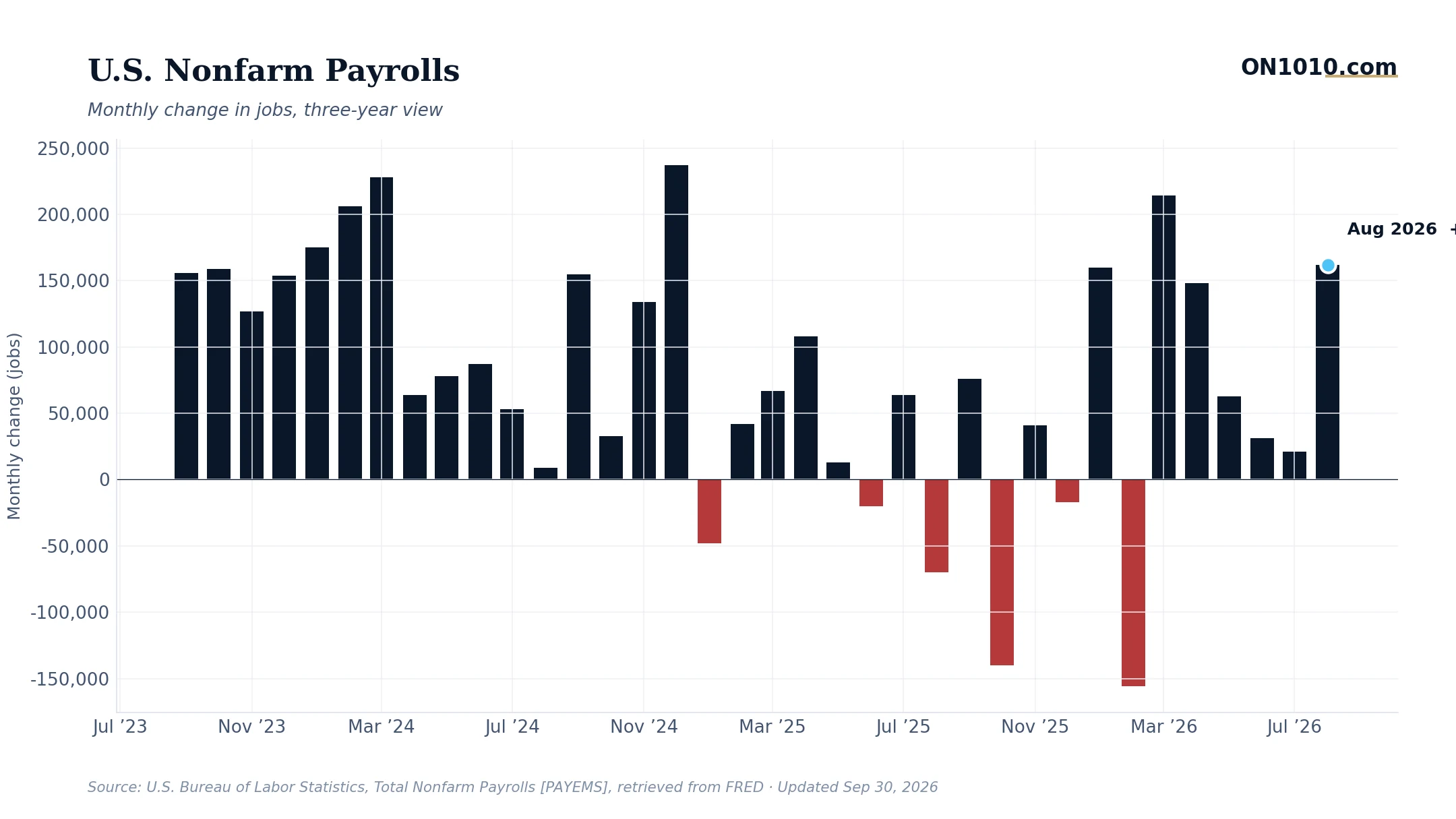
Job openings fell to 7.08 million in August, down 256,000 from July. Workers are quitting at their lowest rate since April. Hiring is technically rising, but the six-month trend is flat. The labor market still looks fine on the surface. Underneath, the cushion is getting thinner.
Here’s the twist most people will miss: the PCE inflation report prints this morning, and it lands into a labor market that is softening at exactly the wrong moment. If the Fed’s preferred inflation gauge comes in hotter than expected, rate cuts get pushed further out. But the labor data says the economy may not be able to wait that long.
What moved. Stocks drifted lower again Tuesday, with the S&P 500 closing at 7,670.84, off 12.85 points. The 10-year Treasury yield sits at 5.24%, with the Fed holding at 4.0%, a gap of 124 basis points. The bond market is pricing long-term risk well above what the Fed currently controls. Oil came in at $90.21 per barrel, up $0.83 on the session.
On deck today. The PCE index, the Fed’s preferred inflation gauge, prints this morning. The 10-year breakeven inflation rate sits at 2.35%, so any PCE reading above that will sharpen the question of whether the Fed is actually ahead of inflation or just holding steady.
Why it matters. Falling quit rates tell you workers feel less confident about finding something better. When that confidence fades alongside slipping job openings, the labor market can cool faster than the headline numbers suggest.
The deeper read on what a quiet but shaky market setup has meant historically lands Sunday in The Long View. It is free, and today’s data is exactly the kind of input that shapes it.
ON1010 Research is an independent publisher of economic education and is not a registered investment adviser, broker-dealer, or investment company. This content is for educational and informational purposes only and is not investment advice or a recommendation to buy, sell, or hold any security. Published under the publisher exemption recognized by Section 202(a)(11)(D) of the Investment Advisers Act of 1940 (Lowe v. SEC). Always consult a qualified financial professional before making any financial decision.
Free Research
The economy moves fast. We make sure you move faster.
Economic data, policy shifts, and market signals — delivered to your inbox.
Subscribe Free