
The Fed Stays Put. The Real Question Is Whether It Can Afford To.
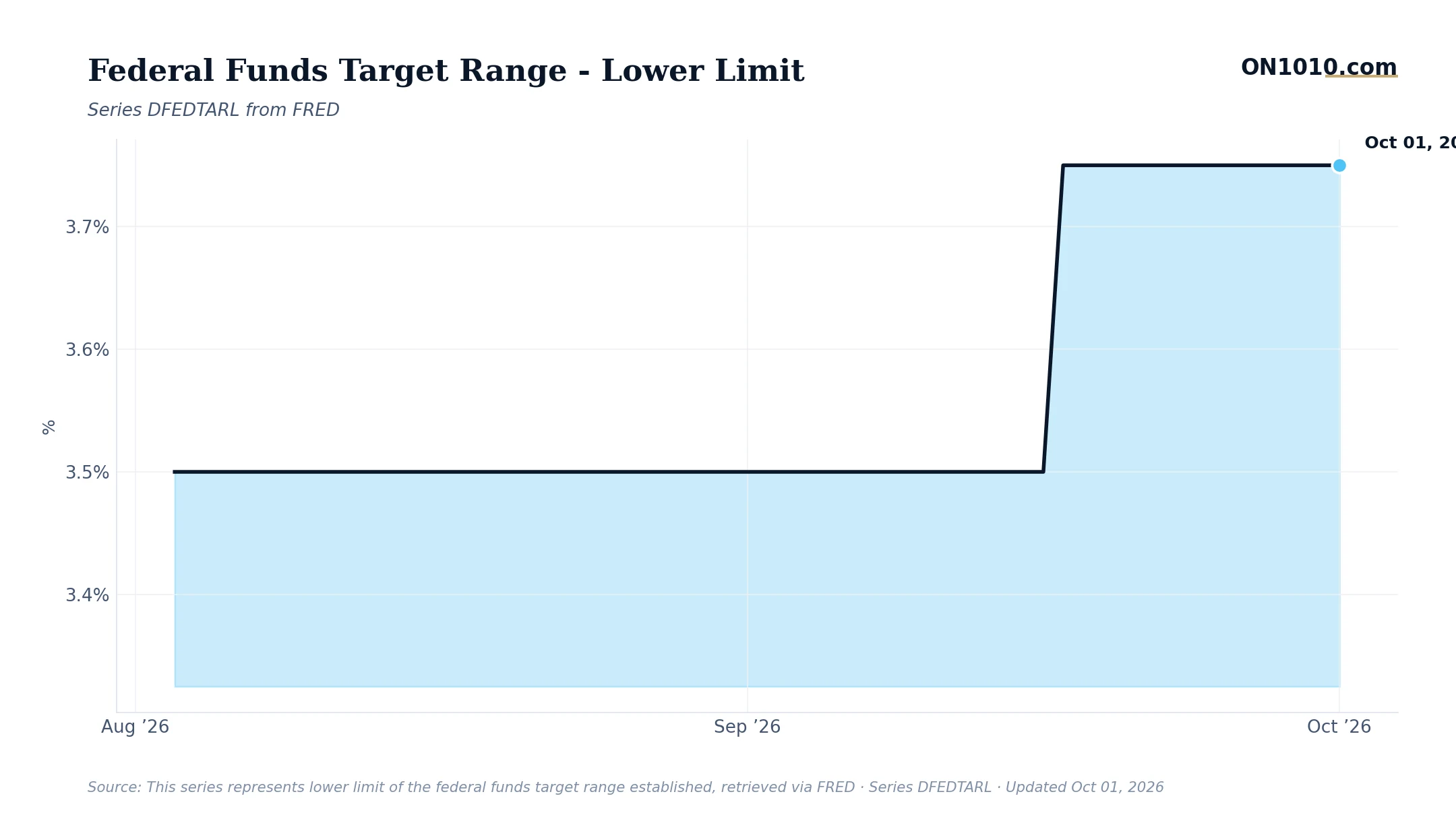
The federal funds rate lower bound held at 3.75% as of October 1, 2026. No surprise there. But the fact that the rate is holding tells you something important about the bind the Fed is sitting in right now.
Core inflation is running hot relative to most of its history. The real policy rate (the fed funds rate minus inflation) is restrictive by historical standards and has been drifting higher, not because the Fed raised rates, but because inflation has been falling. That’s a meaningful distinction. The Fed didn’t tighten. Disinflation did the tightening for it.
That sounds like good news, and in some ways it is. But it creates a quiet tension. Monetary policy is now among the more restrictive it has been in decades, and long-term interest rates are similarly elevated. Businesses refinancing debt, households carrying variable-rate loans, and commercial real estate investors rolling maturing mortgages are all dealing with a rate environment that sits in the upper range of modern history. Growth is near its historical midpoint and steady, which is fine, but consumer sentiment is historically depressed, which is a flashing yellow light worth watching even if recessions rarely start from that setup alone.
Historically, when real policy rates run this restrictive, the economy has entered recession within 12 months roughly 18% of the time. When long-term rates are this elevated simultaneously, that base rate climbs toward 14% on its own track. Those two readings together aren’t a forecast. They are the historical neighborhood the economy is operating in, and they suggest the cost of staying too tight too long is real.
In past cycles, the questions investors and business operators asked at a moment like this centered on duration and refinancing risk: who needs to roll debt soon, at what rate, and whether their margins can absorb it.
Bottom Line: The Fed isn’t moving, but the economy around a static rate keeps shifting. With disinflation doing the tightening and long-term rates elevated by historical standards, the more interesting question isn’t what the Fed will do next, it’s how long the economy can run comfortably at these levels before something in the credit stack gets stressed.
Source: Federal Reserve Economic Data (FRED)
ON1010 Research is an independent publisher of economic education and is not a registered investment adviser, broker-dealer, or investment company. This content is for educational and informational purposes only and is not investment advice or a recommendation to buy, sell, or hold any security. Published under the publisher exemption recognized by Section 202(a)(11)(D) of the Investment Advisers Act of 1940 (Lowe v. SEC). Always consult a qualified financial professional before making any financial decision.
Free Research
The economy moves fast. We make sure you move faster.
Economic data, policy shifts, and market signals — delivered to your inbox.
Subscribe Free