
The Fed Is Holding at 3.75%. The Real Question Is How Long That Lasts.
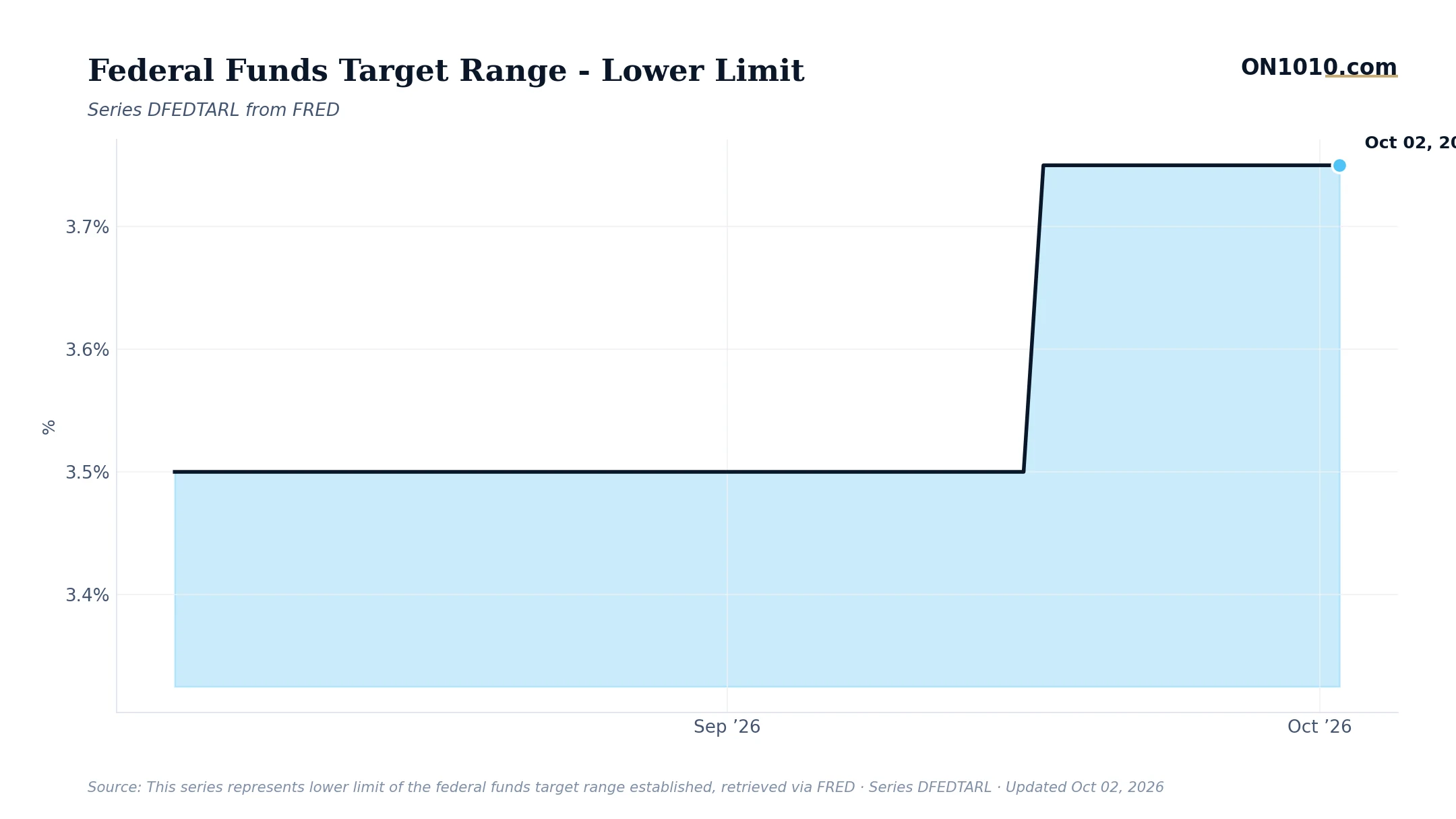
The federal funds rate has sat at 3.75% every single day since at least late September. No surprise there. The Fed is in a holding pattern, watching data before its next move. But “no change” is itself a policy choice, and right now it’s a consequential one.
Here’s the tension: inflation is still running hot by historical standards, and the real policy rate (the fed funds rate minus inflation) is already elevated compared to most of the past two decades. The Fed is squeezing. Whether it’s squeezing hard enough, or too hard, is the question the data will answer over the coming months.
The broader picture is genuinely mixed. Growth is near its long-run norm. Monetary policy is restrictive by historical standards and still rising. Long-term interest rates are in the upper range of their historical record. Consumer sentiment is near historic lows, though that reading alone has rarely predicted a recession in similar past environments. Historically, when the real policy rate runs this high, a new recession has begun within the following 12 months roughly 18% of the time. Worth knowing, not predicting from.
Meanwhile, technology is the only offensive sector clearly outperforming the broader market, while financials, industrials, real estate, and utilities are all lagging. That’s a narrow market underneath a calm surface. The VIX just ticked up from a low reading to a more neutral one, which is a small shift worth watching if it continues.
For businesses running financing decisions or planning capital commitments, the rate environment is the backdrop everything else gets priced against. Historically, extended holds at restrictive policy rates have compressed margins in rate-sensitive industries before showing up in broader employment data. A qualified financial professional is the right starting point for any decision tied to that rate outlook.
Bottom Line: The Fed isn’t moving, but the economy around it is. The question worth watching is whether inflation falls fast enough to give the Fed room to ease before the lag effects of tight policy show up in earnings and hiring.
Source: Federal Reserve Economic Data (FRED)
ON1010 Research is an independent publisher of economic education and is not a registered investment adviser, broker-dealer, or investment company. This content is for educational and informational purposes only and is not investment advice or a recommendation to buy, sell, or hold any security. Published under the publisher exemption recognized by Section 202(a)(11)(D) of the Investment Advisers Act of 1940 (Lowe v. SEC). Always consult a qualified financial professional before making any financial decision.
Free Research
The economy moves fast. We make sure you move faster.
Economic data, policy shifts, and market signals — delivered to your inbox.
Subscribe Free