
Economic Wire: 10-year Treasury yield ticks higher despite weaker-than-expe
When Bonds Ignore Bad News, That’s the Story
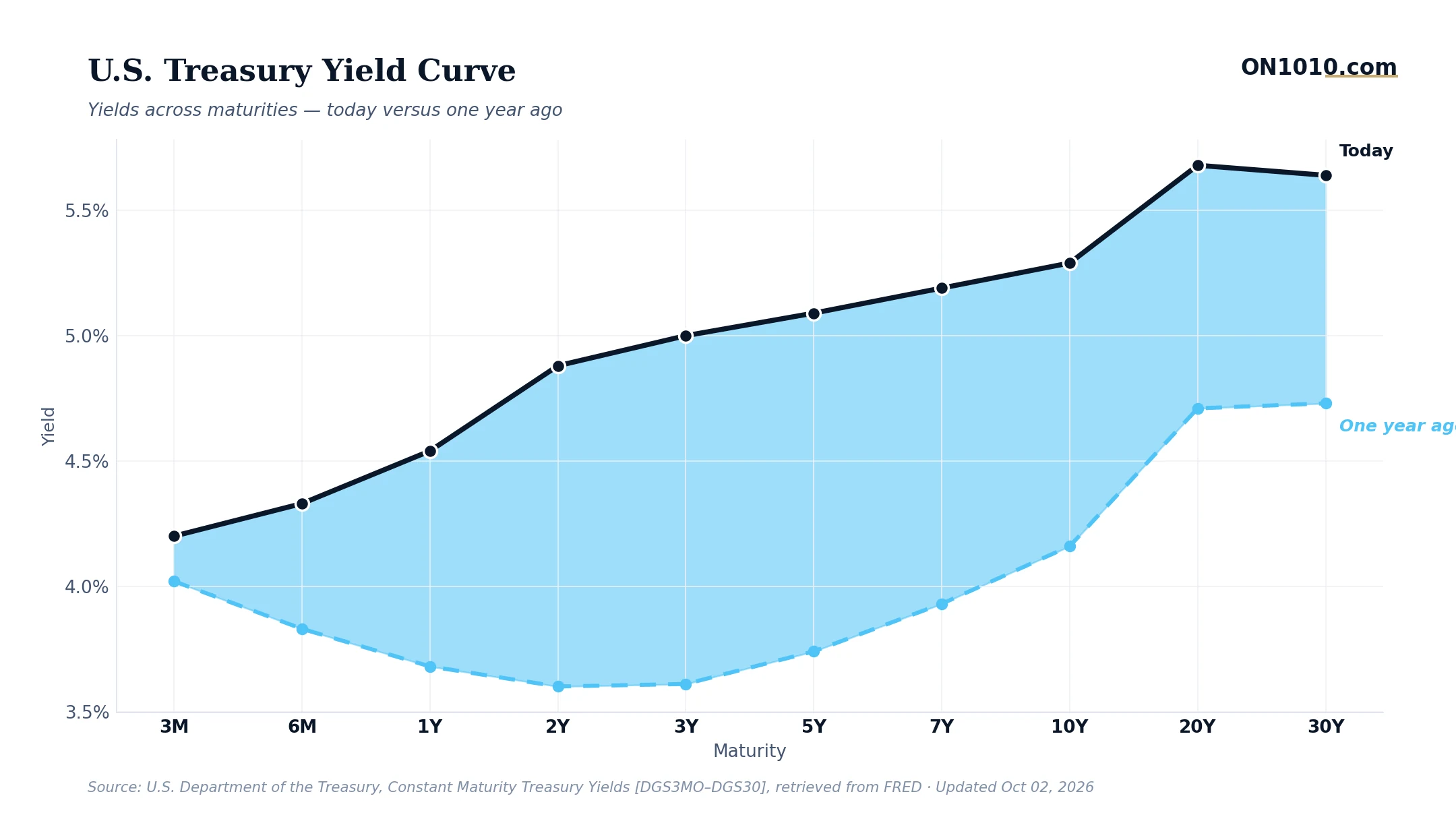
According to CNBC, the 10-year Treasury yield rose even as September’s jobs report came in much weaker than expected, a move that runs exactly opposite to what most investors would predict. Weak jobs data is supposed to pull yields lower, as slower growth reduces inflation pressure and raises expectations for Fed rate cuts. The bond market read the same data and went the other way.
Here is why that matters. The 10-year yield sits at 5.29%, a level that, by historical standards, is deep in the upper range of the past several decades. Inflation is still running hot relative to history, and the real policy rate (the Fed’s target minus inflation) is already restrictive. When long-term rates rise despite a weakening labor market, the bond market is sending a specific message: it is not convinced the Fed can cut rates as much or as fast as the soft data implies. There may be a supply story here too. The U.S. keeps issuing enormous quantities of Treasury debt, and at some point, the market demands more yield just to absorb the paper, regardless of what the economy is doing.
This is the tension that makes the current setup genuinely unusual. Growth is near its historical midpoint. Consumer sentiment is near historic lows. Monetary policy is restrictive. And yields are still climbing. Historically, when long-term rates have sat this high in the historical record, a new recession began within the following 12 months about 14% of the time. That is not a high probability, but it is real, and it is worth knowing as a base rate, not a forecast.
Historically, bond investors have used this kind of divergence, yields rising while economic data softens, as a signal to examine who is actually driving rates: is it growth expectations, inflation fears, or fiscal supply? The answer changes which parts of the economy feel the most pressure first.
Bottom Line: When bonds refuse to rally on weak jobs data, the market is telling you the inflation and deficit problems have not gone away, and a soft labor print alone is not enough to solve them.
Read more: CNBC Top News
ON1010 Research is an independent publisher of economic education and is not a registered investment adviser, broker-dealer, or investment company. This content is for educational and informational purposes only and is not investment advice or a recommendation to buy, sell, or hold any security. Published under the publisher exemption recognized by Section 202(a)(11)(D) of the Investment Advisers Act of 1940 (Lowe v. SEC). Always consult a qualified financial professional before making any financial decision.
Free Research
The economy moves fast. We make sure you move faster.
Economic data, policy shifts, and market signals — delivered to your inbox.
Subscribe Free