
The 10-Year at 5.24% Is Telling You Something Stocks Haven’t Priced In Yet
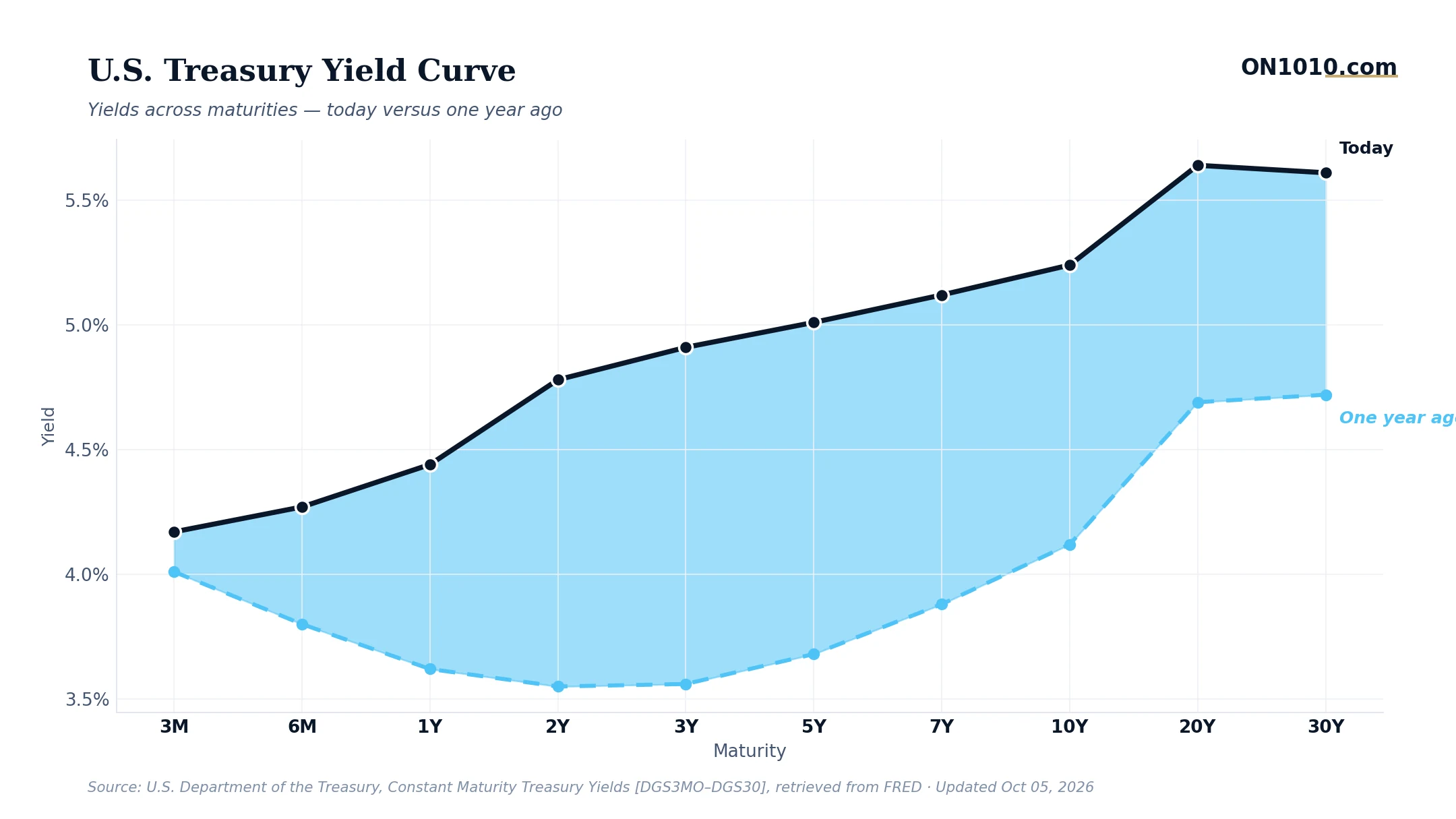
The S&P 500 closed Friday at 7,722 while the 10-year Treasury yield sat at 5.24%. Those two numbers are pulling in opposite directions, and one of them is going to blink first.
Here’s the twist most people miss: the breakeven inflation rate, the bond market’s best guess at future inflation, sits at only 2.36%. So the 10-year isn’t high because traders expect runaway inflation. It’s high because investors are demanding a bigger cushion just to hold long-term U.S. debt. That premium above expected inflation is where the real signal lives.
What moved: Equities finished the week in positive territory, with the Nasdaq leading at +1.19% Friday. Gold held at $4,187. Oil slipped to $90.67. The VIX ticked up to 16.30, which is calm on its face, but our market participation gauges show the underlying trend weakening beneath the surface. The Fed funds rate sits at 3.75%-4.0%, meaning the 10-year is already 124 basis points above the top of the policy rate. That’s a wide gap, and it’s widening without the Fed moving.
On deck today: No major data releases are scheduled for Monday, October 05, 2026. That makes bond market moves the story to watch in real time.
Why it matters: When long-term rates run well above the policy rate and credit spreads keep widening, the cost of capital rises for everyone: businesses refinancing debt, homebuyers, and the federal government itself. Historically, when long-term rates sit this high relative to their own history, growth tends to slow in the quarters that follow. The recession base rate from similar setups is around 14%, which means it doesn’t happen most of the time, but it happens enough to pay attention.
The deeper read on what the bond market is really saying lands Sunday in The Long View, and it’s free.
ON1010 Research is an independent publisher of economic education and is not a registered investment adviser, broker-dealer, or investment company. This content is for educational and informational purposes only and is not investment advice or a recommendation to buy, sell, or hold any security. Published under the publisher exemption recognized by Section 202(a)(11)(D) of the Investment Advisers Act of 1940 (Lowe v. SEC). Always consult a qualified financial professional before making any financial decision.
Free Research
The economy moves fast. We make sure you move faster.
Economic data, policy shifts, and market signals — delivered to your inbox.
Subscribe Free