
The Fed Is Parked at 3.75%. The Real Question Is What’s Keeping It There.
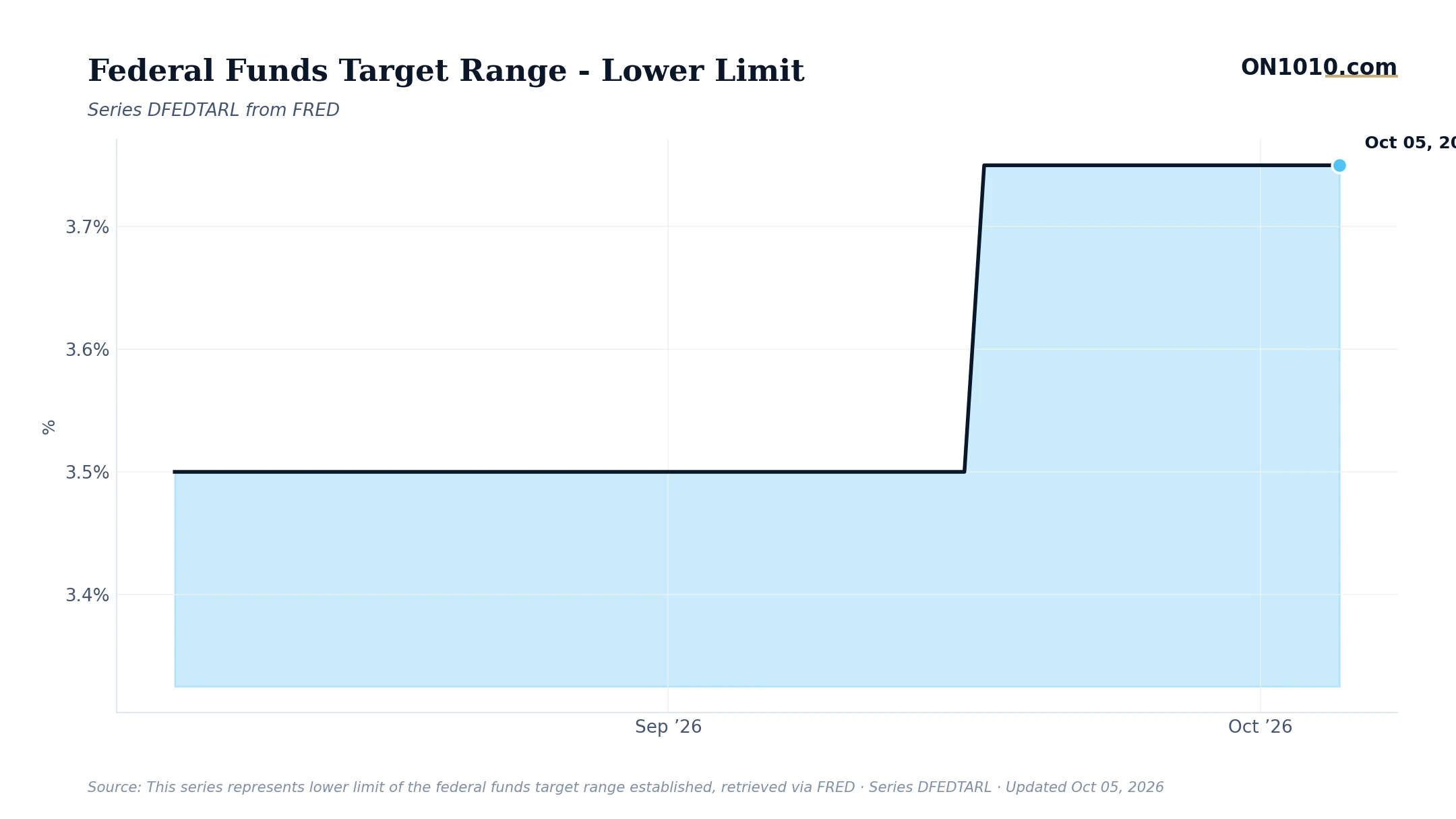
The federal funds rate has sat at 3.75% every single day this month, and that’s exactly the point. A rate that doesn’t move is still a policy. It’s just a different kind.
Holding steady at 3.75% means the Fed is threading a needle: inflation is running hot relative to history, growth is sitting near its long-run average, and consumer sentiment is near the weakest readings on record. There’s no clean direction to cut or hike. So the Fed waits, and that pause carries its own weight for anyone borrowing money or making long-horizon capital decisions.
Here’s the tension worth watching. The policy rate is above its historical norm. Long-term rates are in the upper tier of their historical range. Credit spreads have been widening. When you layer those three together, the borrowing environment gets tighter for businesses even if the Fed never touches the rate again. The cost of capital is doing work on the economy without a single additional hike.
Historically, when the real policy rate (the Fed funds rate minus inflation) has been this elevated, a new recession started within the following 12 months about 18% of the time. That’s well below a coin flip, but it’s not a rounding error either. In past cycles, businesses and capital allocators have used pauses like this one to stress-test refinancing timelines, project the impact of sustained high rates on margins, and watch credit conditions closely for signs that the pressure is spreading from rate-sensitive sectors to the broader economy. Anyone weighing a major financing or investment decision should have that conversation with a qualified financial professional who knows their specific situation.
Bottom Line: The 3.75% rate is a number, but the real story is duration. How long does high-for-longer actually last, and are margins strong enough to absorb it if the answer is “longer than expected”?
Source: Federal Reserve Economic Data (FRED)
ON1010 Research is an independent publisher of economic education and is not a registered investment adviser, broker-dealer, or investment company. This content is for educational and informational purposes only and is not investment advice or a recommendation to buy, sell, or hold any security. Published under the publisher exemption recognized by Section 202(a)(11)(D) of the Investment Advisers Act of 1940 (Lowe v. SEC). Always consult a qualified financial professional before making any financial decision.
Free Research
The economy moves fast. We make sure you move faster.
Economic data, policy shifts, and market signals — delivered to your inbox.
Subscribe Free