
Inflation Expectations Are Frozen.
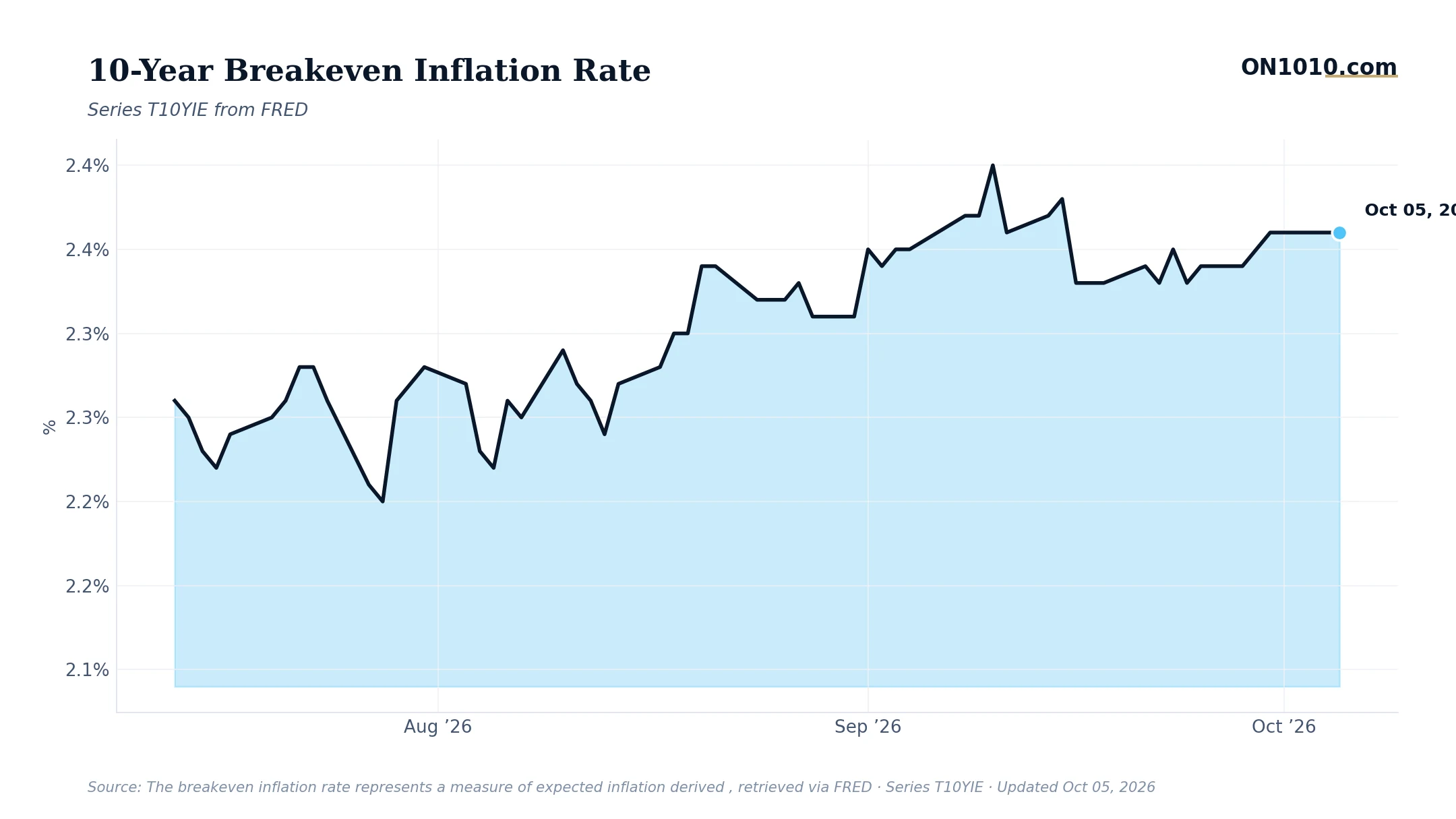
The 10-year breakeven inflation rate has sat at 2.36% for four straight trading days, and barely budged over the past week. Bond markets are telling us something precise: investors expect average inflation of 2.36% per year for the next decade, and they’re not changing their minds.
The stillness itself is the signal.
In a week where long-term interest rates sit near the top of their historical range and credit spreads are widening, you might expect inflation expectations to be moving. They’re not. The breakeven rate has barely drifted from 2.34% to 2.36% over the past week. Markets are pricing a world where inflation cools back toward the Fed’s 2% target over time, even as the real policy rate remains restrictive and core inflation is still running hot against its own history. That gap between “hot today” and “calm tomorrow” is where the real tension lives.
Here’s the mechanism worth understanding. The breakeven rate is derived by subtracting the yield on inflation-protected Treasuries (TIPS) from the yield on regular Treasuries. When that spread is stable at 2.36%, it means bond investors collectively believe the Fed will get the job done over a long enough horizon. Historically, when breakeven rates have stayed anchored near 2.3% to 2.4% during periods of elevated real rates, it has suggested that monetary policy is doing its credibility work, even when current inflation data remains elevated. In past cycles, a well-anchored breakeven gave businesses more confidence to plan capital expenditures without fear of a wage-price spiral forcing policy to overcorrect.
The question worth asking: if inflation expectations are this calm, but credit conditions are tightening and consumer sentiment is near historic lows, what does the economy’s demand side actually look like going forward?
Bottom Line: Bond markets believe inflation is a solved problem over the next decade. Whether the economy gets there without something breaking along the way is the open question.
Source: Federal Reserve Economic Data (FRED)
ON1010 Research is an independent publisher of economic education and is not a registered investment adviser, broker-dealer, or investment company. This content is for educational and informational purposes only and is not investment advice or a recommendation to buy, sell, or hold any security. Published under the publisher exemption recognized by Section 202(a)(11)(D) of the Investment Advisers Act of 1940 (Lowe v. SEC). Always consult a qualified financial professional before making any financial decision.
Free Research
The economy moves fast. We make sure you move faster.
Economic data, policy shifts, and market signals — delivered to your inbox.
Subscribe Free