
Economic Wire: Trade deficit hits $105.6 billion, widest since just before
The Trade Deficit Just Blew Past $100 Billion. Tariffs May Be Making It Worse, Not Better.
According to CNBC, the U.S. trade deficit widened to $105.6 billion in August, a 13.7% jump from July and the largest gap since just before Trump’s tariffs took effect last year. The consensus was $102 billion. The miss matters less than the direction.
Here is the paradox worth unpacking. Tariffs were designed, in part, to shrink the trade deficit by making imports more expensive and less attractive. But when businesses see tariffs coming, they front-run them, pulling forward massive import orders before the new costs kick in. That is almost certainly part of what drove August’s surge. It is the same dynamic that inflated early 2025’s deficit figures. The policy intended to reduce imports is, at least temporarily, generating a wave of them.
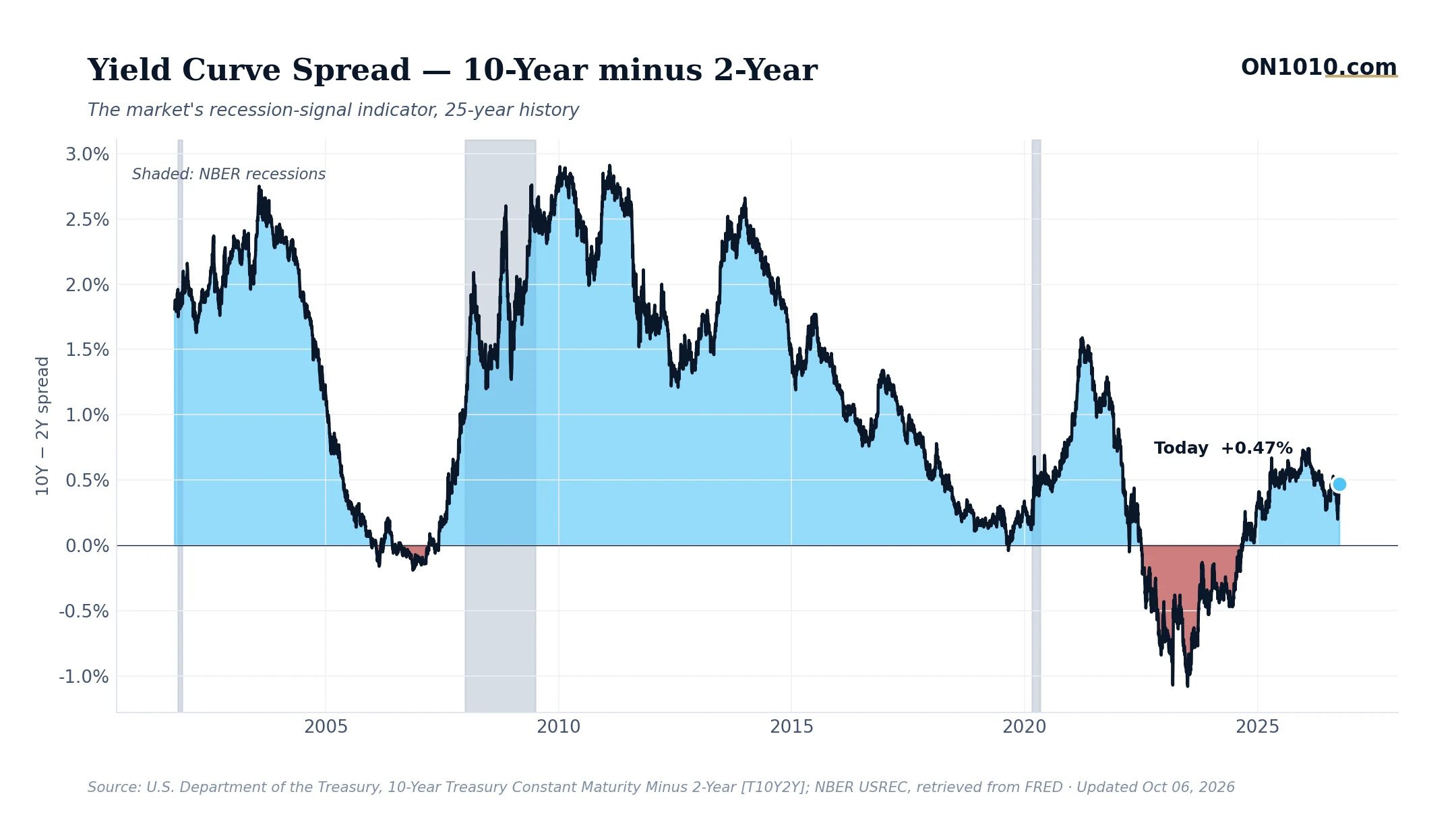
There is a second layer here. A widening trade deficit is, mechanically, a subtraction from GDP. If imports surge while exports hold steady, the net trade number drags on headline growth. This matters because the backdrop is already complicated: monetary policy is restrictive by historical standards, long-term interest rates are near the upper range of their history, and consumer sentiment remains historically weak. Adding a trade drag to that mix tightens the squeeze on nominal growth.
The corporate margin angle is underappreciated. Companies importing goods at higher tariff-adjusted prices face real input cost pressure. If they can pass those costs to consumers, margins hold. If demand softens and they cannot, margins compress. In a high-rate environment where refinancing is expensive and consumer confidence is fragile, compressed margins have limited shock absorbers. Historically, investors have watched the trade data closely during tariff cycles for exactly this reason: the first-order effect is the headline deficit, but the second-order effect lands on earnings.
Bottom Line: A $105.6 billion deficit is a flashing yellow light, not a stop sign, but it confirms that the tariff math is messier in practice than in theory, and the margin pressure building quietly underneath it deserves more attention than the headline number.
Read more: CNBC Economy
ON1010 Research is an independent publisher of economic education and is not a registered investment adviser, broker-dealer, or investment company. This content is for educational and informational purposes only and is not investment advice or a recommendation to buy, sell, or hold any security. Published under the publisher exemption recognized by Section 202(a)(11)(D) of the Investment Advisers Act of 1940 (Lowe v. SEC). Always consult a qualified financial professional before making any financial decision.
Free Research
The economy moves fast. We make sure you move faster.
Economic data, policy shifts, and market signals — delivered to your inbox.
Subscribe Free