
Inflation Expectations Have Barely Moved in Six Days. That Stillness Is Worth Examining.
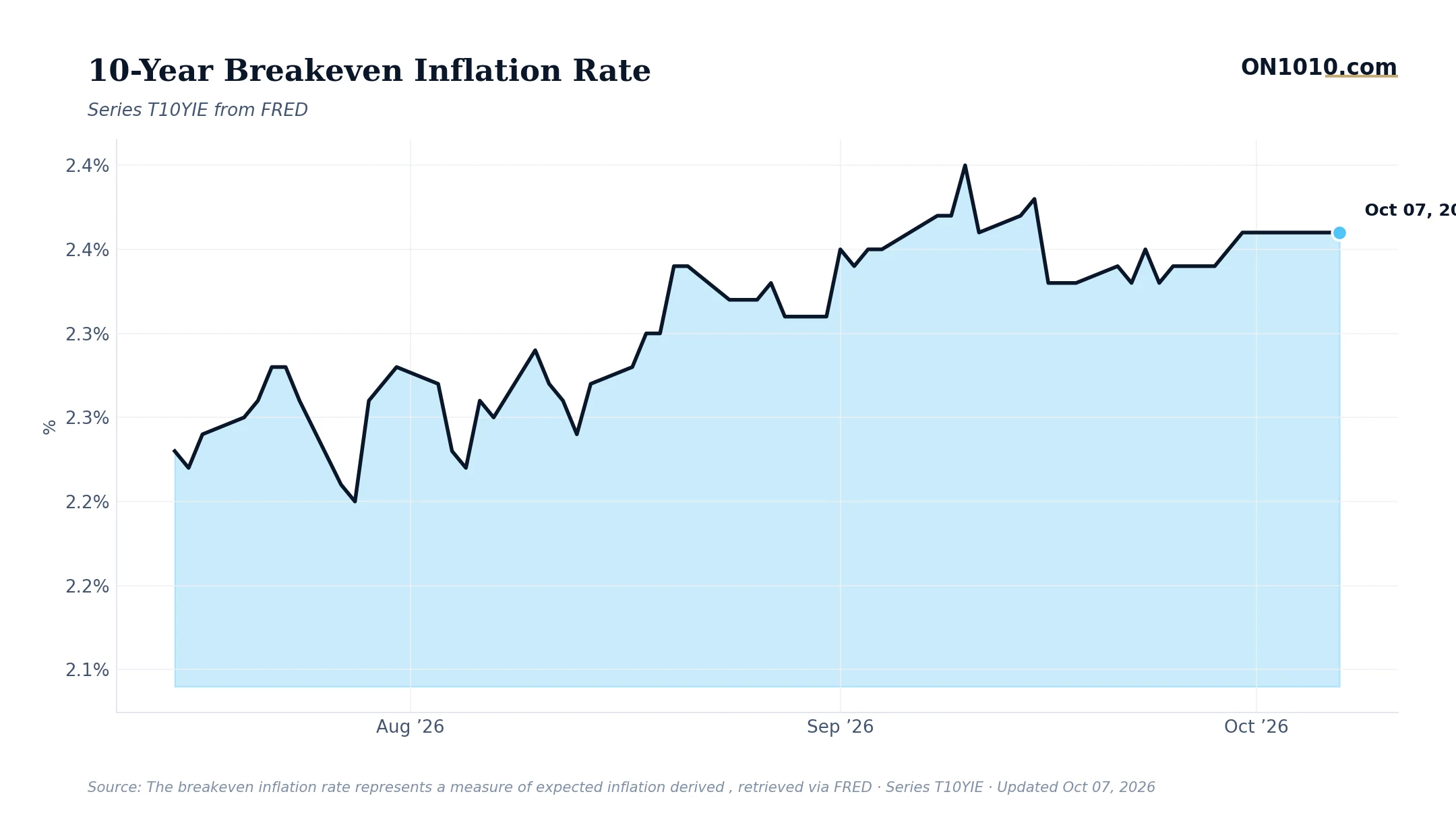
The 10-year breakeven inflation rate has sat at exactly 2.36% for six consecutive trading days. No drift up, no drift down. In a world where tariffs, labor markets, and Federal Reserve messaging are all pulling in different directions, that kind of flat line is worth paying attention to.
Bond investors who buy TIPS versus regular Treasuries are essentially placing a bet on where inflation will land over the next decade. Right now, their collective answer is 2.36%. That is comfortably above the Fed’s 2% target, but well below the inflation readings that rattled markets in 2021 and 2022. The market is saying: inflation will be above target, but not dangerously so.
The broader backdrop makes this steadiness interesting. Core inflation is running in the upper quarter of its historical range. The real policy rate (the Fed’s rate minus inflation) is sitting above its historical norm, meaning monetary policy is genuinely restrictive by historical standards. That combination should, in theory, be pulling inflation expectations lower over time. The fact that breakevens are holding at 2.36% suggests the market believes the Fed has enough credibility to eventually win the fight, but also that the fight is not over.
Historically, when breakevens have held above the Fed’s target for an extended period while real rates are elevated, the central question for businesses has been duration risk on borrowing costs. If inflation stays stubbornly above 2%, the Fed has less room to cut without reigniting it, which keeps long-term borrowing costs elevated. Long-term rates are already in the upper quarter of their historical range. Anyone financing long-lived assets or making multi-year capital commitments should be stress-testing scenarios where rates stay higher for longer than the consensus expects.
Bottom Line: The 10-year breakeven is not screaming panic, but at 2.36%, it is quietly telling the Fed that market confidence in hitting the 2% target is still conditional. The question worth tracking: what would push that number higher, and what would finally pull it back to target?
Source: Federal Reserve Economic Data (FRED)
ON1010 Research is an independent publisher of economic education and is not a registered investment adviser, broker-dealer, or investment company. This content is for educational and informational purposes only and is not investment advice or a recommendation to buy, sell, or hold any security. Published under the publisher exemption recognized by Section 202(a)(11)(D) of the Investment Advisers Act of 1940 (Lowe v. SEC). Always consult a qualified financial professional before making any financial decision.
Free Research
The economy moves fast. We make sure you move faster.
Economic data, policy shifts, and market signals — delivered to your inbox.
Subscribe Free