
Economic Wire: After France, is Italy next? Goldman Sachs flags bond risks
Italy’s Bond Market Is Sending a Warning Europe Isn’t Ready to Hear
According to CNBC, Goldman Sachs has flagged rising risks in Italian sovereign debt, pointing to wider-than-expected deficit targets for 2027 and 2028, climbing yields, and looming election uncertainty as factors that could pressure Rome’s debt outlook. The headline reads like a dry fiscal update. The real story is about contagion math and what happens when the bond market loses patience with a government.
Italy carries roughly $2.9 trillion in sovereign debt, making it one of the largest bond markets in the world. When yields rise on that scale of borrowing, the feedback loop turns vicious fast: higher interest costs eat deeper into the budget, which widens the deficit, which pushes yields higher still. France moved through a version of this cycle in 2024 and 2025. Goldman’s note essentially asks whether Italy is next in line. The incentive structure for Rome’s government is not encouraging. Wider deficit targets signal that fiscal discipline is losing the political argument, and election uncertainty means bond investors cannot price in a reliable path back to consolidation. Global capital is fast; domestic politics is slow. That gap is where bond crises are born.
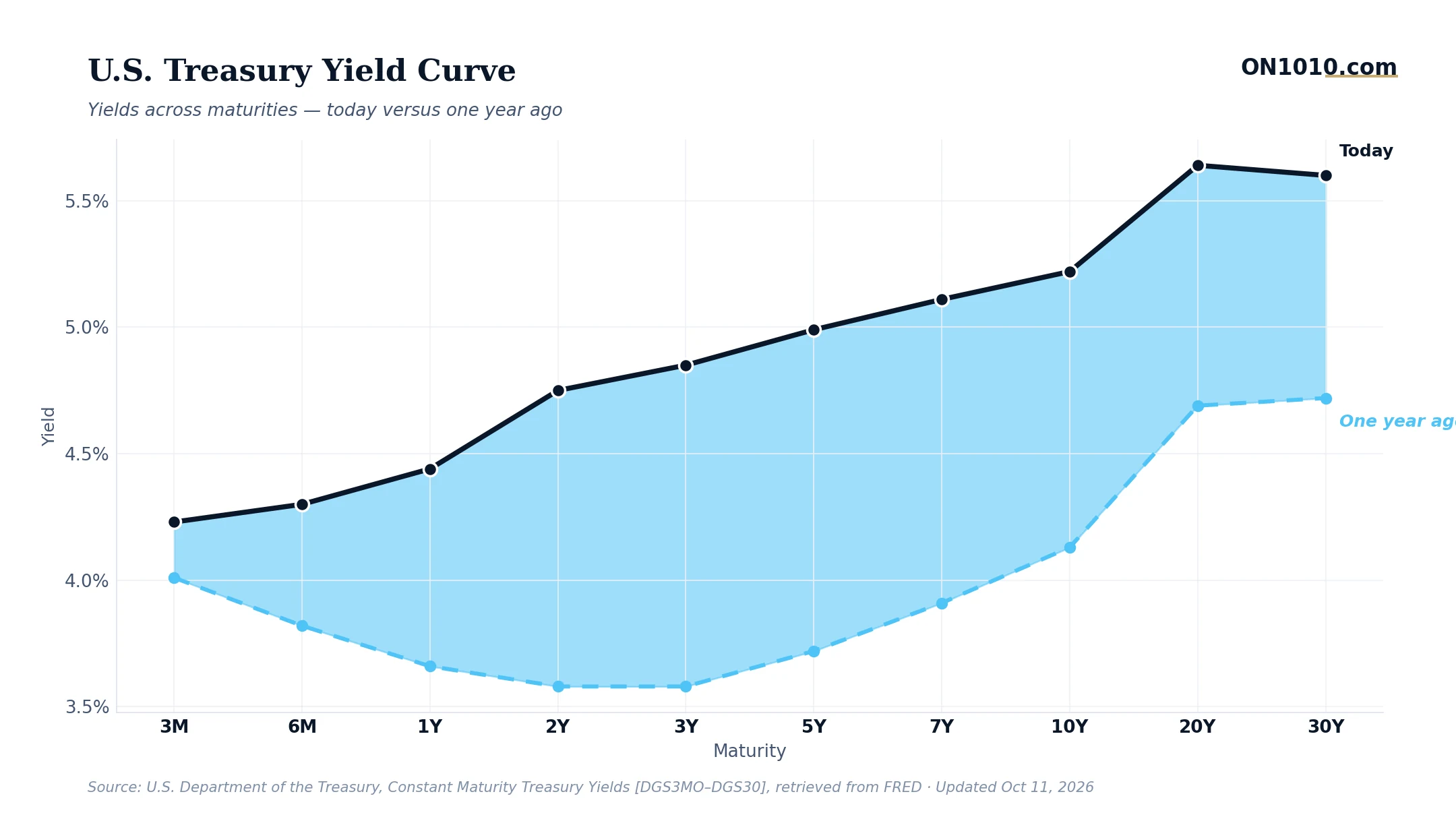
The broader backdrop makes this harder to dismiss. Long-term rates globally sit in the upper range of their historical experience. Credit spreads are wide by historical standards, signaling stress in credit markets that goes beyond any single country. Historically, investors navigating sovereign stress in a high-rate environment have paid close attention to two things: the spread between a country’s bond yields and Germany’s (the European benchmark), and whether the European Central Bank has signaled any willingness to act as a backstop. Both questions are worth watching closely here.
Bottom Line: Italy’s deficit math was always fragile at high rates. Goldman’s warning is a reminder that when the bond market starts asking questions, governments rarely get to answer on their own schedule.
Read more: CNBC Top News
ON1010 Research is an independent publisher of economic education and is not a registered investment adviser, broker-dealer, or investment company. This content is for educational and informational purposes only and is not investment advice or a recommendation to buy, sell, or hold any security. Published under the publisher exemption recognized by Section 202(a)(11)(D) of the Investment Advisers Act of 1940 (Lowe v. SEC). Always consult a qualified financial professional before making any financial decision.
Free Research
The economy moves fast. We make sure you move faster.
Economic data, policy shifts, and market signals — delivered to your inbox.
Subscribe Free