
Economic Wire: Fed’s Hammack says higher rates could be needed as risks of
When the Fed Says “Higher for Longer,” It Means It
According to CNBC, Cleveland Fed President Beth Hammack warned this week that tighter monetary policy may be necessary if inflation continues to prove stubborn, citing growing risks that an “inflationary mindset” could take hold among households and businesses. The real story in that phrasing is what the Fed is actually watching: not just the price data, but whether people are starting to expect inflation to stick. Once expectations shift, the inflation problem becomes self-fulfilling.
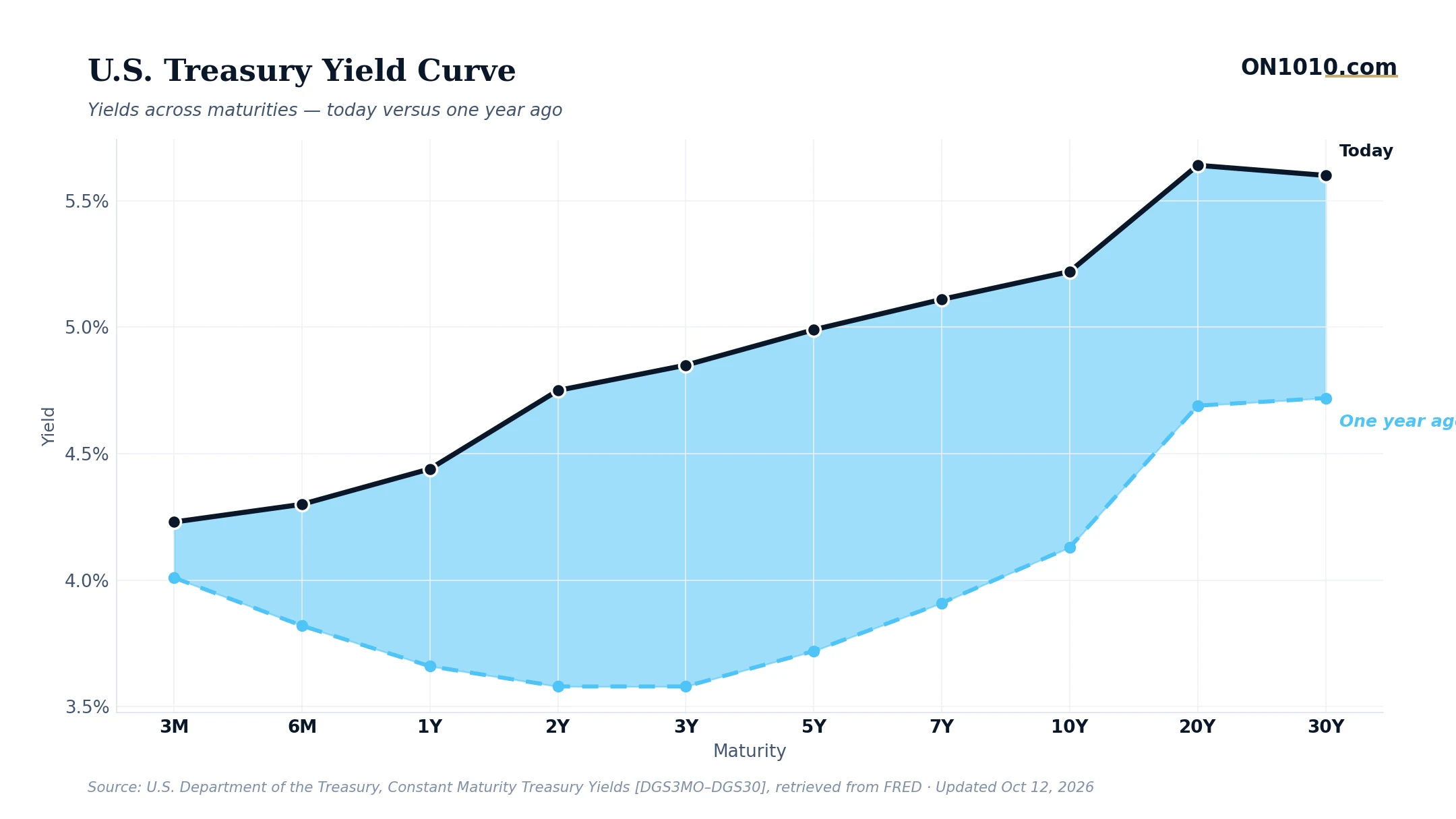
This is the mechanism that made the 1970s so painful. Workers demanded higher wages to get ahead of rising prices. Companies raised prices to protect margins. And around it went. The Fed under Paul Volcker broke that cycle, but only by pushing the policy rate high enough to cause a severe recession. Hammack’s warning suggests the Fed sees early signs of that psychology forming again, and it wants to get ahead of it before the loop closes. That context matters because monetary policy is already running restrictive by historical standards, and long-term interest rates are sitting in the upper range of their historical record. Adding more tightening on top of that raises real questions about how much additional pressure business margins can absorb.
Here is the tension worth watching: core inflation is still running hot relative to its own history, but growth sits near its historical midpoint and consumer sentiment is near the bottom of its historical range. The economy is not in recession territory by most base rates, but the combination of restrictive policy, wide credit spreads, and a Fed signaling more tightening creates a tighter financing environment for businesses planning capital expenditure. Historically, when the real policy rate runs this high, investors and CFOs have paid close attention to the cost and availability of credit, because that is often where expansion plans get revised first. Past cycles where tight policy collided with stretched corporate balance sheets have occasionally ended in abrupt slowdowns, though the base rates suggest that outcome is far from certain here.
The question this raises is whether the Fed is trying to prevent a problem or fighting one that has already formed. Those require different amounts of medicine, and the answer carries very different implications for how long rates stay elevated.
Bottom Line: Hammack’s “inflationary mindset” warning is a signal that the Fed is watching psychology as much as price data, and a Fed willing to tighten further while policy is already restrictive means the cost of capital stays high longer than markets may be pricing.
Read more: CNBC Top News
ON1010 Research is an independent publisher of economic education and is not a registered investment adviser, broker-dealer, or investment company. This content is for educational and informational purposes only and is not investment advice or a recommendation to buy, sell, or hold any security. Published under the publisher exemption recognized by Section 202(a)(11)(D) of the Investment Advisers Act of 1940 (Lowe v. SEC). Always consult a qualified financial professional before making any financial decision.
Free Research
The economy moves fast. We make sure you move faster.
Economic data, policy shifts, and market signals — delivered to your inbox.
Subscribe Free