
The Fed Is Holding Steady. The Real Question Is Whether It Should Be.
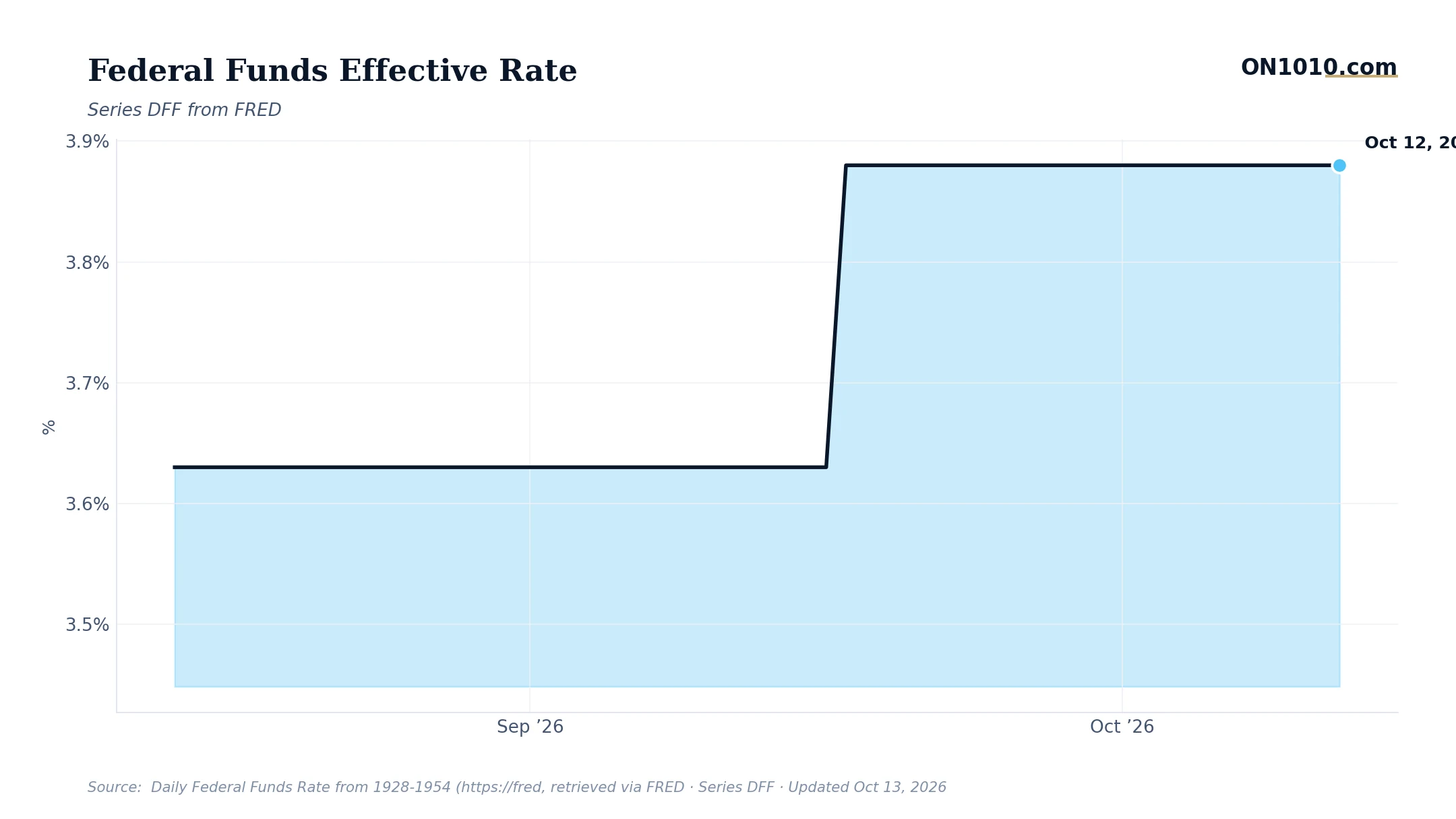
The effective federal funds rate has sat at 3.88% for six consecutive trading days without moving a basis point. On its face, that’s about as boring as economic data gets. Underneath it, something worth understanding is happening.
The Fed’s target range and where the overnight market actually trades have been locked in near-perfect alignment. Banks are lending to each other at exactly the rate the Fed intends. The plumbing is working. But “the plumbing is working” and “the policy setting is right” are two very different things.
Here’s the tension. Core inflation is running in the upper range of its historical distribution and has been sticky. Meanwhile, the real policy rate (that’s the funds rate minus inflation) is elevated by historical standards, sitting well above its long-run midpoint. That combination means monetary policy is genuinely restrictive right now, pressing down on the economy’s brake pedal even as consumer sentiment has fallen sharply. Long-term interest rates are also historically elevated and, alongside credit spreads that are running wide, suggest the broader lending environment is tighter than the quiet daily funds rate reading implies.
In past cycles, when the real policy rate ran this high alongside stubborn inflation, the Fed faced a version of the same dilemma: ease too soon and risk re-igniting price pressures; hold too long and risk breaking something in the credit stack. Historically, periods of restrictive real rates combined with wide credit spreads have seen recession begin within the following year roughly 18% of the time. That is not a prediction. It is the base rate worth knowing.
The question worth carrying into every business and capital planning meeting right now: if rates stay here, what does your refinancing calendar look like over the next 12 to 18 months? The cost of waiting to answer that question keeps rising with every week the rate holds.
Bottom Line: The effective funds rate holding at 3.88% tells you the Fed hasn’t blinked, but the surrounding conditions (tight real rates, wide spreads, weak consumer sentiment) are exactly the environment where the lag effects of monetary policy show up without warning.
Source: Federal Reserve Economic Data (FRED)
ON1010 Research is an independent publisher of economic education and is not a registered investment adviser, broker-dealer, or investment company. This content is for educational and informational purposes only and is not investment advice or a recommendation to buy, sell, or hold any security. Published under the publisher exemption recognized by Section 202(a)(11)(D) of the Investment Advisers Act of 1940 (Lowe v. SEC). Always consult a qualified financial professional before making any financial decision.
Free Research
The economy moves fast. We make sure you move faster.
Economic data, policy shifts, and market signals — delivered to your inbox.
Subscribe Free