
The Yield Curve Is Positive Again. The Hard Part Is Figuring Out What That Means.
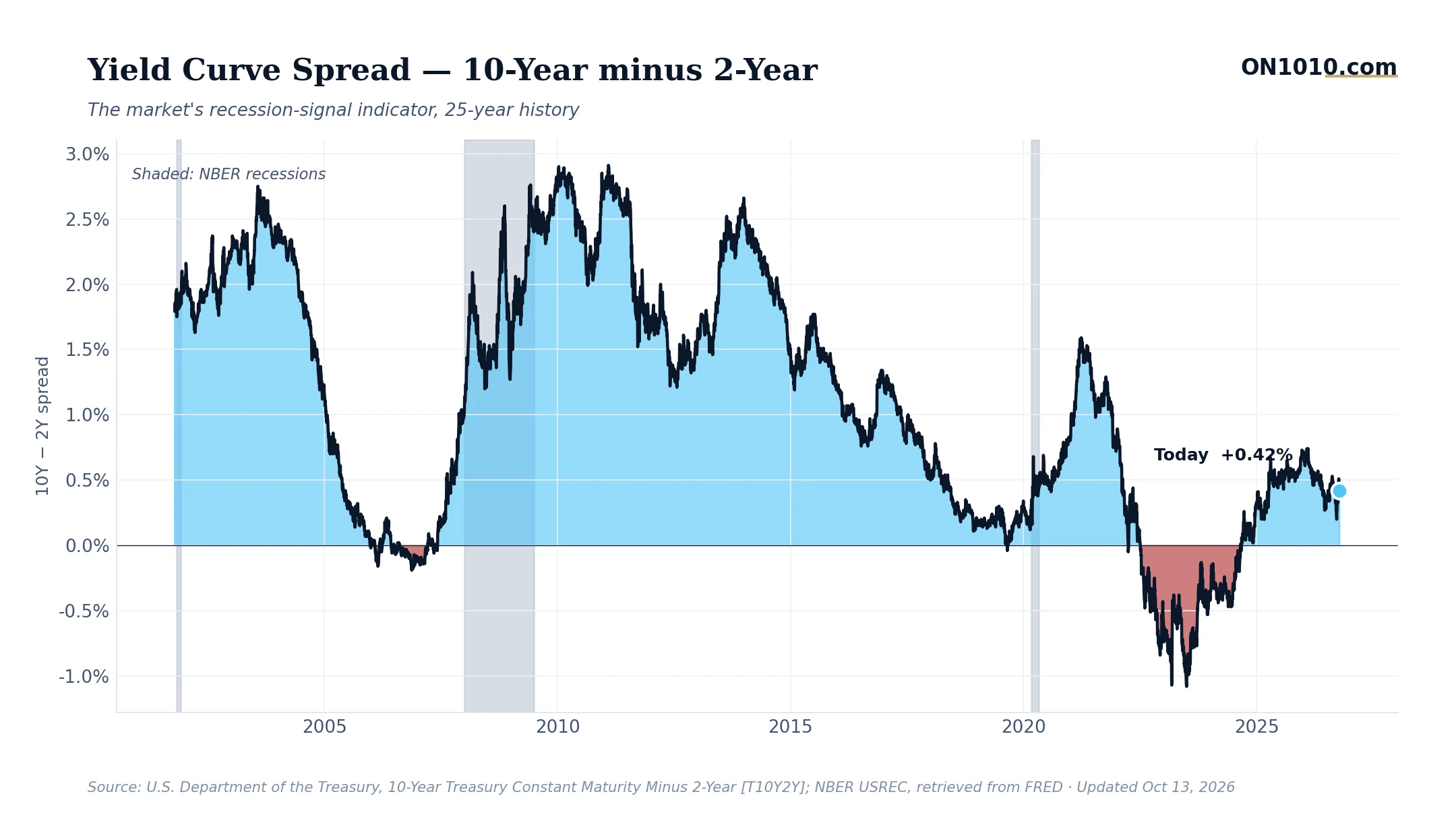
The 10-year Treasury yield is sitting 0.42 percentage points above the 2-year yield as of October 13, down slightly from 0.44 just days ago. After nearly two years of inversion that had bond markets flashing recession warnings, the curve has been positive for months now. The question investors keep wrestling with: does a positive curve mean the danger has passed, or does it mark the beginning of a new kind of trouble?
History offers a complicated answer. The yield curve doesn’t just signal recessions by inverting. It also signals them by un-inverting. In several past cycles, including the early 1980s and the period around 2006-2007, the spread turned positive again right as economic conditions were beginning to deteriorate in earnest. The mechanism: short-term rates fall (or longer-term rates rise) because markets are pricing in distress ahead, which mechanically pushes the spread back above zero. A positive curve after a long inversion deserves scrutiny, not celebration.
The broader economic backdrop complicates the read further. Monetary policy remains restrictive by historical standards. Long-term interest rates are still elevated relative to most of the past 40 years. Credit spreads are wide. Consumer sentiment is near historical lows. Growth is near its long-run midpoint and holding steady, but the combination of tight policy, high rates, and credit stress has historically created friction for business borrowing and capital allocation decisions.
In past cycles, when the curve re-emerged from inversion into this kind of environment (tight policy, elevated long rates, stressed credit), operators and capital allocators have used it as a prompt to revisit the duration and refinancing risk on their balance sheets. The level of the spread matters less than the direction of the forces moving it.
Bottom Line: A positive yield curve is better than a negative one, but a spread that has been shrinking for several straight sessions, in an environment of restrictive monetary policy and wide credit spreads, raises a question worth tracking: is the long end rising because growth expectations are improving, or because bond investors are demanding more compensation for holding duration?
Source: Federal Reserve Economic Data (FRED)
ON1010 Research is an independent publisher of economic education and is not a registered investment adviser, broker-dealer, or investment company. This content is for educational and informational purposes only and is not investment advice or a recommendation to buy, sell, or hold any security. Published under the publisher exemption recognized by Section 202(a)(11)(D) of the Investment Advisers Act of 1940 (Lowe v. SEC). Always consult a qualified financial professional before making any financial decision.
Free Research
The economy moves fast. We make sure you move faster.
Economic data, policy shifts, and market signals — delivered to your inbox.
Subscribe Free