
THE GROWTH-WILL-SAVE-US BET HAS A CREDIBILITY PROBLEM
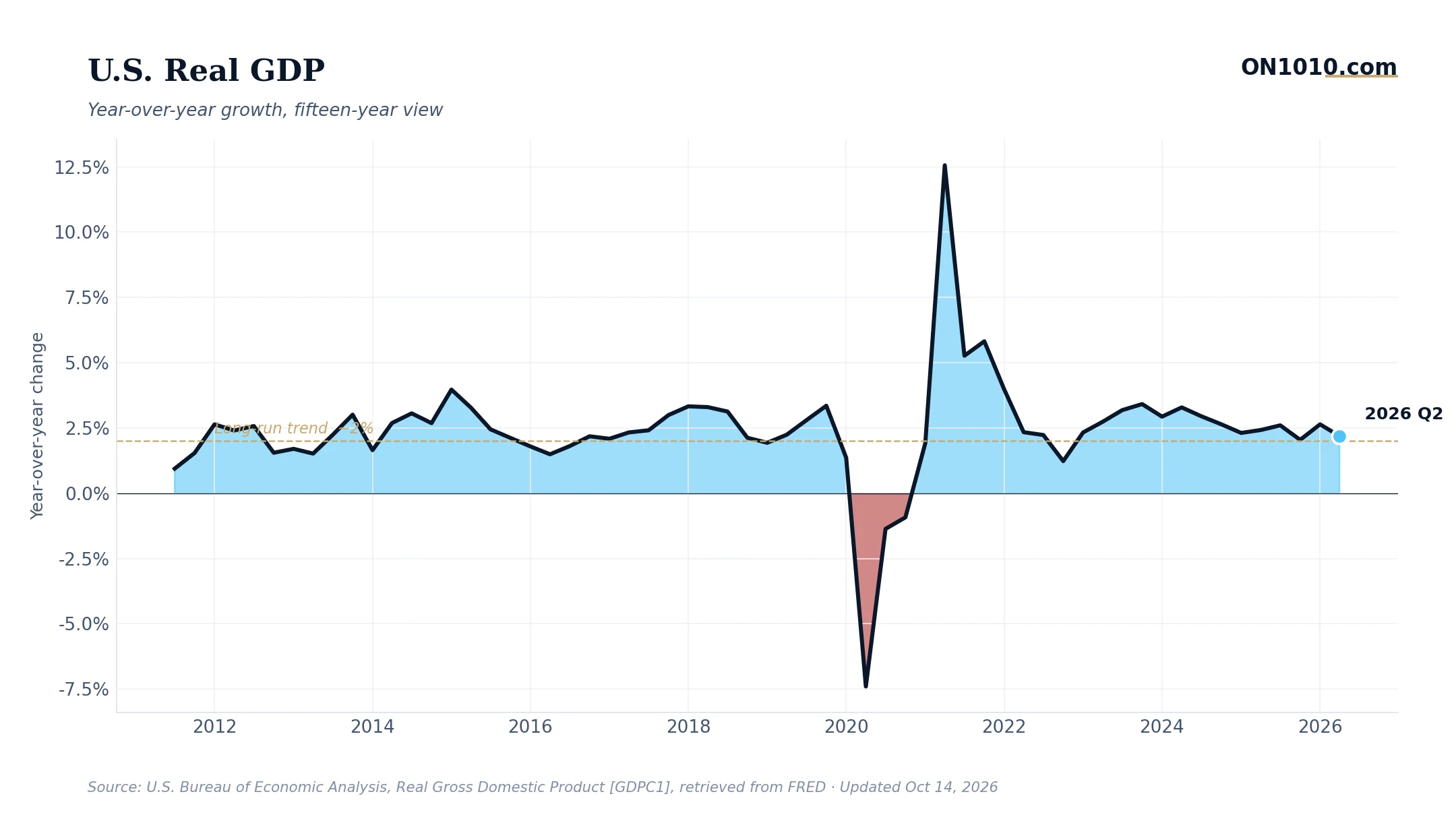
According to CNBC, IMF Managing Director Kristalina Georgieva is pushing back on Treasury Secretary Scott Bessent’s core fiscal argument, saying that relying on economic growth alone won’t shrink the U.S. deficit or meaningfully dent the country’s $40 trillion debt pile fast enough. The IMF is calling for actual fiscal consolidation. The timing sharpens the critique: it lands in an environment where long-term interest rates are already sitting near the upper end of their historical range and policy rates remain restrictive.
The growth-solves-everything argument has real logic behind it. Faster GDP growth expands the tax base, and a growing economy makes a fixed debt stock more manageable relative to national income. The problem is the arithmetic is relentless. At $40 trillion and counting, even a sustained growth bump has to outrun both the compounding interest cost and the ongoing primary deficit. When interest rates are high relative to history, the debt-to-GDP ratio tends to snowball unless the government is running a surplus before interest payments, which the U.S. is not. The IMF’s implicit point is a simple one: growth helps, but it cannot close the gap if spending continues to exceed revenue by a wide margin.
This matters because the bond market is the referee. Historically, investors watching a large sovereign borrower lean entirely on nominal growth to fix its balance sheet have demanded higher yields as compensation for the perceived risk. Higher long-term yields feed directly into mortgage rates, corporate borrowing costs, and the discount rate on future earnings. Every dollar of additional interest expense the government pays is a dollar of capital diverted away from productive private investment. The crowding-out effect is slow and easy to dismiss quarter by quarter, but it accumulates.
Consumer sentiment is already historically weak, monetary policy is still tight, and long-term rates show no sign of retreating. The structural math of a $40 trillion debt load at elevated interest rates does not wait for political consensus to form.
Bottom Line: Growth is a necessary ingredient for fiscal sustainability, but it has never been sufficient on its own when a government is this far behind on its primary balance. The bond market will eventually price the difference between a credible plan and a hopeful one.
Read more: CNBC Top News
ON1010 Research is an independent publisher of economic education and is not a registered investment adviser, broker-dealer, or investment company. This content is for educational and informational purposes only and is not investment advice or a recommendation to buy, sell, or hold any security. Published under the publisher exemption recognized by Section 202(a)(11)(D) of the Investment Advisers Act of 1940 (Lowe v. SEC). Always consult a qualified financial professional before making any financial decision.
Free Research
The economy moves fast. We make sure you move faster.
Economic data, policy shifts, and market signals — delivered to your inbox.
Subscribe Free