
The IMF Is Saying the Quiet Part Out Loud on U.S. Debt
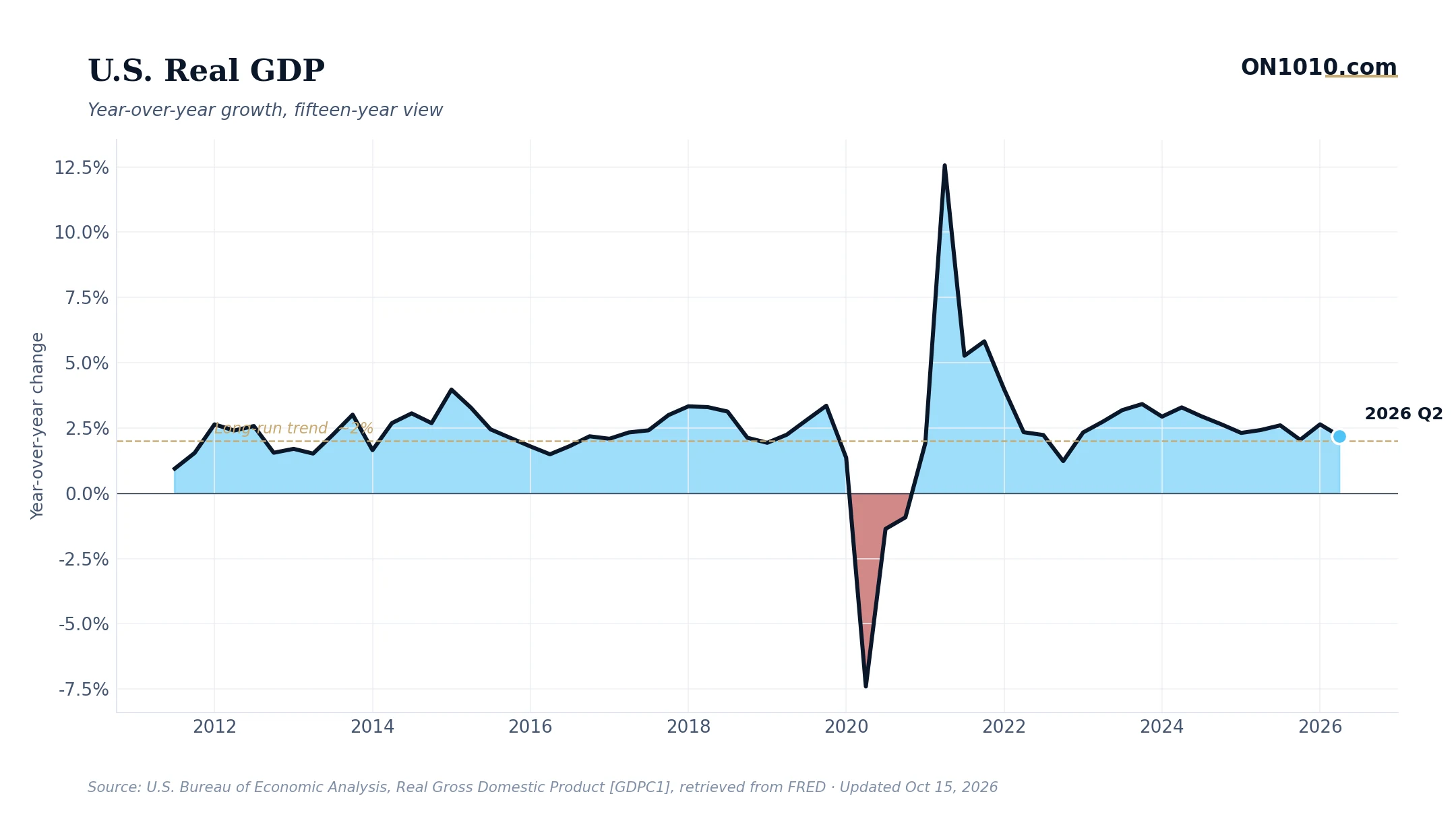
According to CNBC, IMF Managing Director Kristalina Georgieva pushed back directly on Treasury Secretary Scott Bessent’s fiscal strategy, saying that counting on economic growth to shrink the U.S. deficit and $40 trillion debt pile simply will not work fast enough. The IMF is calling for actual fiscal consolidation, not just faster growth.
Here is what makes this worth paying attention to. Bessent’s argument is not irrational on its face. If productivity rises and the economy grows faster than the debt compounds, the debt-to-GDP ratio falls even without cutting spending. That mechanism worked, more or less, in the 1990s. The problem is the math looks harder now. The U.S. is running a structural deficit, meaning the government spends more than it collects even in good economic times. Growing your way out requires sustained real GDP growth well above its historical average, and it requires that growth to be non-inflationary. With core inflation still running hot by historical standards and monetary policy still restrictive, those are significant asks to stack on top of each other.
The bond market is the variable worth watching here. Long-term interest rates are elevated by historical standards, and when the government carries $40 trillion in debt, the cost of servicing that debt compounds quickly at higher rates. Credit spreads have widened recently, which suggests bond investors are pricing in more friction. Every 100 basis points of higher average borrowing cost on $40 trillion is $400 billion in additional annual interest expense, before a single new dollar of spending.
Historically, when the IMF issues a public warning about a major economy’s fiscal path, fixed income investors have used it as a prompt to reassess how much compensation they demand for holding longer-dated government debt. The questions this raises are real: if the growth-only strategy stalls and fiscal consolidation becomes unavoidable, which programs absorb the cuts, and how does that affect the private sector’s profit environment? Those are not hypothetical questions for some distant future. Credit conditions and interest rate gauges are both flashing above their historical norms right now.
Bottom Line: Growth solves a lot of problems, but $40 trillion in debt at elevated interest rates is a balance sheet problem, and balance sheet problems have a way of demanding attention on their own schedule.
Read more: CNBC Top News
ON1010 Research is an independent publisher of economic education and is not a registered investment adviser, broker-dealer, or investment company. This content is for educational and informational purposes only and is not investment advice or a recommendation to buy, sell, or hold any security. Published under the publisher exemption recognized by Section 202(a)(11)(D) of the Investment Advisers Act of 1940 (Lowe v. SEC). Always consult a qualified financial professional before making any financial decision.
Free Research
The economy moves fast. We make sure you move faster.
Economic data, policy shifts, and market signals — delivered to your inbox.
Subscribe Free