
Consumers Are Still Spending. The Question Is Whether They’re Happy About It.
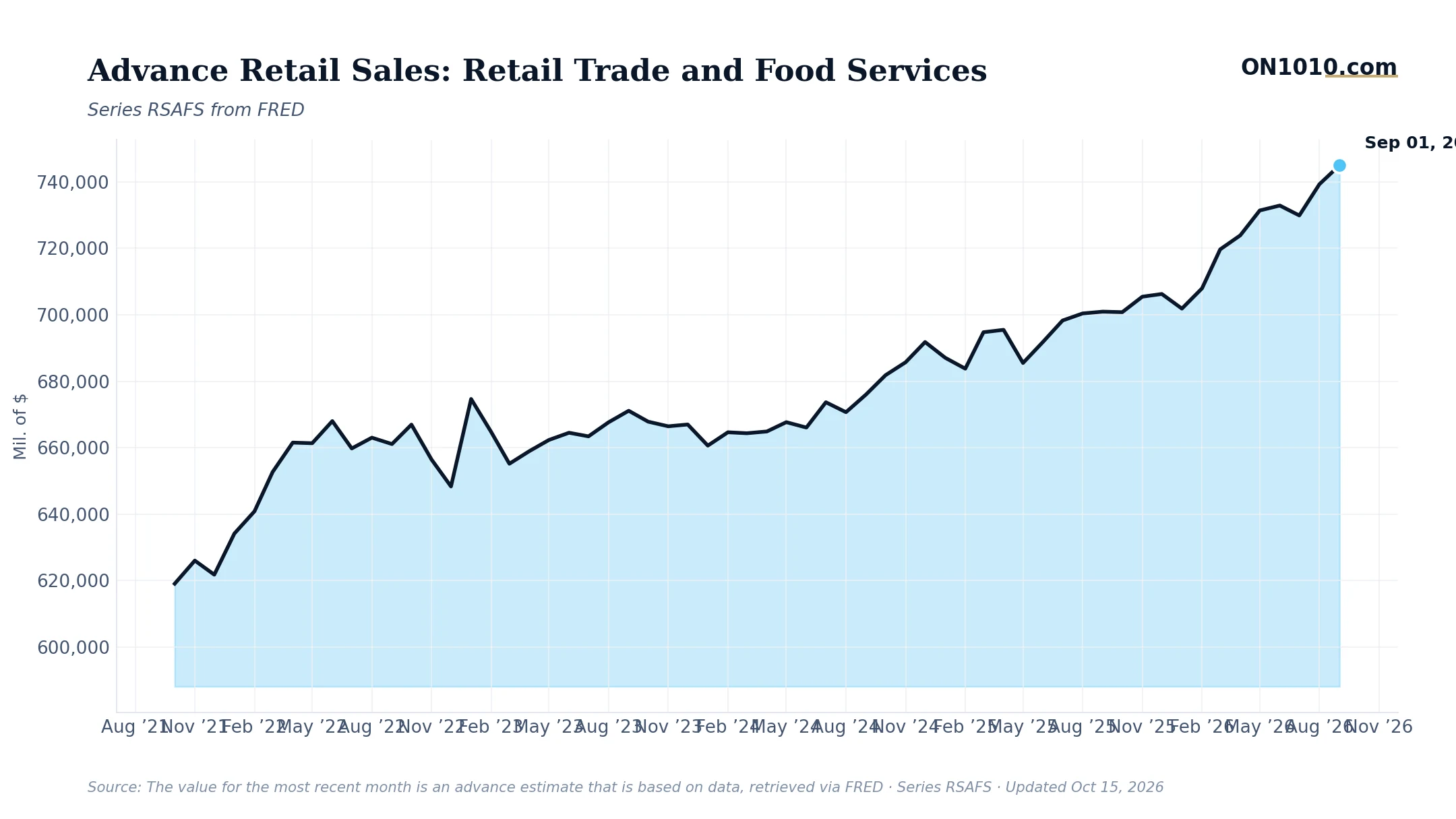
Retail sales rose 0.77% in September to $745 billion, beating the modest pace of the prior two months and marking the third consecutive monthly gain. The trend has been steadily climbing since April. On the surface, that looks like a healthy consumer. But there’s a wrinkle worth examining.
Consumer sentiment is sitting near the lowest readings in modern history. People say they feel terrible about the economy. And yet they keep opening their wallets. That disconnect is one of the most important puzzles in economic analysis right now.
The likely explanation: spending is being driven by necessity and inertia more than confidence. Rent, food, insurance, and car payments don’t wait for good vibes. Year-over-year, retail sales are up 5.61%, which sounds strong. But with inflation still running hot relative to history, a meaningful chunk of that gain reflects higher prices, not more stuff being bought. Always do the math on real versus nominal before getting too excited about a headline number.
The broader backdrop makes this reading more complicated. Monetary policy is restrictive by historical standards. Long-term interest rates remain elevated. Credit spreads have widened recently, a signal that lenders are growing more cautious. Historically, when restrictive policy and wide credit spreads coincide, they tend to put a slow squeeze on spending over time, even when the monthly prints still look fine.
In past cycles, sustained spending against a backdrop of tightening credit has eventually resolved one of two ways: the economy grows through the pressure as incomes hold up, or the spending fades as credit becomes harder and more expensive to access. Businesses watching consumer demand right now are essentially asking which of those two paths we’re on.
Bottom Line: Consumers are spending more in dollars, but sentiment is near historic lows and credit conditions are tightening. Whether this spending trend reflects resilience or inertia is a question the next few months of data will answer.
Source: Federal Reserve Economic Data (FRED)
ON1010 Research is an independent publisher of economic education and is not a registered investment adviser, broker-dealer, or investment company. This content is for educational and informational purposes only and is not investment advice or a recommendation to buy, sell, or hold any security. Published under the publisher exemption recognized by Section 202(a)(11)(D) of the Investment Advisers Act of 1940 (Lowe v. SEC). Always consult a qualified financial professional before making any financial decision.
Free Research
The economy moves fast. We make sure you move faster.
Economic data, policy shifts, and market signals — delivered to your inbox.
Subscribe Free