
The Fed Is Holding. The Economy Around It Is Not.
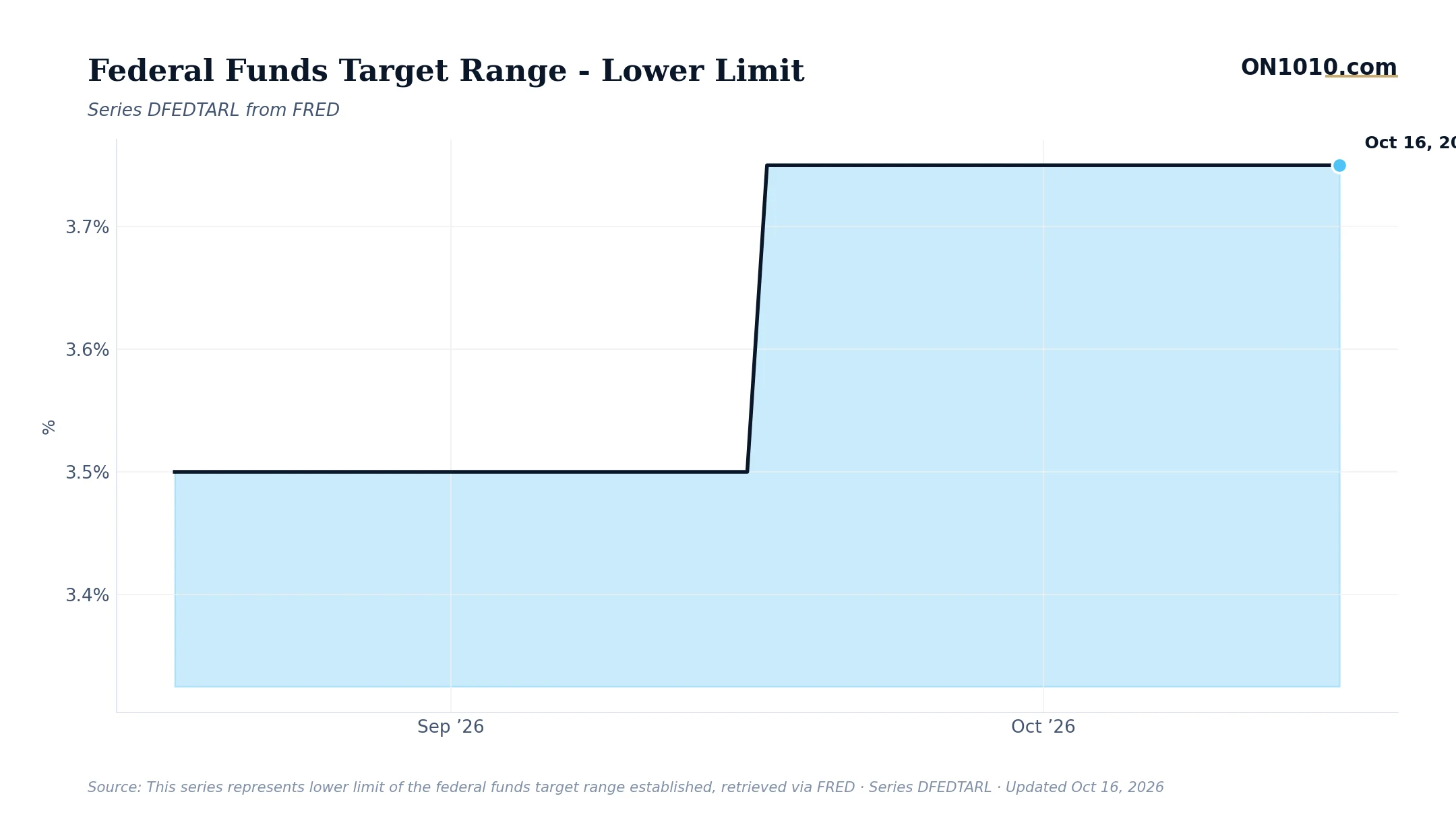
The federal funds rate lower bound has sat at 3.75% without moving. The Fed is in a deliberate pause, watching. What makes that interesting right now is everything else shifting underneath it.
Inflation is still running hot relative to its own history. Monetary policy is restrictive by historical standards, meaning real borrowing costs are doing real work. Long-term rates are elevated. And credit spreads have just started widening, a signal that lenders are quietly demanding more compensation for the risk of lending money in this environment. The Fed is holding steady while the conditions around it are tightening further on their own.
Here is the mechanism that matters: when credit spreads widen, borrowing becomes more expensive even if the Fed does nothing. Mortgage rates, corporate bond yields, and small business loan costs all move with credit spreads, not just with the Fed’s policy rate. So a Fed that holds at 3.75% can still produce tighter financial conditions if the bond market decides to do the tightening itself.
Historically, this kind of setup, where the policy rate is restrictive, long-term rates are elevated, and credit spreads are widening simultaneously, has raised the pressure on business margins. In past cycles, operators have watched this combination carefully because it raises the cost of refinancing debt while also squeezing the customers who borrow to spend. When those two forces hit at once, capital allocation decisions slow down. The question worth asking is whether current profit margins are thick enough to absorb higher financing costs before businesses pull back on hiring and investment.
Bottom Line: The Fed’s finger is off the trigger for now, but financial conditions are tightening anyway. The real question is how long corporate margins hold up before that pressure shows up in business behavior.
Source: Federal Reserve Economic Data (FRED)
ON1010 Research is an independent publisher of economic education and is not a registered investment adviser, broker-dealer, or investment company. This content is for educational and informational purposes only and is not investment advice or a recommendation to buy, sell, or hold any security. Published under the publisher exemption recognized by Section 202(a)(11)(D) of the Investment Advisers Act of 1940 (Lowe v. SEC). Always consult a qualified financial professional before making any financial decision.
Free Research
The economy moves fast. We make sure you move faster.
Economic data, policy shifts, and market signals — delivered to your inbox.
Subscribe Free