
Factory Floors Are Quietly Humming. The Rest of the Economy Isn’t So Sure.
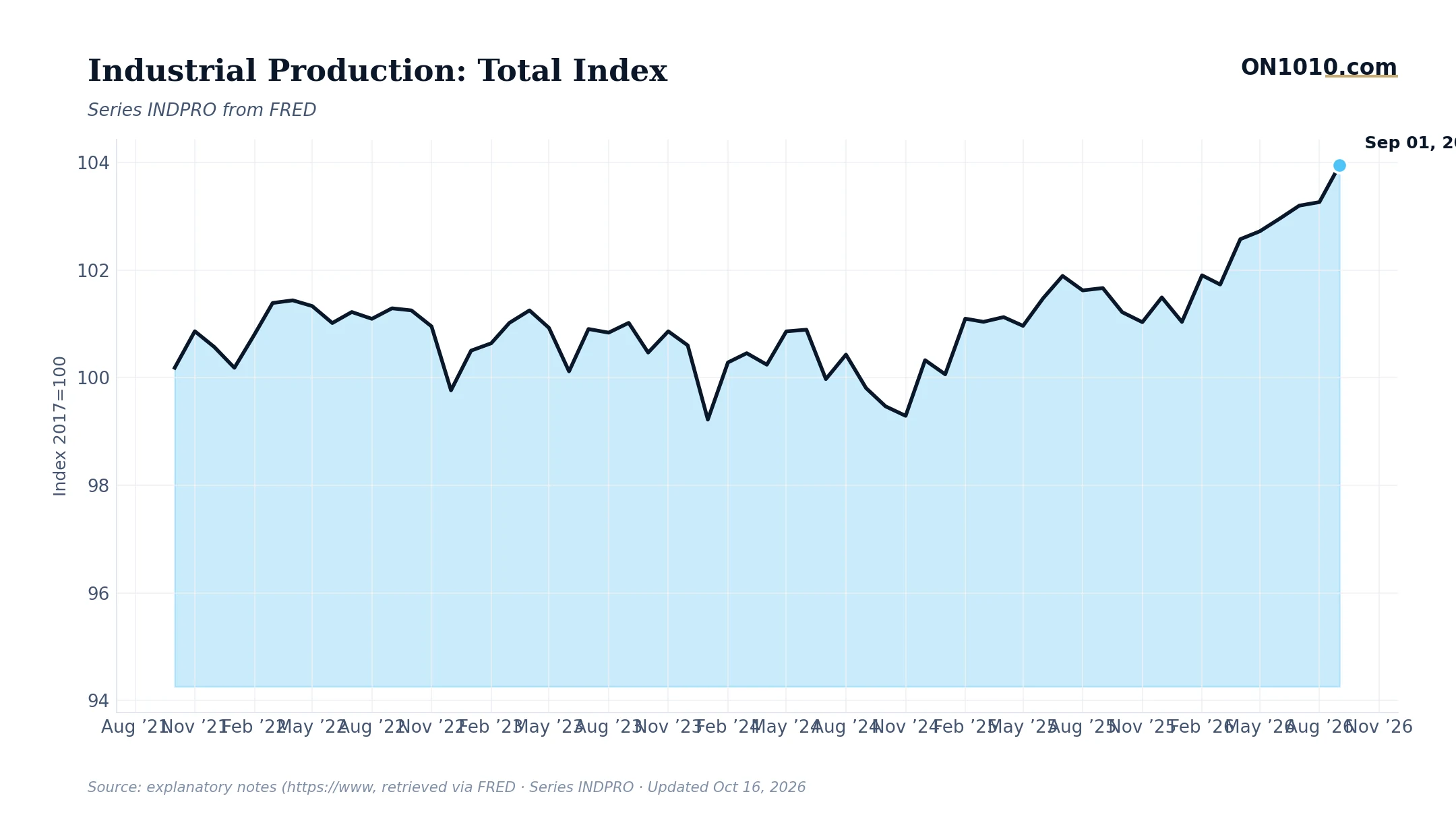
Industrial production rose 0.66% in September, pushing the index to 103.95 and landing 2.89% above where it was a year ago. More striking than the monthly print is the shape of the trend: output has climbed every single month since April, six consecutive gains without a single stumble.
That kind of unbroken streak deserves attention, especially when the rest of the macro backdrop is throwing mixed signals. Consumer sentiment sits near historic lows. Credit spreads are widening. Long-term interest rates are historically elevated. And yet factories, mines, and utilities just posted their best six-month run in some time.
Part of what may be sustaining this is reshoring momentum. Companies that spent the last few years rebuilding domestic supply chains are now running those facilities. That structural shift toward bringing production back to American soil has created a floor under industrial output that didn’t exist before 2020. This isn’t a standard mid-cycle bounce. It may be something more durable.
The tension worth tracking is whether this industrial strength can survive the financing environment. In past cycles, sustained manufacturing expansion has historically accompanied rising business investment and margin expansion across the goods-producing sector. But high real interest rates raise the cost of that investment, and widening credit spreads suggest lenders are getting more selective. Historically, when monetary policy is this restrictive relative to its own history, businesses begin deferring capital commitments even when demand signals look healthy. The question isn’t whether factories are busy today. It’s whether the incentive to expand capacity holds when borrowing costs stay elevated.
The sector rotation picture adds a layer of caution: defensive sectors are quietly pulling ahead of cyclicals, which sometimes reflects institutional money hedging against softness before it shows up in the hard data.
Bottom Line: Six straight months of industrial gains in a high-rate, wide-spread environment is genuinely encouraging. Whether the businesses driving that output can keep investing at current financing costs is the question that separates a durable expansion from a late-cycle surge.
Source: Federal Reserve Economic Data (FRED)
ON1010 Research is an independent publisher of economic education and is not a registered investment adviser, broker-dealer, or investment company. This content is for educational and informational purposes only and is not investment advice or a recommendation to buy, sell, or hold any security. Published under the publisher exemption recognized by Section 202(a)(11)(D) of the Investment Advisers Act of 1940 (Lowe v. SEC). Always consult a qualified financial professional before making any financial decision.
Free Research
The economy moves fast. We make sure you move faster.
Economic data, policy shifts, and market signals — delivered to your inbox.
Subscribe Free