
The $2 Trillion Deficit Isn’t the Scary Part. The Timing Is.
According to CNBC, the U.S. budget deficit for fiscal year 2026 hit nearly $2 trillion, a 12% jump in a single year. The number itself will generate plenty of alarm. The more important detail is what it means in this specific economic environment.
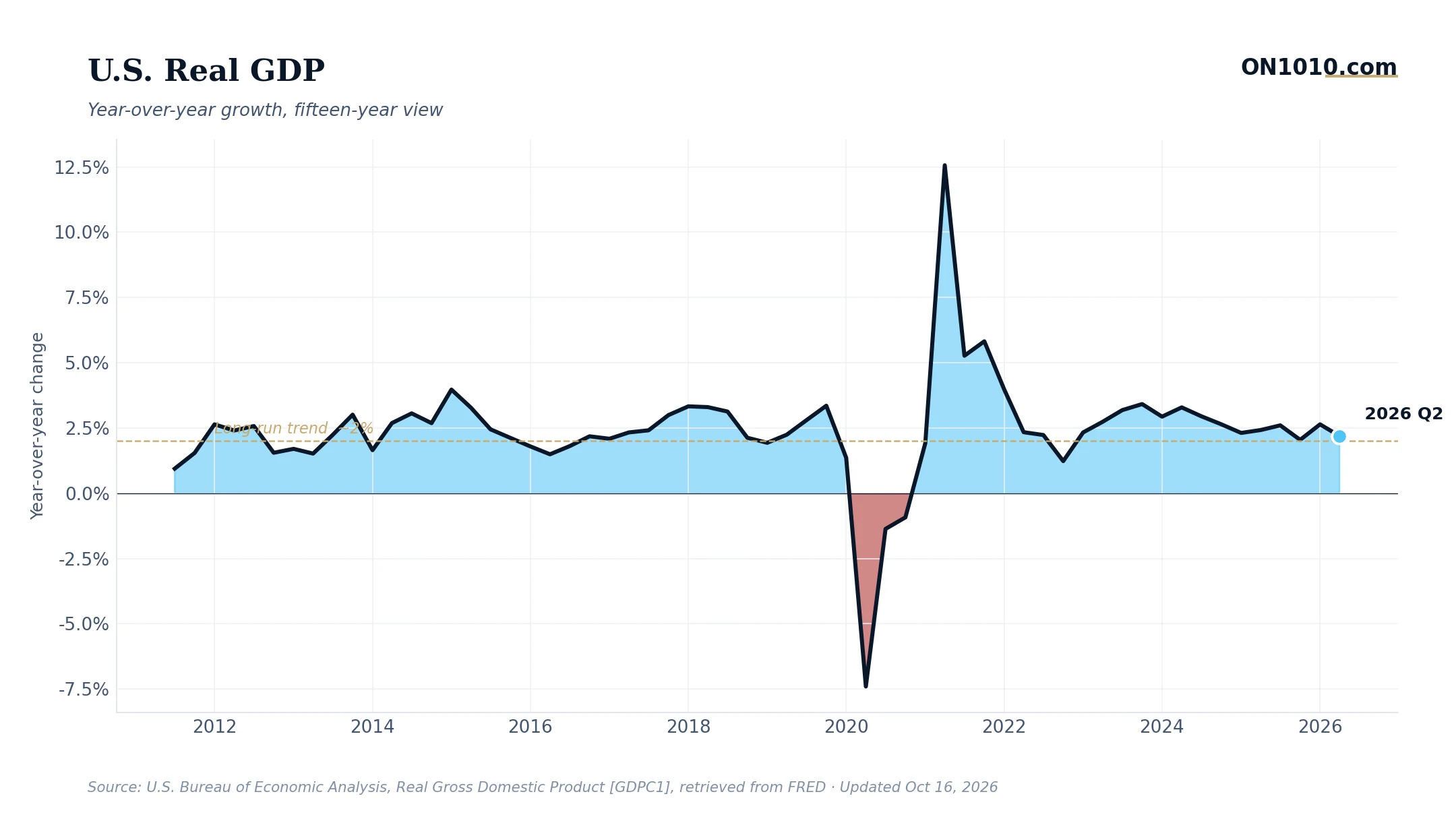
Running a $2 trillion deficit when the economy is growing near its historical trend is unusual. Deficits of this magnitude normally show up during recessions, when tax revenues collapse and emergency spending surges. In 2026, neither is true. This is structural overspending in an expansion, which limits the government’s capacity to respond if conditions actually deteriorate.
Here is where the backdrop matters. Long-term interest rates are sitting in the upper range of their historical experience. Credit spreads have been rising. The real policy rate remains restrictive. Every dollar the Treasury borrows at today’s rates costs more than it did two or three years ago, and that interest burden feeds directly back into the deficit in a compounding loop. The CBO has been flagging this dynamic for years: higher deficits push up borrowing needs, which can pressure rates higher, which raises debt service costs, which widens the deficit further. The arithmetic is not friendly.
There is also a crowding-out question worth watching. When government borrowing is large and persistent, it competes with private borrowers for the same pool of capital. Historically, investors have treated wide deficits paired with high real rates as a constraint on private investment, the actual engine of productivity and long-run growth. The bond market’s behavior, with credit conditions tightening even as equities hold above their long-term trend lines, suggests at least some pricing of this tension. Whether it becomes a problem depends heavily on whether foreign demand for U.S. Treasuries holds, and that demand is increasingly difficult to take for granted.
Bottom Line: A $2 trillion deficit is one thing. A $2 trillion deficit at the top of the rate cycle, with compounding interest costs and tightening credit conditions, is a different kind of problem, and the bond market tends to notice before the headlines do.
Read more: CNBC Economy
ON1010 Research is an independent publisher of economic education and is not a registered investment adviser, broker-dealer, or investment company. This content is for educational and informational purposes only and is not investment advice or a recommendation to buy, sell, or hold any security. Published under the publisher exemption recognized by Section 202(a)(11)(D) of the Investment Advisers Act of 1940 (Lowe v. SEC). Always consult a qualified financial professional before making any financial decision.
Free Research
The economy moves fast. We make sure you move faster.
Economic data, policy shifts, and market signals — delivered to your inbox.
Subscribe Free