
The 10-Year Yield Is Pulling Back. The Bigger Story Is Where It Started.
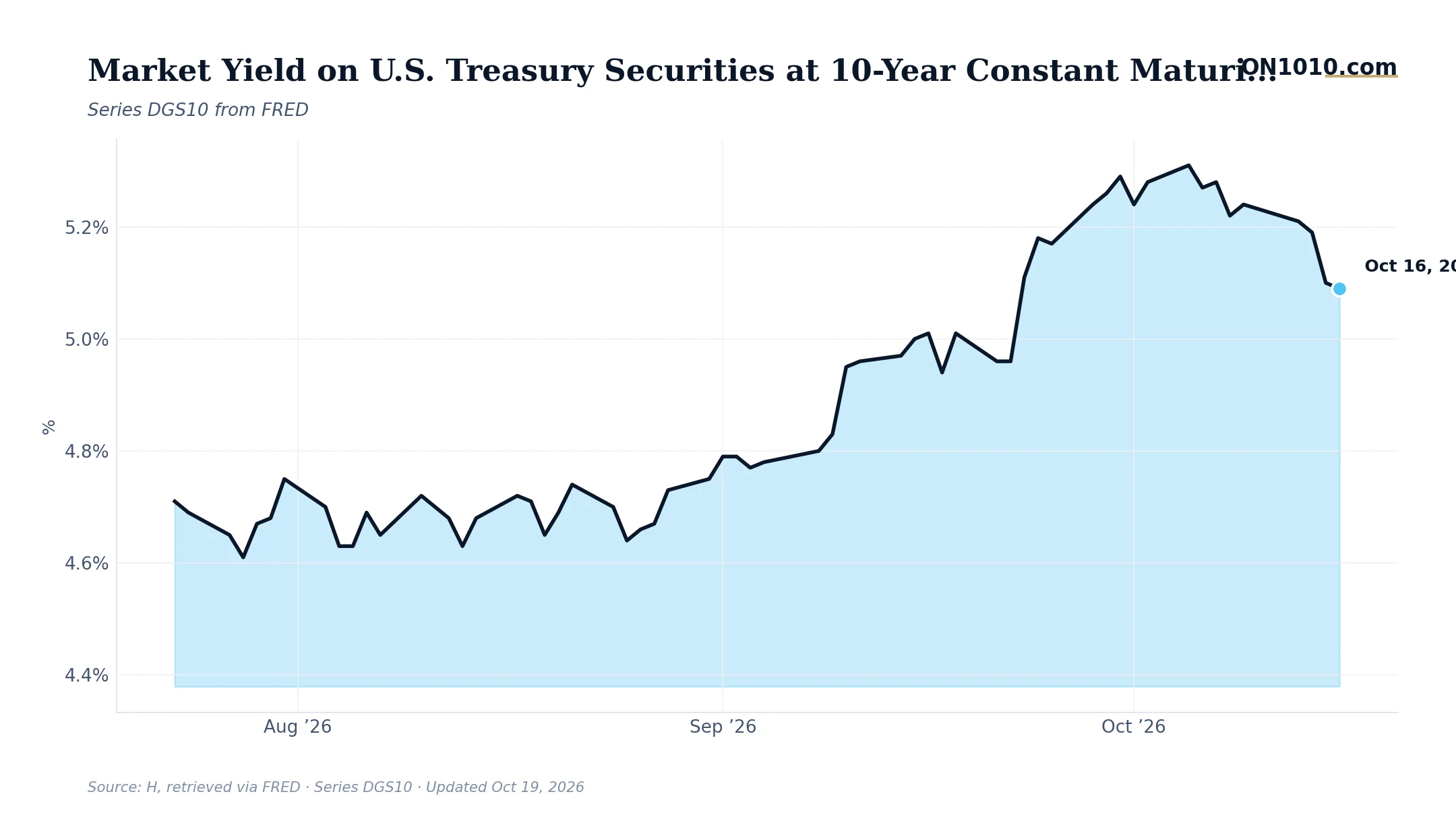
The 10-year Treasury yield dipped to 5.09% on October 16, down from 5.10% the day before and off the recent peak of 5.24% earlier this month. A 15-basis-point pullback sounds like relief. But zoom out and the picture looks different: yields are still sitting in the upper range of their history over the past several decades. That context matters more than the daily move.
This isn’t a number that exists in isolation. Long-term rates at this level arrive alongside a monetary policy stance that remains historically restrictive, credit spreads that are widening, and consumer sentiment near multi-decade lows. That combination puts pressure on the economy from multiple directions at once. Businesses face higher borrowing costs. Homebuyers face affordability math that doesn’t work at today’s rates. And corporations carrying floating-rate debt are refinancing into a world that is meaningfully more expensive than the one they borrowed in.
Historically, when long-term rates have sat in this range, a new recession began within the following 12 months about 20% of the time, and one-in-five is not a certainty but it is a real probability worth understanding. What typically followed, over longer windows, was a drift lower in rates as the economy slowed enough to pull inflation down and give the Fed room to ease. Past performance does not predict future results, and this cycle has broken enough old rules to warrant humility about any historical analog.
The sector rotation data adds a layer of context: defensive sectors like consumer staples and health care are outperforming cyclicals by a meaningful margin, which often signals that institutional money is repositioning ahead of slower growth, not celebrating it.
Bottom Line: The 10-year yield’s small daily dip is less interesting than the altitude it fell from. At 5.09%, capital across the economy is still pricing risk at a level that compresses margins, slows investment decisions, and raises the bar for any new project to pencil out.
Source: Federal Reserve Economic Data (FRED)
ON1010 Research is an independent publisher of economic education and is not a registered investment adviser, broker-dealer, or investment company. This content is for educational and informational purposes only and is not investment advice or a recommendation to buy, sell, or hold any security. Published under the publisher exemption recognized by Section 202(a)(11)(D) of the Investment Advisers Act of 1940 (Lowe v. SEC). Always consult a qualified financial professional before making any financial decision.
Free Research
The economy moves fast. We make sure you move faster.
Economic data, policy shifts, and market signals — delivered to your inbox.
Subscribe Free