
The 2-Year Yield Is Sliding. The Market Already Knows Something.
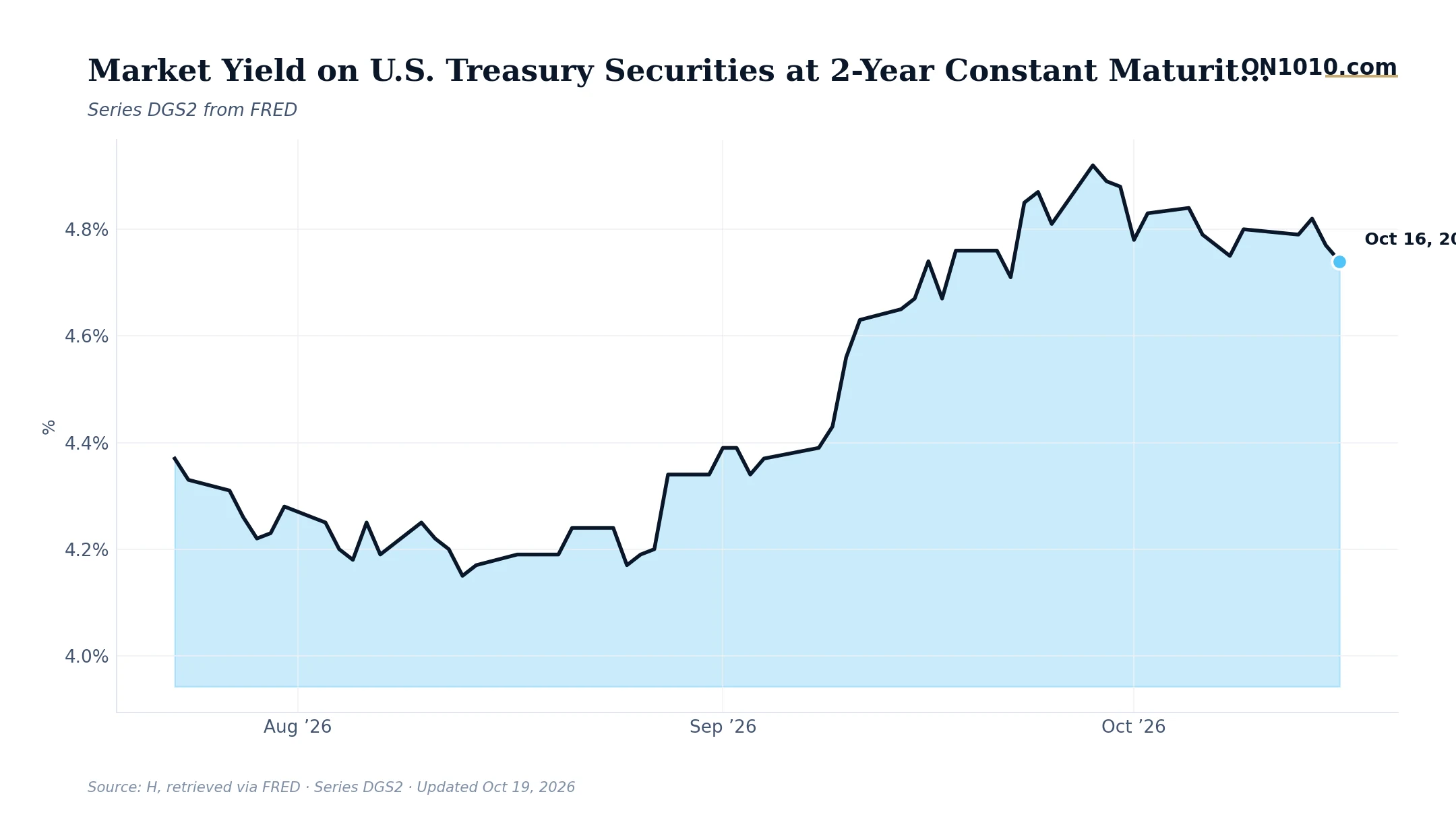
The 2-year Treasury yield fell to 4.74% on October 16, down from 4.82% just two trading days earlier. That four-session drift lower is small in absolute terms, but the direction matters more than the magnitude right now.
The 2-year yield is the bond market’s best guess at where the Fed’s policy rate is headed over the next couple of years. When it falls without the Fed doing anything, it means traders are pricing in either slower growth, softer inflation, or both. Given that monetary policy is sitting well above its historical midpoint and core inflation is still running hot by historical standards, a falling 2-year yield is the market starting to lean toward “the Fed will have to blink eventually.”
Here is what makes this interesting: the broader backdrop doesn’t scream recession. Growth is near its historical norm. The base rate for a new recession starting within the next 12 months, from conditions like these, has historically been around 7%. But credit spreads are wide and widening, consumer sentiment is near multi-decade lows, and defensive sectors have been outpacing growth names by more than 4 percentage points over the past month. The bond market and the equity market are both pointing in the same cautious direction, and when those two agree, history suggests the signal is worth taking seriously.
In past cycles, when the 2-year yield started drifting lower while the real policy rate remained elevated, it often meant the market was getting ahead of a Fed pivot. Sometimes it was right. Sometimes it was early. The historical anchor here is that long-term rates in the upper quarter of their range, where we still sit, preceded a new recession within 12 months about 20% of the time. One in five is not inevitable, but it is worth building into the analysis.
Bottom Line: The 2-year yield is not crashing, but its quiet slide while credit spreads widen and defensive stocks lead is a consistent message across three different markets. The question to sit with is whether the Fed can hold policy this tight while those three signals keep moving in the same direction.
Source: Federal Reserve Economic Data (FRED)
ON1010 Research is an independent publisher of economic education and is not a registered investment adviser, broker-dealer, or investment company. This content is for educational and informational purposes only and is not investment advice or a recommendation to buy, sell, or hold any security. Published under the publisher exemption recognized by Section 202(a)(11)(D) of the Investment Advisers Act of 1940 (Lowe v. SEC). Always consult a qualified financial professional before making any financial decision.
Free Research
The economy moves fast. We make sure you move faster.
Economic data, policy shifts, and market signals — delivered to your inbox.
Subscribe Free