
The Courts Are Now in the Trade War. That Changes the Uncertainty Calculus.
According to CNBC, a new lawsuit is challenging President Trump’s 50% tariffs on Canadian goods, invoking Section 338 of the Tariff Act of 1930, a rarely used provision that gives the executive branch broad retaliatory authority against countries it deems to be discriminating against U.S. commerce. The legal novelty here is what makes this worth watching: challengers are arguing in court, not Congress, which signals that traditional political channels for pushing back on trade policy have essentially closed.
Section 338 has almost no judicial track record. Courts have historically given the executive wide deference on trade, so a challenge built on this statute is a long shot on the merits. But that may be beside the point. Litigation adds a layer of uncertainty that businesses cannot plan around. A company deciding whether to sign a three-year supply contract with a Canadian manufacturer now has to price in not just the tariff level, but whether that level survives appeal, what a court ruling could mean for related policies, and how the administration might respond to a judicial check. That kind of uncertainty is not neutral. It delays capital commitments, and delayed capital commitments slow productivity growth. That mechanism is well understood, even when its magnitude is hard to measure in real time.
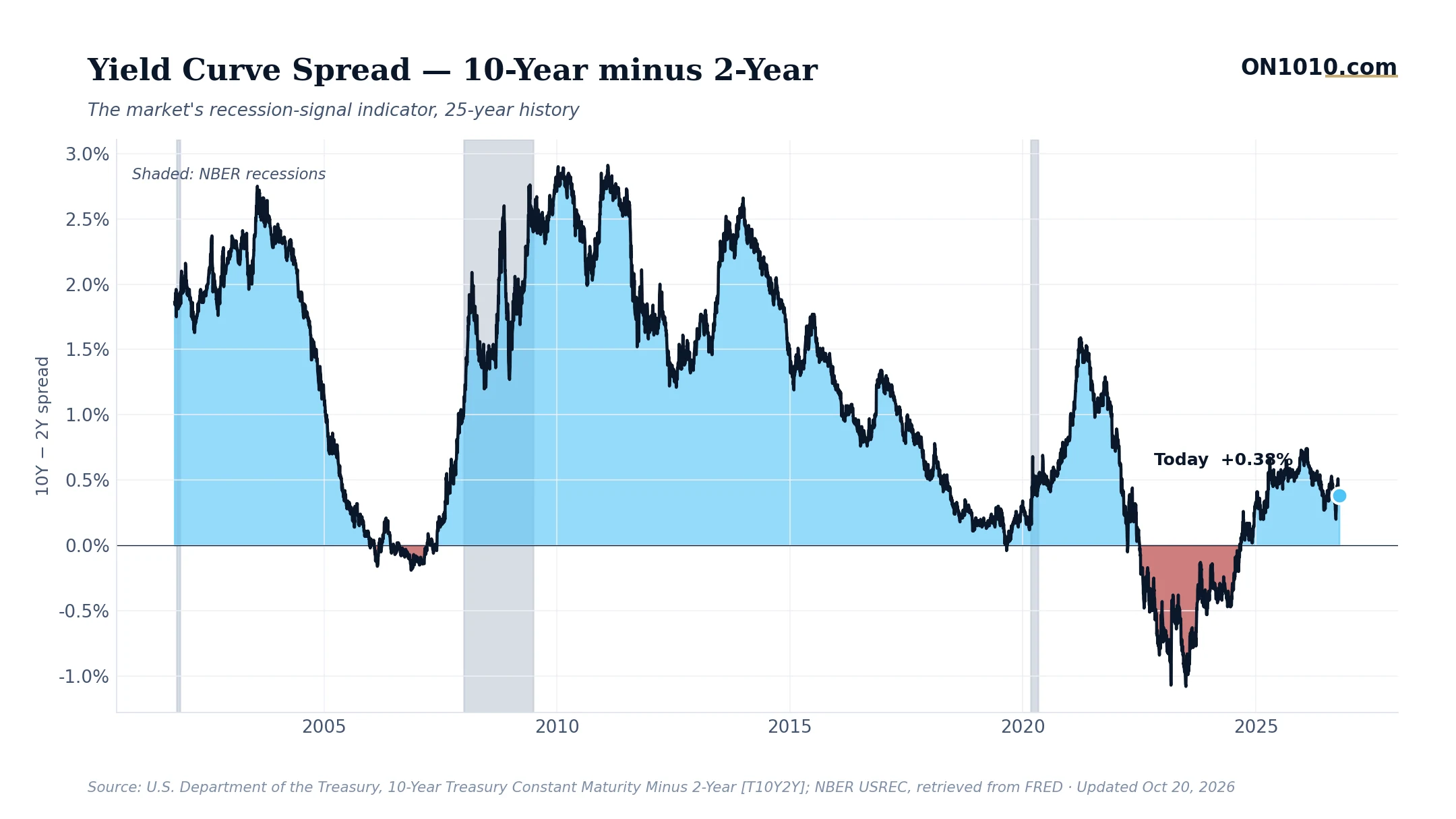
The broader backdrop sharpens the concern. Credit spreads have moved from elevated to very wide territory recently, and market uncertainty is climbing. Defensive sectors have been outperforming growth sectors by nearly 4 percentage points over the past month. Historically, when restrictive monetary policy, wide credit spreads, and rising trade frictions all run simultaneously, the margin pressure on import-dependent businesses compounds quickly. Historically, investors and operators have used periods of high policy uncertainty to reassess supply chain exposure and input cost assumptions across their planning horizons. The questions this raises include how durable the tariff structure actually is, and whether current cost models are built on a policy baseline that may shift.
Bottom Line: A 50% tariff is a known cost. A 50% tariff currently in litigation is an unknown one, and unknown costs are what stop investment decisions cold.
Read more: CNBC Top News
ON1010 Research is an independent publisher of economic education and is not a registered investment adviser, broker-dealer, or investment company. This content is for educational and informational purposes only and is not investment advice or a recommendation to buy, sell, or hold any security. Published under the publisher exemption recognized by Section 202(a)(11)(D) of the Investment Advisers Act of 1940 (Lowe v. SEC). Always consult a qualified financial professional before making any financial decision.
Free Research
The economy moves fast. We make sure you move faster.
Economic data, policy shifts, and market signals — delivered to your inbox.
Subscribe Free